
Color CSS Templates
For brands that rely on bold accents, gradients, or multiple UI states, CSS control keeps color behavior predictable. Reusable classes and responsive rules let the palette adapt without forcing broad restyling.
-

-
-
-
-
-
-
-
-
-
-
-
-
-
-
-
-
-
-
-
-
-
-
-
-
-
-
-
-
-
-
-
-
-
-
-
Build Website with no CodingDownload
-
-
-
-
-
-
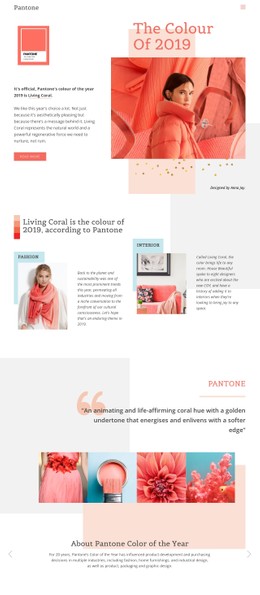

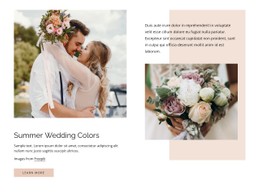


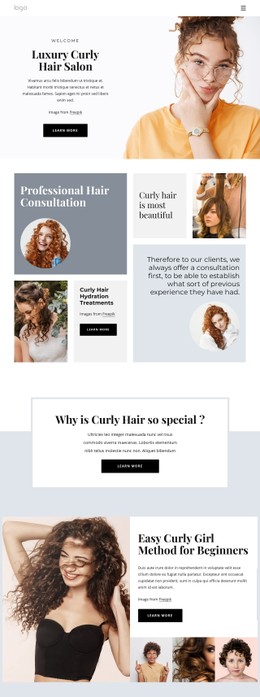






























More Website & HTML Templates for Color




































Other Art & Design CSS Templates
Customizable Color CSS Templates for Precise Styling Control
A ready-made palette comfortably covers most projects. Buttons, links, and card backgrounds follow it, and that covers 80- 90 percent of a site. The trouble starts with the remainder: a badge that needs its own accent, a button whose hover has to survive a dark image, a gradient block that behaves differently on a phone. Color CSS Templates exist for that remainder.
Global Rules and Local Exceptions
The useful question about a styled template is how cleanly it keeps the shared layer apart from the one-off layer. The shared layer holds everything a visitor meets over and over:
- primary and secondary buttons in all their visual states;
- link and heading colors inside body content;
- ordinary card backgrounds, borders, and dividers.
Everything else is an exception: a seasonal block, a dark surface around artwork, one featured item that has to outshine its neighbors. When a template mixes the two, changing a button turns into a scavenger hunt.
Hover, Focus, Selected
Take one product card as the test case. It has a resting background, a border that changes when the item is chosen, and a hover shade. Add a focus outline for keyboard users, and keep the text readable throughout—five treatments for a single component, with a clear template that keeps them recognizably related.
A hover should shift the existing accent, lighter or deeper, and stay within the palette the site uses everywhere else. A focus outline must remain visible on a colored surface, which is where many templates quietly fail. A selected state must never look like a hover state, or visitors won't know what they actually chose.
Nicepage supports Custom CSS Code when a component needs something the standard visual controls do not reach. The Custom CSS controls show how rules are written, and classes are assigned, keeping a special case attached to one element rather than leaking into unaffected sections.
Scoping Overrides to Single Components
Breakpoints deserve more attention than they usually get. On a wide screen, a card can borrow meaning from the colored block beside it. Once a Grid or Flexbox row collapses into a narrow stack, that neighbor disappears, so the breakpoint sometimes touches the background or the text treatment along with the spacing.
Exports are worth a thought as well. If one campaign page carries color rules that nothing else uses, there is no reason to send those declarations to every visitor. Export Minimal CSS Per Page can write them into a separate file. The rule is short: a repeating pattern belongs to the shared layer; a one-off stays local.