
Record CSS Templates
Album covers, artist names, release data, and track details need a consistent visual system. Record CSS templates define reusable styles for music grids, typography, spacing, imagery, and component states without changing the underlying content structure.











More Website & HTML Templates for Record











More CSS Templates from Music & Entertainment Category




















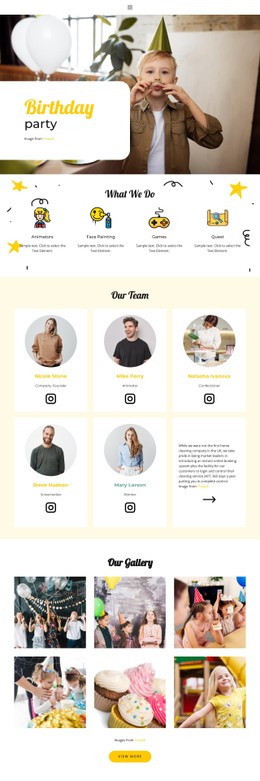




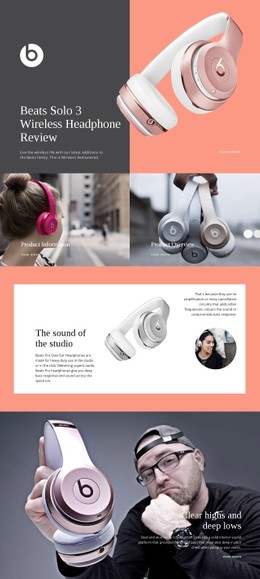
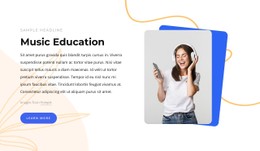














Other Music & Entertainment CSS Templates
Customizable Record CSS Templates
Most of the customization in record CSS templates happens in the styling layer. The design arrives ready, and you can change how covers are sized and how cards are spaced, while the content of each release stays the same. Labels and independent artists get a shared set of rules for a catalog where no two covers look alike.
Album Grids Full of Mismatched Covers
Music catalogs rarely contain artwork with identical colors, proportions, or visual weight. One cover may be minimal and pale, while another uses dense photography. Covers are usually square because streaming platforms ask for square artwork, but press photos sharing the same grid often are not.
For a release grid, useful styling rules can cover:
- consistent gaps between album and single cards;
- controlled cover-art proportions and cropping;
- reusable classes for release titles, artist names, and secondary metadata;
- spacing between the cover, the title block, and the credits.
Grid or Flexbox then determines how many existing cards fit in a row, with no manual positioning required.
How Responsive Columns Handle Long Titles
A grid that looks tidy on a laptop can quickly crowd a phone screen. As the viewport narrows, the number of columns decreases, and the gaps shrink. A one-word album name may sit next to a winding prog-rock title, so the type rules have to keep line height and card height in check. Nicepage's Responsive Modes let you adjust all of this, from large screens down to phones.
Interactive release cards also need clear states. A hover effect can lift the cover or reveal a play icon, while a visible focus style helps keyboard users. Touch screens don't have a hover state in the usual sense, so a release date or a buy link hidden behind it should remain visible on phones.
Custom CSS for Special Editions
Special releases may still need an exception to the shared stylesheet, such as a wider cover for an anniversary box set or a gold badge on a limited pressing. Such tweaks change how a card looks while leaving its content unchanged.
Nicepage describes how to add targeted rules in its Custom CSS documentation, including CSS added through page settings and reusable classes assigned to elements. If several album cards need the same exception, it belongs in a reusable class.
Shared classes also pay off when a label refreshes its look. With one class behind every release title, a new typeface means editing a single rule, and the whole back catalog updates at once. Before you settle on a record CSS template, look past the demo covers and check how much of its styling runs on shared rules.