
Supplement HTML Templates
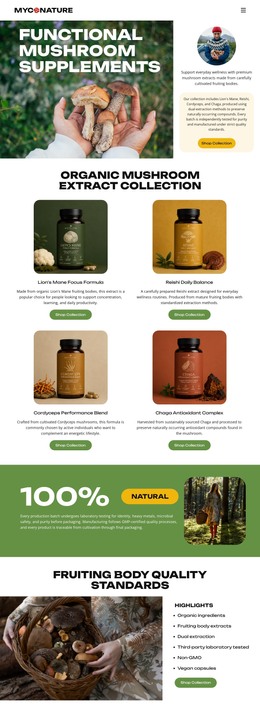
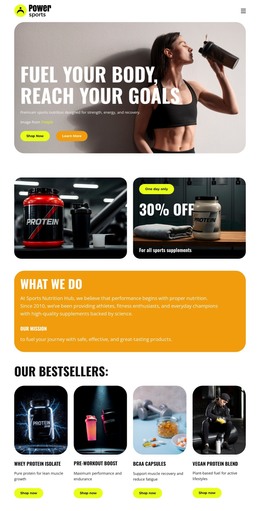
Supplement sites often combine formula details, ingredient explanations, directions, quality information, and purchase context. A ready-made HTML structure keeps those regions distinct and responsive without making CSS or CMS workflow the main concern.
-

-

-
-
-
-
-
-
-
Free Website Builder SoftwareDownload
-
-
-








More HTML Templates from Music & Entertainment Category
















































Other Music & Entertainment HTML Templates
Supplement HTML Templates: Source Files You Own and Edit
What ships with a supplement HTML template is a folder you can unzip and read. Pages as .html files, one or more stylesheets, a script file, an images directory, often a fonts folder, and a README. Nothing gets generated at request time. Open any page in an editor, and you will see the same markup the browser will receive.
Things That the Markup Actually Includes
Each page is a document with a head, a body, and a run of sections you can identify by name. Header, hero, content blocks, footer. Heading levels follow in order, sections carry classes that match rules in the stylesheet, and a repeated block is simply markup you copy from one file into another. Adding a product page usually means duplicating an existing .html file, changing the text and images inside the same block structure, then adding a link to it in the header of every page that needs one.
That last step is the honest cost of the format. Without templating, shared elements live separately in every file. Ten pages stay comfortable. Fifty product pages plus a blog is where teams start regretting the decision, because one header change becomes fifty edits or a build step somebody has to set up and maintain.
Hosting and Deployment
Static files run anywhere: Netlify, GitHub Pages, Cloudflare Pages, an S3 bucket, an ordinary shared host. No database to back up, no PHP version to keep current, no plugin surface to patch. Deployment is a file copy or a Git push, and rolling back is checking out the previous commit. For a team already working in Git, a supplement HTML template drops into the same branching and review process as the rest of their code.
Integrations Get Attached, Not Installed
Anything the site needs beyond static content arrives as a snippet you place yourself: a Shopify or Snipcart buy button, a form endpoint, an analytics tag, a reviews widget, a subscription service. You pick each service, and you own the consequences when one of them changes its embed code. More control, more of the maintenance.
Read the File List, Not the Product Name
Marketplace naming blurs categories. A product sold as a health supplement HTML template describes its design and its delivery format in one phrase, and only the second half tells you what you will be editing. Before buying, look at the page count, the file tree, and whether the stylesheet and scripts arrive readable or minified into a single line.
Nicepage generates clean, lightweight markup and styles with optimized elements, which matters more in this format than anywhere else. With static files, there is no layer sitting in front of the output. Whatever the tool exports is exactly what your visitors download.