
Selling CSS Templates
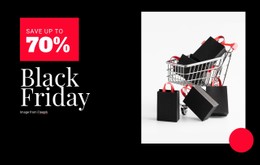
Retail promotions often change faster than their visual system should. Selling CSS templates keeps prices, discount states, product cards, and action buttons consistent while responsive rules and targeted CSS handle campaign-specific presentation.











More Website & HTML Templates for Selling



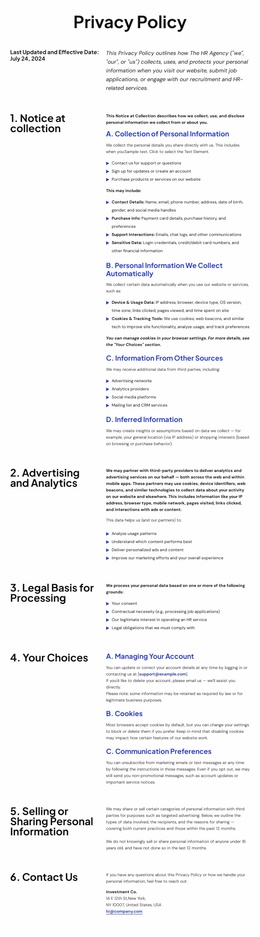
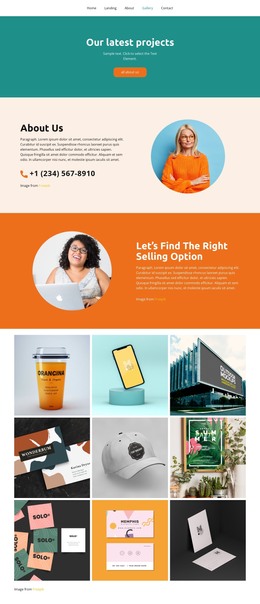


More CSS Templates from Sale Category



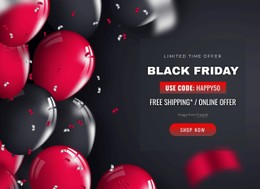














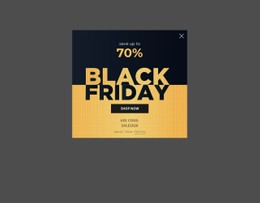

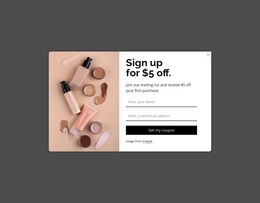

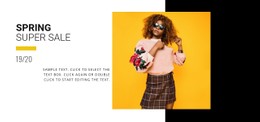


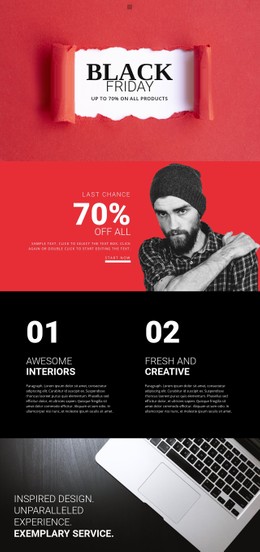





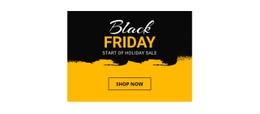








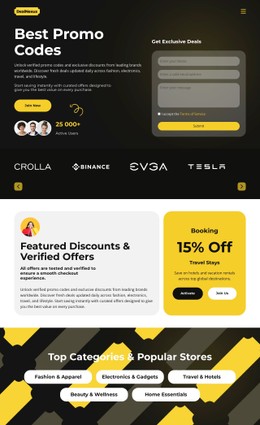

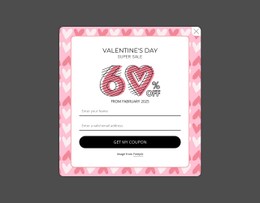





Other Sale CSS Templates
Selling CSS Templates as a Finished Product
A CSS template is sold as a styling package: variables, component classes, and responsive rules that someone else will drop into a project you will never see. Buyers pay for the hour they save when three variables change, and the whole thing matches their brand. Everything else exists to keep that promise honest.
Structure That Survives Reuse
Start with the base layer. Colors, spacing steps, and typography scale belong in a small set of variables at the top, so the rest of the stylesheet reads them instead of repeating raw values. Component classes sit above that layer, and variants come last, modifying components without replacing them.
Reviewers of a paid stylesheet usually look for the same things:
- A variable block small enough to scan in one screen;
- Component classes named for what they are, not where they first appeared;
- States for hover, focus, and error on every interactive element;
- Responsive rules grouped by breakpoint instead of scattered through the file.
Customization Without Rewriting Everything
Decide in advance which parts a buyer is expected to touch, then make those parts obvious. Names carry most of that weight. A class named card travels well; a class named promo-block-2 tells the next person nothing and still gets copied.
Scope matters as much as naming. Global rules that reach into a host project will find something to break, so keep them separate from the component rules a buyer actually wants.
Mark the adjustable surface clearly, and the support questions mostly disappear:
- Brand colors and spacing pulled from variables, never from individual selectors;
- A font stack defined once, with a fallback that works when the primary face fails to load;
- Component variants are added through an extra class, leaving the base rule intact.
Signs of Templates Nobody Wants to Maintain
You know the type: when you open it, forty selectors tied to one specific layout, with overrides fighting each other, and ! important sprinkled wherever the cascade got inconvenient. A buyer finds no way to change the button color without breaking the cards, and the refund request arrives that evening.
File weight matters too. Ship only the rules a project actually uses; the Export Minimal CSS Per Page option in Nicepage produces a slimmer output, which keeps what you deliver close to what the buyer needs.
The honest test before you list anything for sale: hand the stylesheet to someone who has never seen it, ask for a color change and a new card variant, and time how long it takes. In under ten minutes, you have a product; in an hour, you have a portfolio piece.