
Client HTML Templates
Testimonials, client stories, referral messages, and featured brands each need clear context around the people or companies they represent. A reusable HTML structure keeps those proof sections distinct and responsive while leaving visual CSS treatment secondary.



































Other Travel & Hotels HTML Templates
Ready-to-use Client HTML Templates for Customer Proof
Client sections nearly always serve one purpose: showing who you have worked with and what they said about it. Ready-to-use client HTML templates hand you pre-written markup, from a single testimonial card to a full customer story linking to the case behind it. A consulting site usually needs several of those formats at once, so the work is mostly matching a prepared block to the proof you already collected.
Short Quotes, Featured Brands, Detailed Narratives
Client proof arrives in very different shapes. A logo strip signals recognition, a two-line quote adds a human voice, and a customer story explains what was delivered and what changed afterward. Prepared templates keep those apart, and the difference starts in the markup.
A client library usually covers a small set of formats:
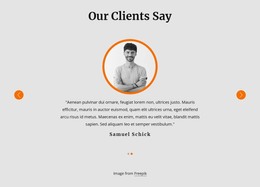
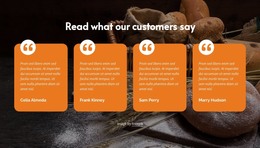
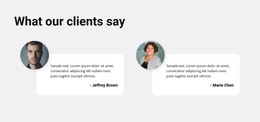
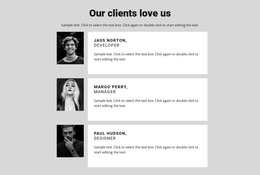
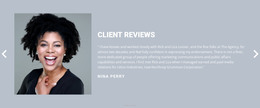
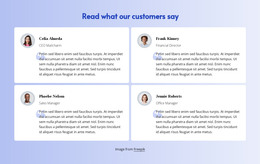
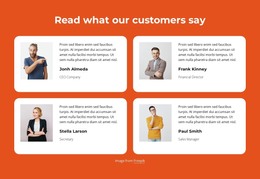
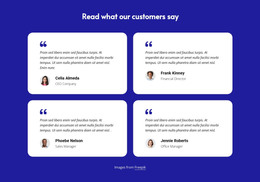
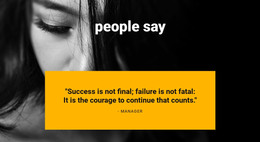
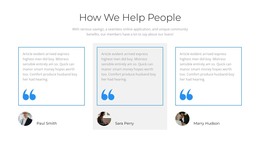
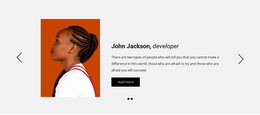
- testimonial cards built around a quote, a name, and a company;
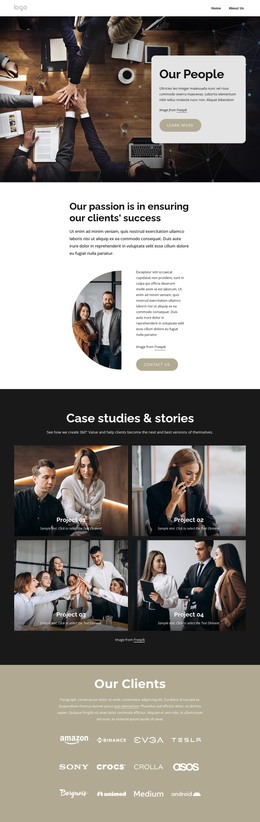
- logo rows for recognizable accounts and featured brands;
- customer stories carrying project context, results, and a link to the full case;
- spotlight blocks that give one relationship far more room than the others.
Take the smallest block that still carries what you have. A quote with no company behind it reads as filler, and a story squeezed into a card loses the numbers that made it worth publishing.
Semantic Tags That Hold Attribution Together
When comparing two client blocks, look at what the tags say about the content. A quote sits naturally inside blockquote, with the author in a cite or a small attribution line right beside it. A standalone customer story works better wrapped in article, since it can be moved or repeated without losing meaning, and a client area is easier to follow when it opens with section and a real heading.
Logo images need alt text too, because a wall of files called logo-04 tells nobody which accounts you serve. The order of the source matters as much as the visual arrangement, so when a portrait appears above the quote on a phone, the name and company should still be in the same unit as the statement.
How Much Markup Each Format Actually Needs
Short endorsements need three fields and nothing else (quote, author, company). B2B proof works harder when the role and the account brand sit inside the same unit, because buyers check who said something before they read what was said. A customer story asks for the most structure, since context, outcome, and a link to the full case are separate ideas people scan in order. The more a client reference has to carry, the more markup its template should already contain.