
Africa Website Templates
Tourism groups, cultural projects, nonprofits, and regional businesses often need several clear destinations for their content. Africa website templates provide a connected page structure for services, stories, locations, projects, and contact details.








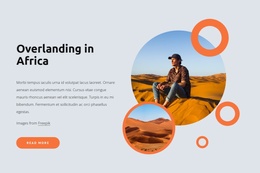

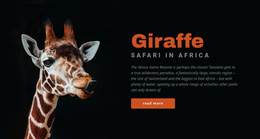








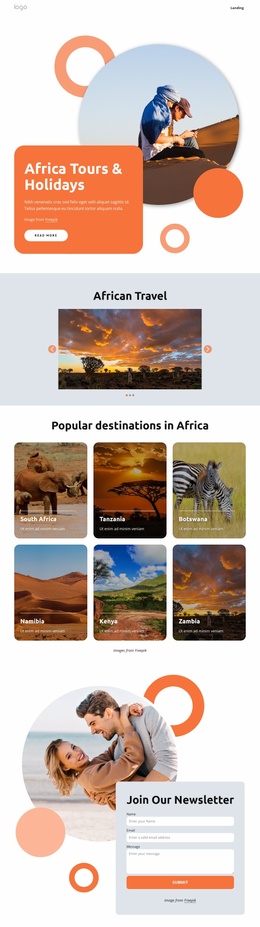
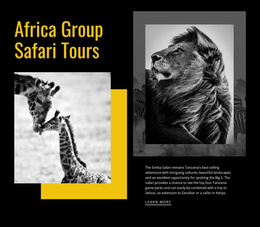



































Other Nature Website Templates
Ready-to-use Africa Website Templates for Connected Regional Sites
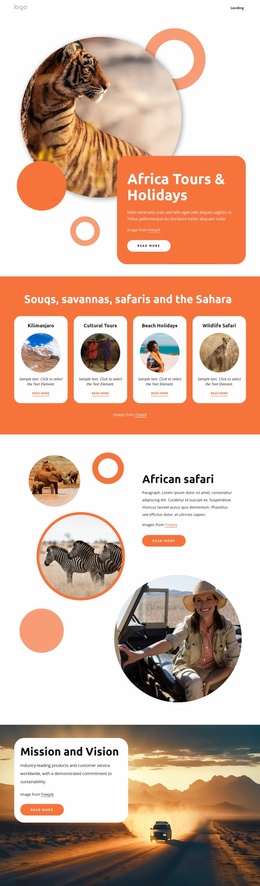
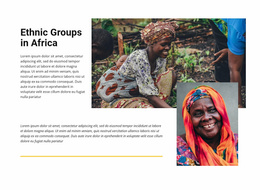
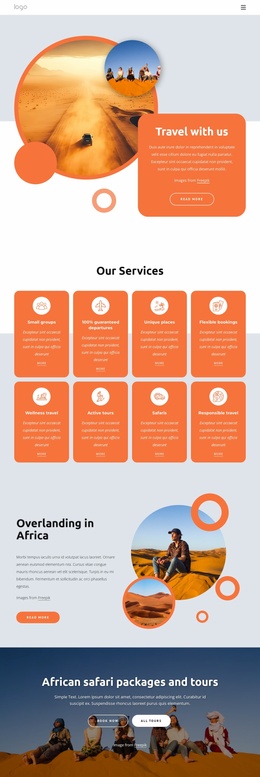
Africa website templates give you the design for a whole site, typically a home page with several inner pages and one menu linking them. Colors and fonts carry over, so visitors never feel they have wandered onto someone else's site. The designs differ mostly in their page sets, since a safari operator and a heritage museum guide people through a site in very different orders.
Which Page Map Your Project Needs
Picking the route visitors should follow narrows the choice quickly, and Africa-focused projects usually settle into one of three page maps:
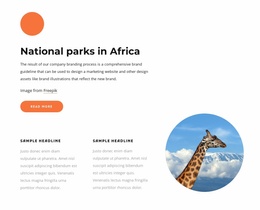
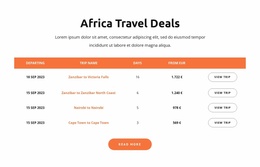
- a safari or tour site, where country and park pages lead into individual itineraries, and every itinerary ends with an inquiry
- a heritage or arts site that moves people from stories and exhibitions toward an events calendar
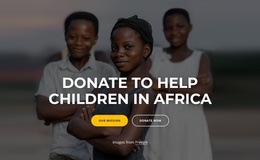
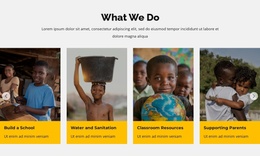
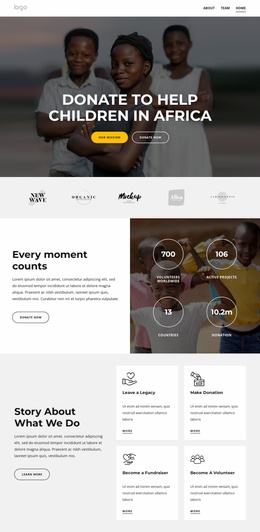
- a charity or community site that explains the cause, gives each project its own page, and keeps the donation link close
Travel sites often need one extra page too, because timing questions are hard to avoid in East Africa. The Great Migration moves between Tanzania's Serengeti and Kenya's Maasai Mara through the year. A short guide on when to go saves a lot of repeated emails.
Nicepage describes this site-level work in its Site Basics documentation, which covers Project Websites and their pages. It makes sense to finalize the page list in the project before adding any photos or copy.
Checks Worth Making Before Committing
Page count is the first filter. A small community project can manage with a handful, while an operator selling trips in several countries needs room for parks, lodges, and itineraries. A long destination list also calls for a menu split by country, or visitors give up before reaching a single trip.
Wildlife or cultural photography also needs strong galleries deeper in the site, since a striking first impression can hide thin detail pages. Visual density matters too: a lodge can let one photo fill the screen, while a conservation charity needs space for anti-poaching results next to its pictures. A tailor-made safari starts with a request listing dates, group size, and budget, so the design should keep that request easy to access in every itinerary.
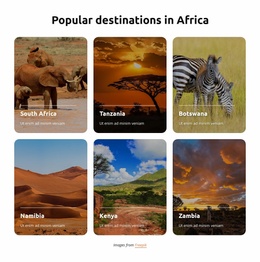
Room for Botswana, Namibia, and Beyond
Before settling, lay your page list next to the one in the demo. When most of your list already has a counterpart, launch comes down to swapping in photos, prices, and text. A wide gap usually indicates that a closer match lies elsewhere in the collection. An operator planning to add Botswana or Namibia after its first season should also check that new country pages fit without a menu redesign.