150 Music & Entertainment Html Code Examples


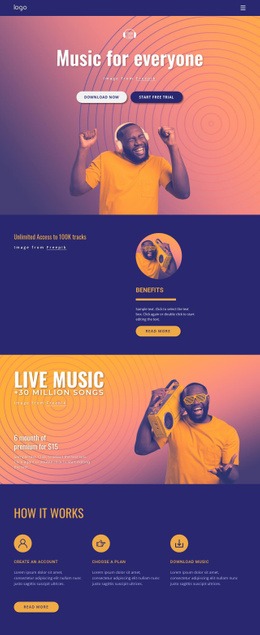
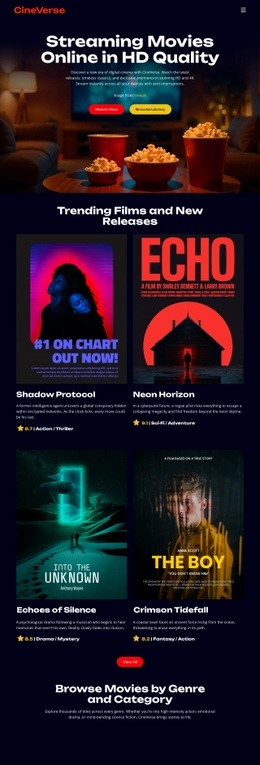


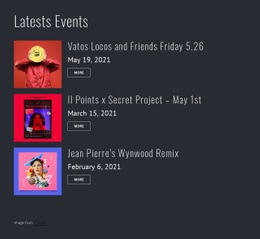
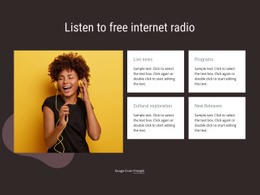








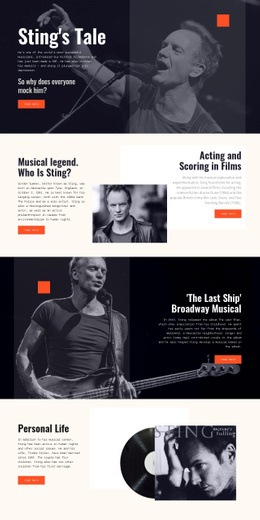
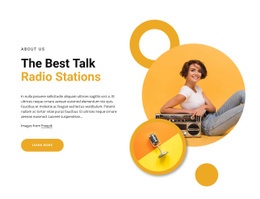









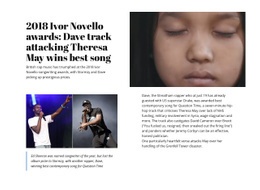





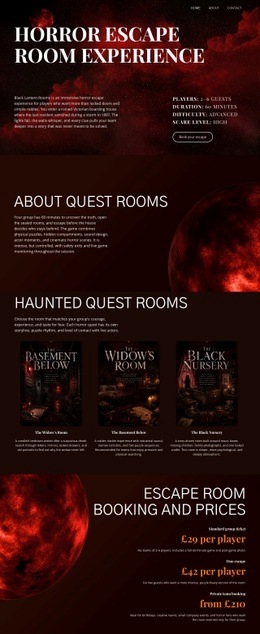















































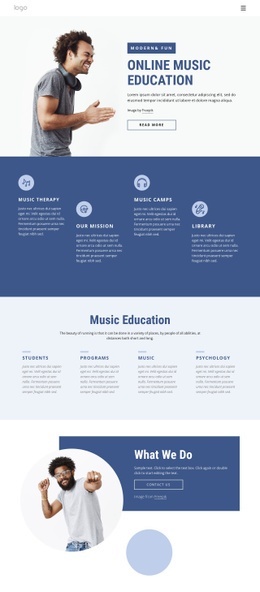
Music & Entertainment HTML Code for Custom Embeds and Extensions
Music & entertainment HTML code is most useful when a developer needs a concrete piece of markup to insert, adapt, or extend rather than an entire finished website template. Bands, event teams, movie promoters, and creative studios may need a custom player wrapper, ticket block, embed container, sponsor strip, or third-party widget to add to an existing page. Nicepage supports this narrower workflow through custom HTML and CSS extension points while keeping the main visual composition editable.
Use Custom HTML for the Part the Builder Does Not Cover
The strongest use case for HTML Code is small and specific. A band site may already have its release and tour layout but may need an embed from a streaming service. An event page may require a ticket widget with its own markup. A movie promotion may need a registration or booking component from a third-party platform. In each case, the custom code extends one part of an existing page rather than defining the complete site.
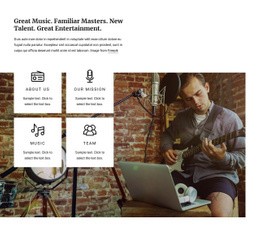
A band website idea can still shape the surrounding release, tour, and media layout. The custom layer should begin only where standard page elements are no longer sufficient.
Custom HTML First, Full-Site Export Second
The Custom HTML Element is the central tool for this type of customization because it provides a controlled place to insert external code into a page. The HTML Element documentation explains how that workflow works when a required element or option is not available directly in Nicepage.
Custom CSS can then style classes or wrappers used by the inserted markup. Nicepage custom CSS controls allow rules at element, page, or site level, which is useful when an embedded ticket panel or player needs to match the entertainment brand.
Full website export remains available, but it is not the main reason to use HTML Code. Export is relevant when a developer wants to inspect the generated project files after the visual layout and custom snippets are already in place.
For concert listings, showcases, and ticket-driven pages, event website concepts can provide the surrounding information hierarchy before a custom schedule or ticket embed is inserted. A movie promotion can similarly use movie campaign direction for the visible campaign structure while a trailer embed, booking widget, or external registration block is handled through custom markup.
Keep Custom Markup Isolated and Maintainable
Treat third-party or hand-written HTML as an extension layer:
- keep the snippet scoped to one clear purpose;
- use readable wrapper classes;
- avoid mixing unrelated scripts and styles into the same block;
- document external dependencies;
- test the embed at desktop and mobile widths;
- keep a copy of the original snippet so later edits are traceable.
This is a different job from choosing an HTML template. The template defines the page or site structure; HTML Code handles the specific markup fragment that needs to be copied, inserted, adapted, or extended.
HTML Code Questions for Music & Entertainment Pages
Can custom external code extend a music or event page?
Yes. The Custom HTML Element can add external code for a required element or option that is not available in the visual editor. It is appropriate for controlled embeds and custom markup blocks.
Can I add custom CSS for an embedded player or ticket widget?
Yes. Custom CSS can target classes used by the inserted markup so the embed can match the page typography, spacing, and visual system.
Is HTML Code the same as an HTML website template?
No. An HTML template gives you a broader page or site structure. HTML Code is the narrower layer: a snippet, embed, or generated block of markup that you insert or extend inside a project.
Technical Limitation to Keep in Mind
A copied snippet can bring its own scripts, inline styles, cookies, loading behavior, or external dependencies. Nicepage can provide the insertion point, but the third-party code still needs developer review. Check whether it loads resources securely, whether its styles leak into the host page, whether it remains usable on mobile, and what happens if the external service is unavailable.
That makes HTML Code a developer-extension topic, not a promise that every pasted embed is automatically optimized or production-safe.