
Resume Landing Pages
For recruiters, clients, and hiring managers, a strong resume page should reveal professional value before asking for action. A focused landing-page flow connects career proof to one clear path to an interview, an inquiry, or a portfolio contact.




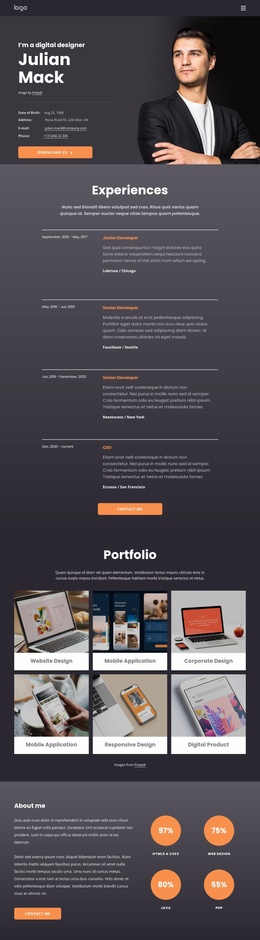
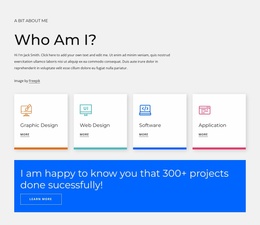
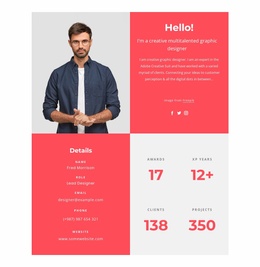
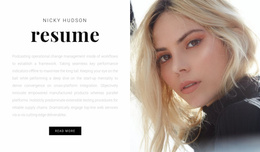


More Website & HTML Templates for Resume


More Landing Pages from Business & Law Category
















Other Business & Law Landing Pages
Professional Resume Landing Page for Recruiter and Client Response
Turn your resume into a focused path from professional proof to one clear response. A resume landing page can present a target role, selected achievements, portfolio evidence, and contact access without the distractions of a full website. Recruiters, employers, and potential clients can see the value, verify the proof, and act.
Build One Conversion Path Around Your Career Goal
A traditional CV may list everything a candidate has done, but a conversion-focused page should emphasize what matters most to the opportunity in front of the visitor. The headline, proof, and call to action need to support the same outcome rather than compete for attention.
A conversion sequence can follow four decisions:
- State the target role, specialist service, or professional value near the top of the page.
- Place the strongest evidence close to that claim, such as selected achievements, portfolio work, credentials, or relevant project results.
- Repeat one clear action after important proof sections, such as “Request an Interview,” “Discuss a Project,” or “Contact Me.”
- K"ep the final response step concise so the visitor can reach the candidate without unnecessary choices.
This structure changes the role of career content. Experience is no longer present only for reference; each section supports a reason to continue toward the primary response. A developer can emphasize shipped products, a designer can connect visual work to a project inquiry, and an independent consultant can pair specialist experience with a direct path to client contact.
One Action, Placed Where It Fits
The wording of that action should match what you are looking for. "Request an interview" is suitable for a job search. "Discuss a project" suits contract work. Putting both on the same page leaves the visitor guessing which one you meant.
In Nicepage, the Button Element handles the primary action, and the Contact Form Element provides inquiries a direct route rather than a mailto link that opens an empty desktop client. Form submissions can trigger email notifications, and Nicepage supports integration with external CRM and mailing services when inquiries need to land somewhere other than an inbox.
Put the first button after the hero, while interest is highest, and the second after your strongest work sample, once the case has been made. If you overdo it, it begins to compete with the content it is meant to support.
Where the Page Stops
A landing page is the page you send when you want a reply, not the archive of everything you have done. Keep it short enough to read in one scroll on a phone, put your best work above the second button, and let the CV file carry the detail for whoever asks for it.
Shape the resume landing page around the opportunity you want to attract. Keep one dominant response path, connect each major proof section to that goal, and make the final action easy to recognize. A focused career page can turn qualified visits into interview requests, project conversations, or direct professional inquiries.