Handyman services Template


Edit Template Offline
2. Create new page and search for id 4724231
Edit Template Online
Create Awesome Websites


Free Nicepage Builder
Keywords
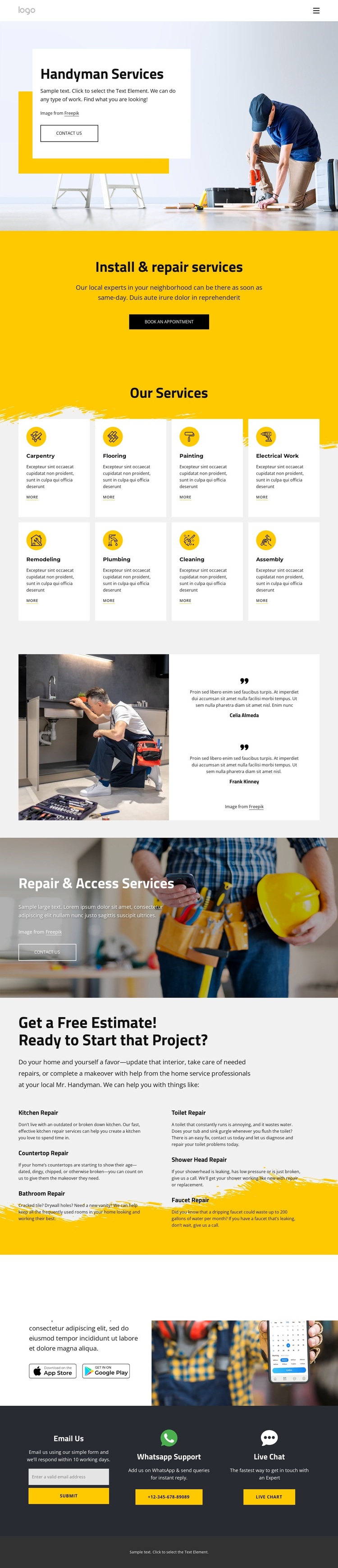
Eight Categories and Six Repair Details Cover the Service Story
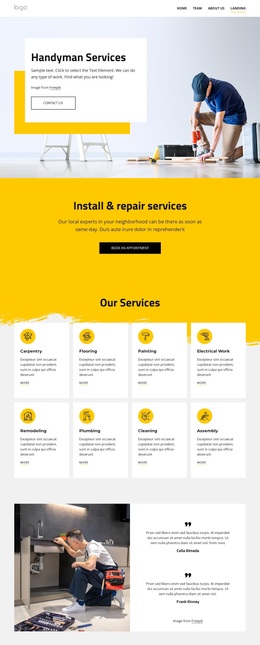
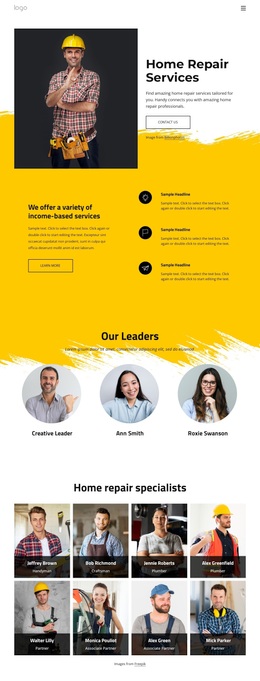
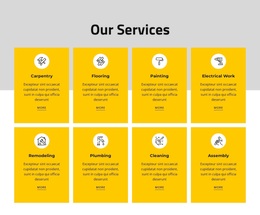
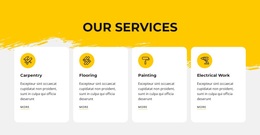
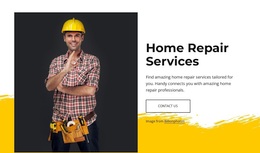
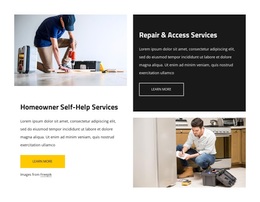
Large repair imagery gives this design an immediate subject, but its strongest distinguishing feature is the way it combines broad service coverage with specific project information. The eight-card catalog presents the main categories—carpentry, flooring, painting, electrical work, remodeling, plumbing, cleaning, and assembly—in a compact format. That makes the design suitable for a provider that needs to show range without opening with dense paragraphs.
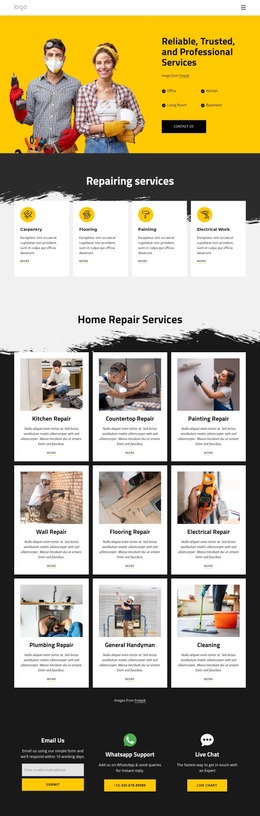
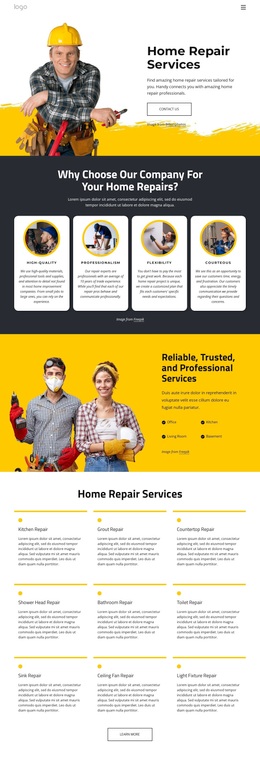
The later estimate section adds a more focused layer through six repair descriptions for kitchens, countertops, bathrooms, toilets, shower heads, and faucets. This relationship between the general catalog and the detailed list helps visitors recognize both the overall scope and the kinds of smaller jobs the page addresses. Two testimonial entries and a repair photograph then provide a separate reassurance moment instead of interrupting the service grid.
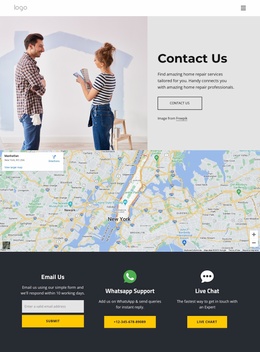
The yellow booking panel, easy-booking section, and final contact area make the design practical for projects that need a visible response path. Email, WhatsApp, and live chat are presented as different support channels, giving the page broader contact coverage than a design that relies on one button alone. As a ready-made option, it is especially suited to home repair projects that need visual context, clear service organization, detailed examples, and several ways to request help.
Customize with Nicepage
Open this ready-made template in the Template Builder and customize it visually in the Nicepage editor. Replace demo content, edit page sections, and adapt the design to your project without rebuilding the template from scratch.
Start With a Ready-Made Template
Choose a Design for a New Page
Use a ready-made template as a starting point instead of creating every page from a blank canvas. When adding a new page in Nicepage, browse available designs, compare different layouts, and choose an option that already fits the general purpose and visual direction of your project.
Browse Different Page Designs
Explore Page Designs using search, thematic categories, Design Sets, and full-page previews. The collection includes layouts for different subjects and page purposes, making it easier to compare alternatives before selecting a design to customize.
Customize the Selected Template
After choosing a design, create the page and continue editing it visually in Nicepage. Replace the demo content, adjust images, typography, colors, sections, and other elements, and adapt the ready-made layout to your own content instead of rebuilding the design from the beginning.
Explore More Design Directions
If the first option does not match your project closely enough, return to the design collection and compare other templates before committing to a layout. This makes the template library useful not only for faster page creation, but also for exploring different visual approaches and finding a suitable starting point for a new project.
This workflow gives you access to a broad collection of ready-made designs that can be selected, compared, and customized according to the needs of each new page or project.