Travel and photography Template


Edit Template Offline
2. Create new page and search for id 39714
Edit Template Online
Create Awesome Websites


Free Nicepage Builder
Keywords
Two Career Routes Framed by Strong Editorial Imagery
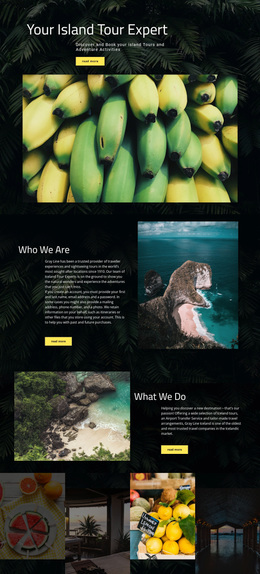
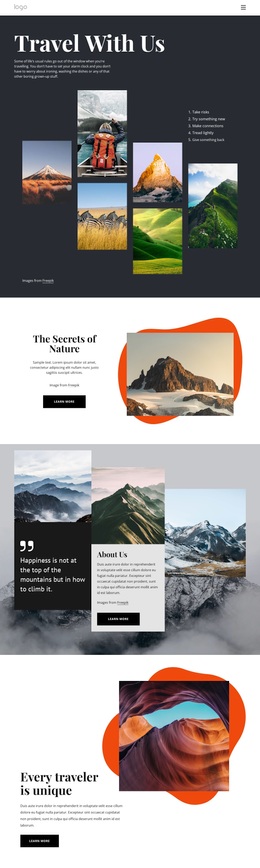
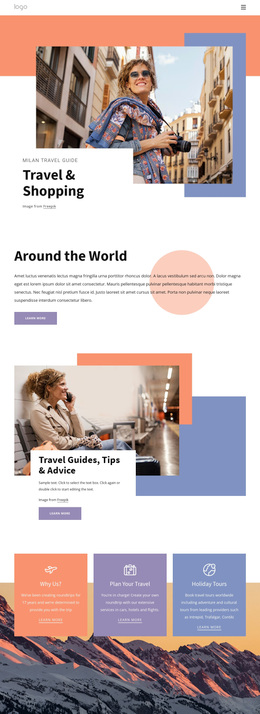
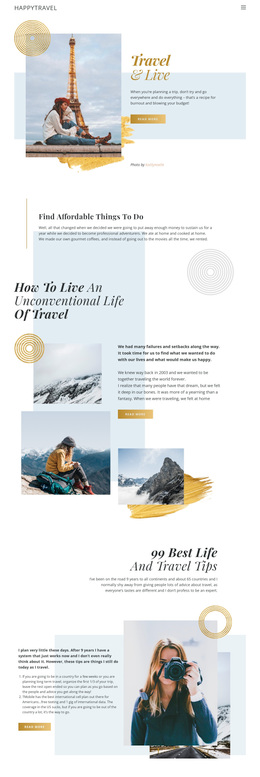
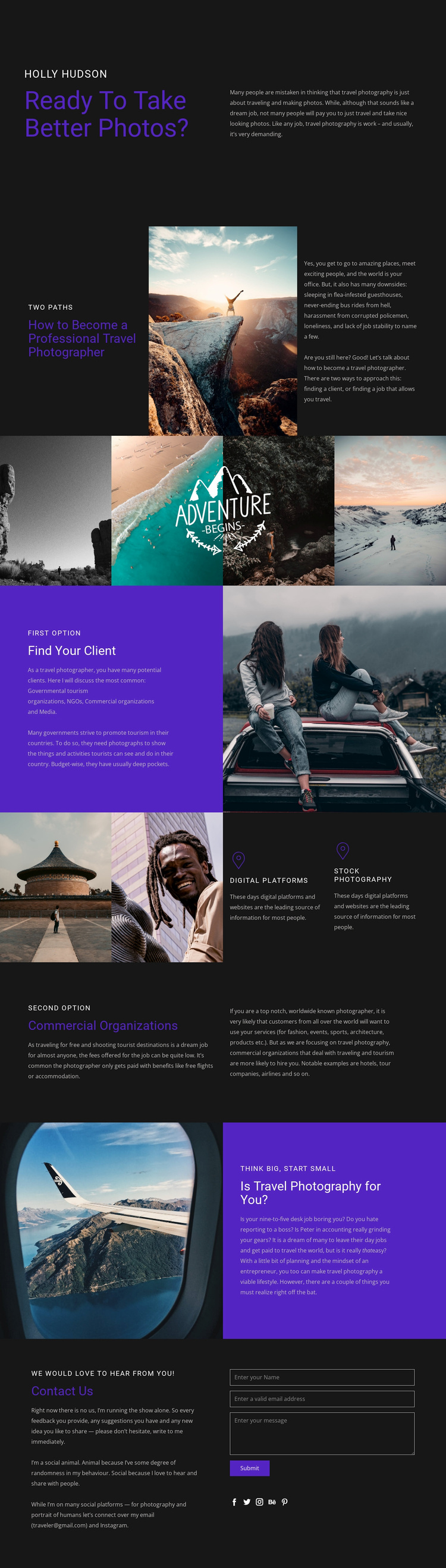
The design is a distinctive option because it treats travel photography as both an educational subject and the main visual evidence of the page. The opening question about taking better photos creates an immediate connection between the reader’s interest and the imagery that follows. Instead of relying on dense uninterrupted text, the article explains two career routes through alternating text panels, travel photographs, and supporting explanations.
Its content coverage is also unusually focused. The “Find Your Client” section introduces one route, while the feature area identifies digital platforms and stock photography as specific avenues. “Commercial Organizations” develops the other direction through tourism-related opportunities, including governmental tourism organizations, NGOs, media, hotels, tour companies, and airlines. This gives the page more practical range than a generic photography portfolio while keeping the subject centered on travel and career development.
The four-image gallery strengthens the choice for projects that need visual pauses between explanatory sections. The closing self-assessment section adds a reflective use case, and the contact area gives readers a direct way to respond through an email address, form, and social links. Together, these relationships suit an educational photography article, career guide, or advisor-led presentation where images should carry atmosphere while structured sections carry practical guidance. The design is therefore worth considering for its combination of subject clarity, visual storytelling, and response-oriented finish.
Customize with Nicepage
Open this ready-made template in the Template Builder and customize it visually in the Nicepage editor. Replace demo content, edit page sections, and adapt the design to your project without rebuilding the template from scratch.
Start With a Ready-Made Template
Choose a Design for a New Page
Use a ready-made template as a starting point instead of creating every page from a blank canvas. When adding a new page in Nicepage, browse available designs, compare different layouts, and choose an option that already fits the general purpose and visual direction of your project.
Browse Different Page Designs
Explore Page Designs using search, thematic categories, Design Sets, and full-page previews. The collection includes layouts for different subjects and page purposes, making it easier to compare alternatives before selecting a design to customize.
Customize the Selected Template
After choosing a design, create the page and continue editing it visually in Nicepage. Replace the demo content, adjust images, typography, colors, sections, and other elements, and adapt the ready-made layout to your own content instead of rebuilding the design from the beginning.
Explore More Design Directions
If the first option does not match your project closely enough, return to the design collection and compare other templates before committing to a layout. This makes the template library useful not only for faster page creation, but also for exploring different visual approaches and finding a suitable starting point for a new project.
This workflow gives you access to a broad collection of ready-made designs that can be selected, compared, and customized according to the needs of each new page or project.