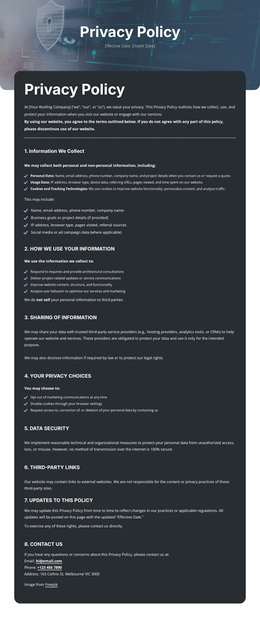
Trust begins with transparency Template


Edit Template Offline
2. Create new page and search for id 6542693
Edit Template Online
Create Awesome Websites


Free Nicepage Builder
Keywords
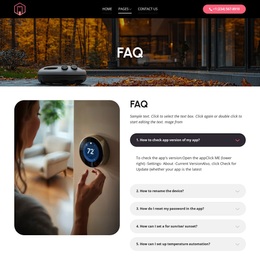
A Text-First Choice With Strong Site Context
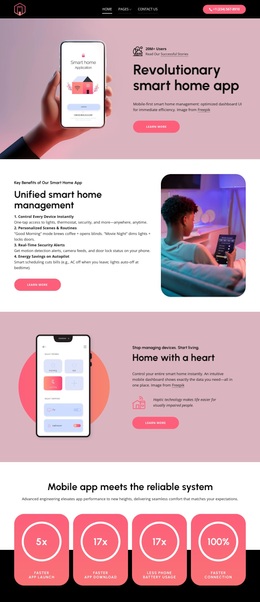
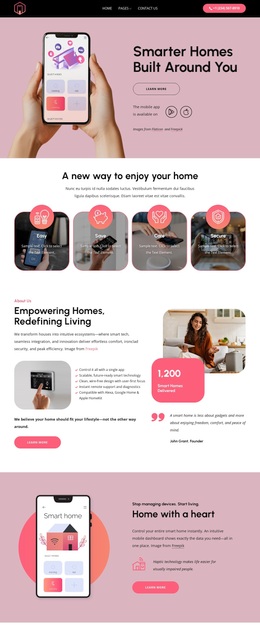
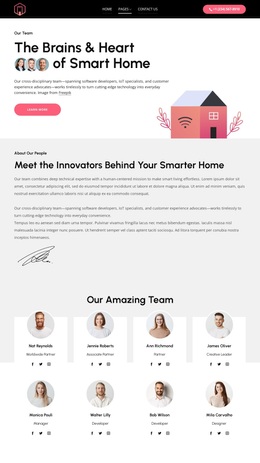
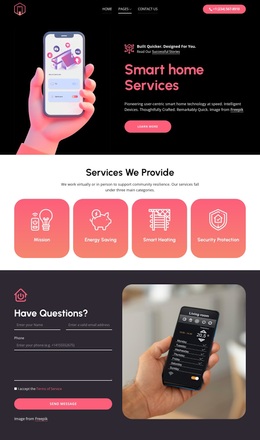
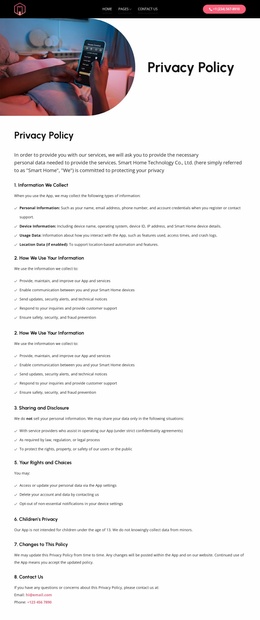
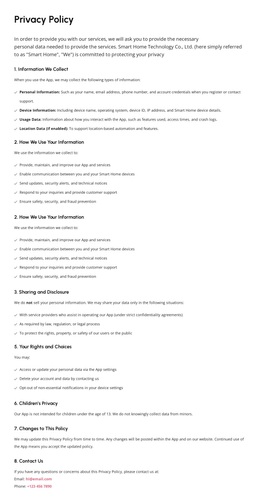
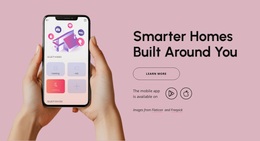
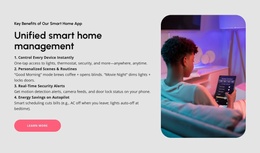
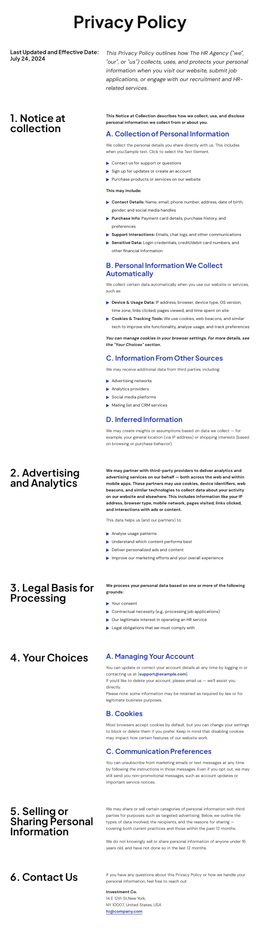
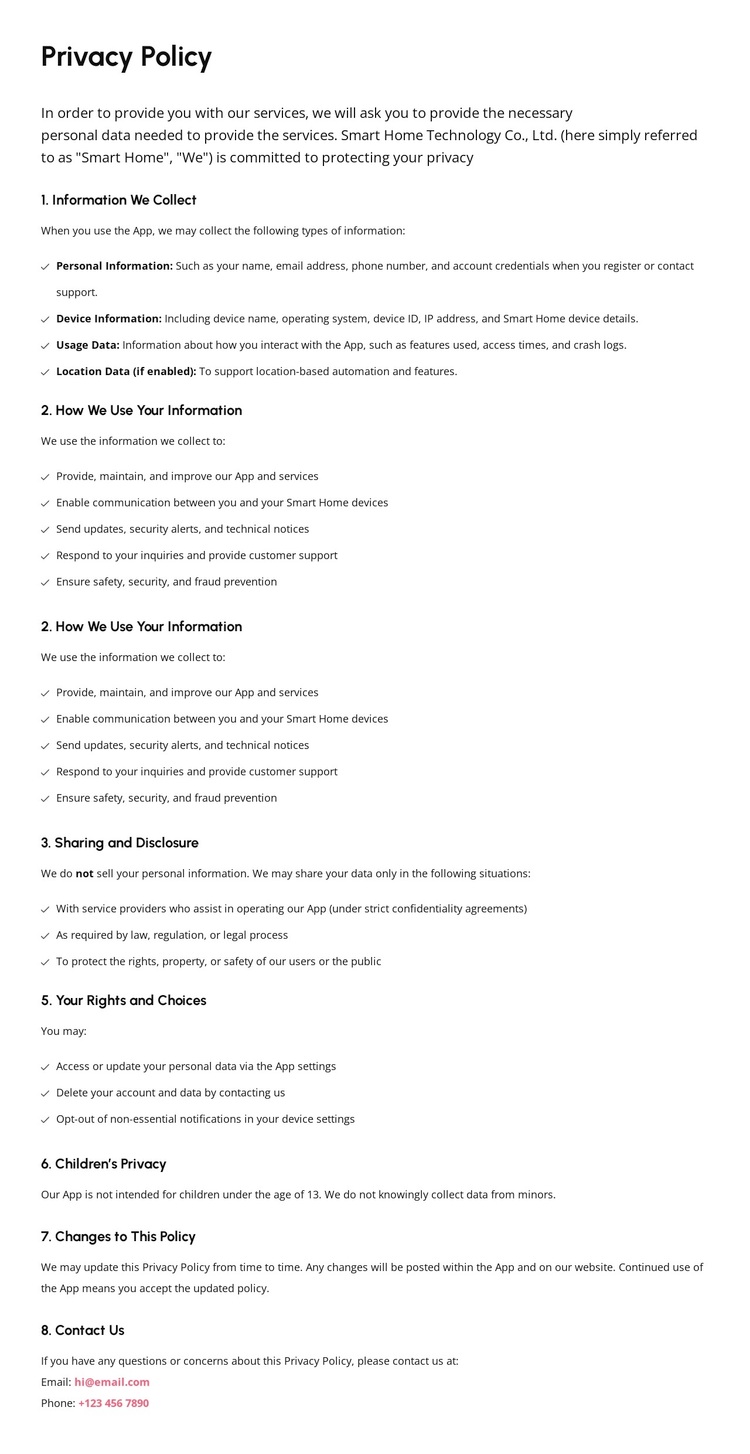
The page is worth choosing when a project needs policy content to feel like part of an established service website rather than an isolated legal document. The dark header gives the page immediate site context through the logo, navigation, pages menu, and phone contact action. The soft pink banner then creates a visible document marker, pairing a short smart-home statement with the Privacy Policy title before the reader reaches the denser text.
Its content coverage is another reason to select the design. The opening section identifies personal, device, usage, and location data, while the later numbered subjects explain information use, sharing and disclosure, user rights and choices, children’s privacy, policy changes, and contact inquiries. That range makes the layout suitable for projects that need more than a short legal notice. The dark footer reinforces the same choice by combining office contact details with quick links, solution references, help and support, and copyright content. The result is a restrained, document-led option for app or home-automation projects where transparency, navigation, and contact access need to coexist. It favors organized reading and clear site relationships over decorative presentation or a sales-oriented message.
Customize with Nicepage
Open this ready-made template in the Template Builder and customize it visually in the Nicepage editor. Replace demo content, edit page sections, and adapt the design to your project without rebuilding the template from scratch.
Start With a Ready-Made Template
Choose a Design for a New Page
Use a ready-made template as a starting point instead of creating every page from a blank canvas. When adding a new page in Nicepage, browse available designs, compare different layouts, and choose an option that already fits the general purpose and visual direction of your project.
Browse Different Page Designs
Explore Page Designs using search, thematic categories, Design Sets, and full-page previews. The collection includes layouts for different subjects and page purposes, making it easier to compare alternatives before selecting a design to customize.
Customize the Selected Template
After choosing a design, create the page and continue editing it visually in Nicepage. Replace the demo content, adjust images, typography, colors, sections, and other elements, and adapt the ready-made layout to your own content instead of rebuilding the design from the beginning.
Explore More Design Directions
If the first option does not match your project closely enough, return to the design collection and compare other templates before committing to a layout. This makes the template library useful not only for faster page creation, but also for exploring different visual approaches and finding a suitable starting point for a new project.
This workflow gives you access to a broad collection of ready-made designs that can be selected, compared, and customized according to the needs of each new page or project.

Design Set (23)
-

-
-
-
-
-
-
-
-
-
-
Free Website Builder SoftwareDownload
-
-
-