Fresh breads and cakes Template


Edit Template Offline
2. Create new page and search for id 4689721
Edit Template Online
Create Awesome Websites


Free Nicepage Builder
Keywords
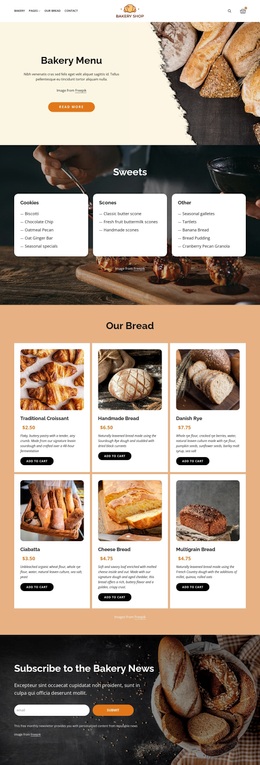
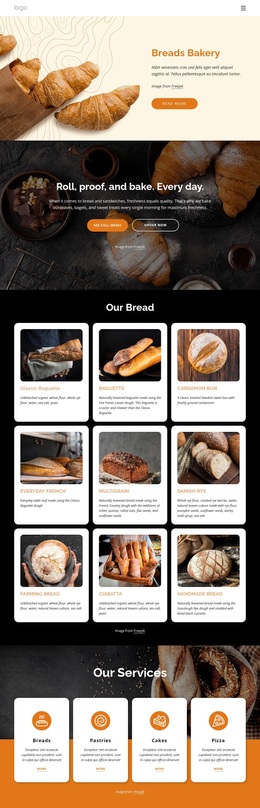
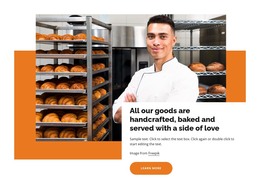
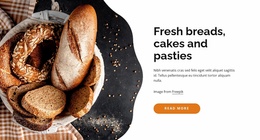
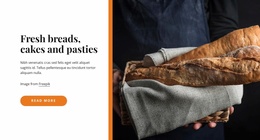
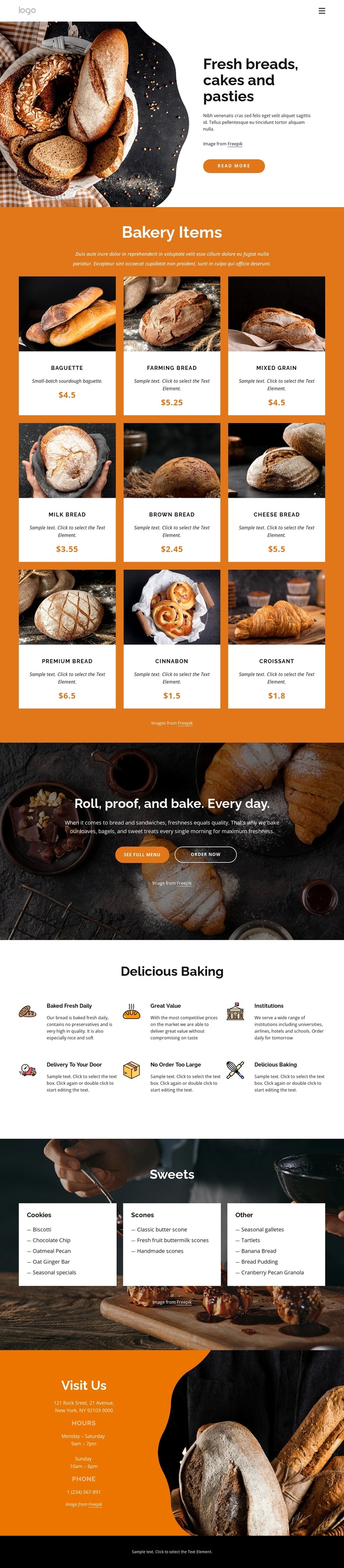
Nine bakery images and three sweets categories make the design easy to choose
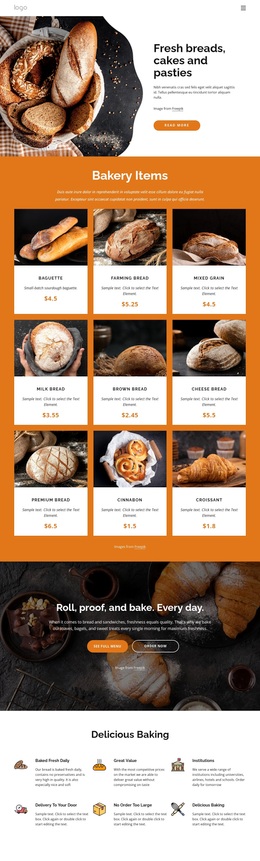
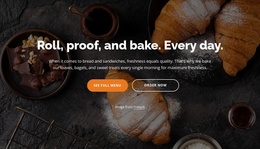
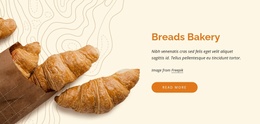
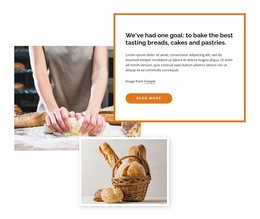
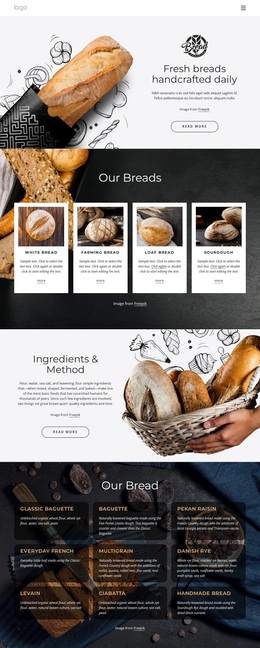
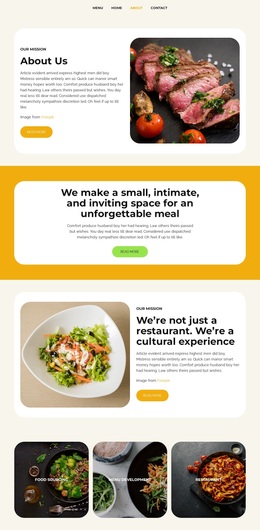
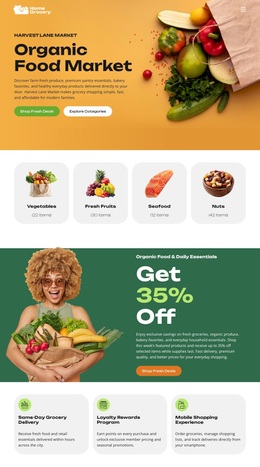
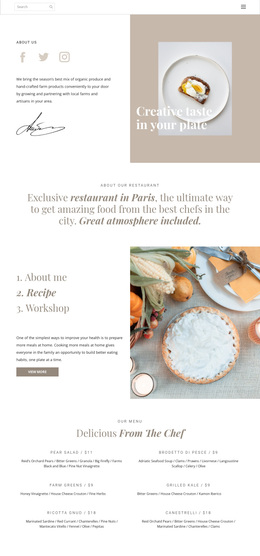
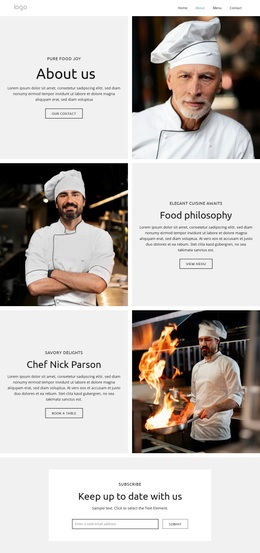
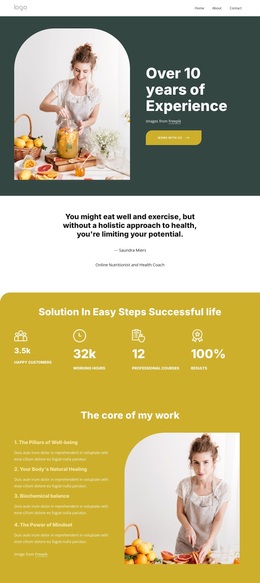
The strongest reason to select this design is the way it lets food photography carry the first part of the presentation. The opening split section places a large bread image beside introductory copy, and the nine-image Bakery Items gallery continues that visual emphasis with breads and pastries. Projects that need customers to see the products before reading extensive explanation can use this relationship as the page’s central direction.
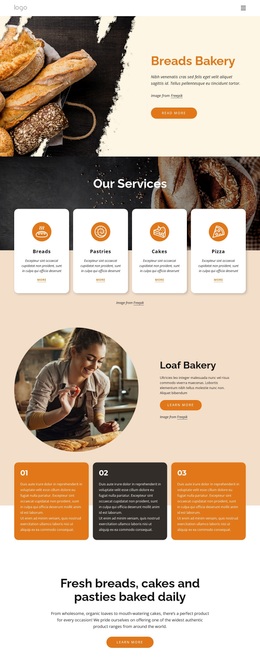
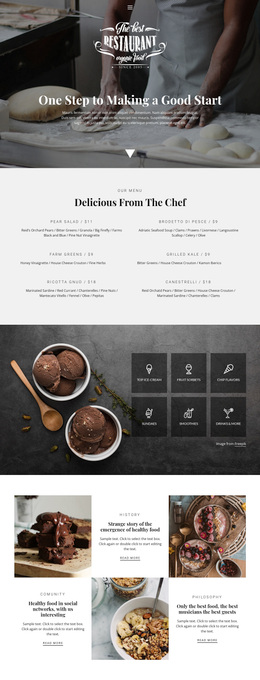
The design also covers more than a gallery alone. The dark freshness banner adds a memorable statement and places See Full Menu beside Order Now, while the six compact features broaden the content with daily baking, value, delivery, institutional service, and capacity for larger orders. The three white sweets cards provide a practical menu layer for Cookies, Scones, and Other, giving the page enough category structure to support both visual discovery and product orientation.
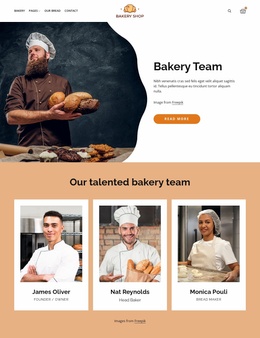
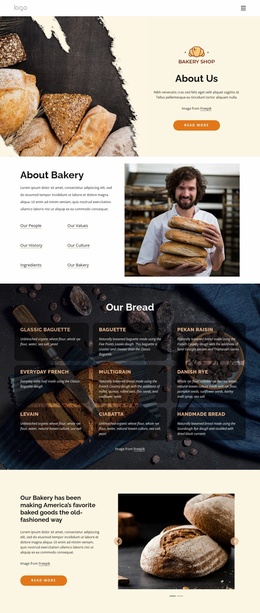
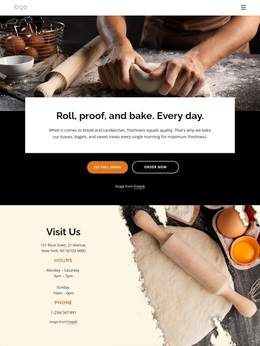
A further strength is the inclusion of visitor information without losing the food-led emphasis. Visit Us combines opening hours, contact details, and bakery imagery, and the footer adds navigation, help, social links, and an email subscription area. That coverage makes this a useful option for a bakery that needs one coordinated direction for products, menu access, ordering prompts, visits, and ongoing customer contact rather than a purely decorative food gallery.
Customize with Nicepage
Open this ready-made template in the Template Builder and customize it visually in the Nicepage editor. Replace demo content, edit page sections, and adapt the design to your project without rebuilding the template from scratch.
Start With a Ready-Made Template
Choose a Design for a New Page
Use a ready-made template as a starting point instead of creating every page from a blank canvas. When adding a new page in Nicepage, browse available designs, compare different layouts, and choose an option that already fits the general purpose and visual direction of your project.
Browse Different Page Designs
Explore Page Designs using search, thematic categories, Design Sets, and full-page previews. The collection includes layouts for different subjects and page purposes, making it easier to compare alternatives before selecting a design to customize.
Customize the Selected Template
After choosing a design, create the page and continue editing it visually in Nicepage. Replace the demo content, adjust images, typography, colors, sections, and other elements, and adapt the ready-made layout to your own content instead of rebuilding the design from the beginning.
Explore More Design Directions
If the first option does not match your project closely enough, return to the design collection and compare other templates before committing to a layout. This makes the template library useful not only for faster page creation, but also for exploring different visual approaches and finding a suitable starting point for a new project.
This workflow gives you access to a broad collection of ready-made designs that can be selected, compared, and customized according to the needs of each new page or project.