Celia Almeda personal page Template



Edit Template Offline
2. Create new page and search for id 3064701
Edit Template Online
Create Awesome Websites


Free Nicepage Builder
Keywords
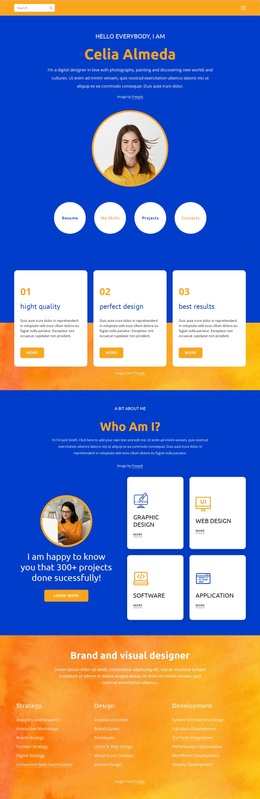
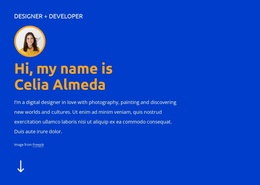
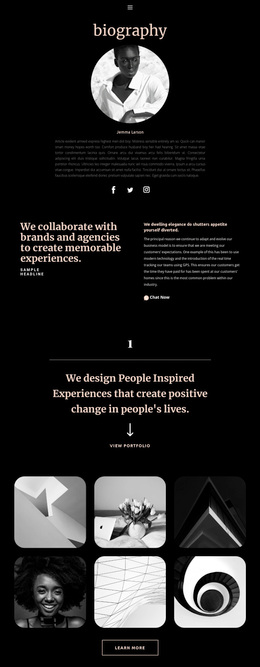
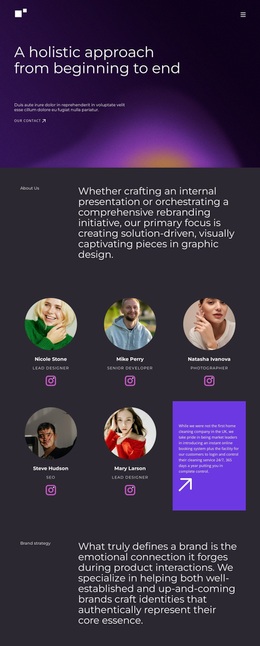
A portrait-led profile connects capabilities with visible portfolio work
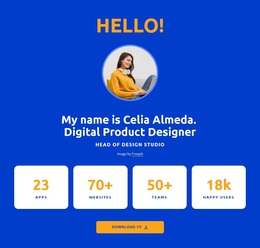
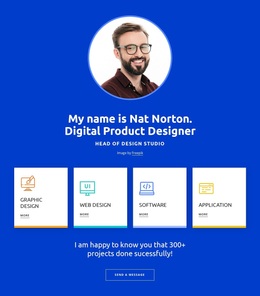
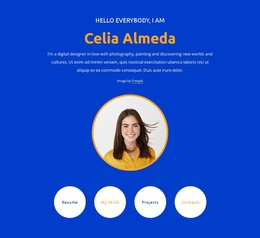
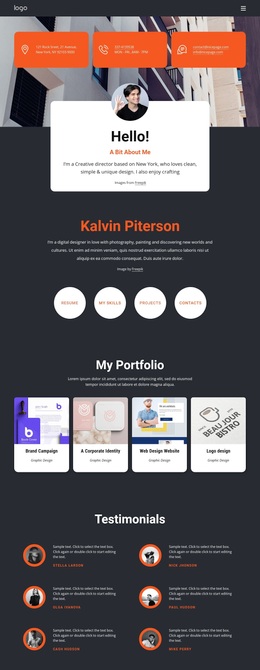
The design is worth considering when a personal portfolio needs to communicate both creative identity and a broad range of services. The opening blue profile area puts the designer’s name, portrait, biography, and four circular actions at the center of the experience. That combination gives the page a personal starting point instead of leading with a generic service list, while the resume, skills, contacts, and projects actions make the main content areas immediately apparent.
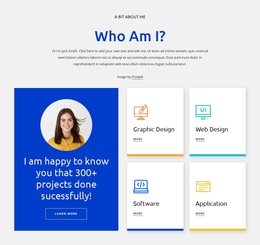
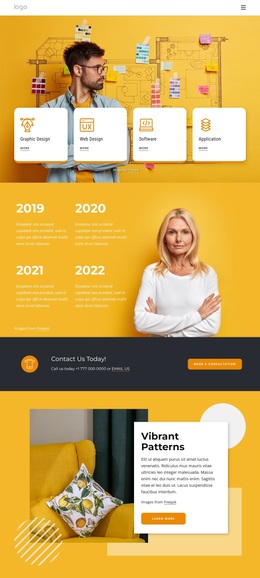
The page then balances concise qualification with more detailed professional coverage. Three white quality cards provide quick highlights, and the “Who Am I?” section adds four skill categories covering graphic design, web design, software, and applications. The orange capability section expands the offer into strategy, design, and development, with supporting references to areas such as brand strategy, UI/UX, and full-stack development. This makes the design suitable for a designer whose work crosses visual and technical disciplines.
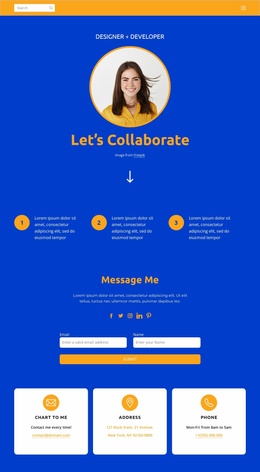
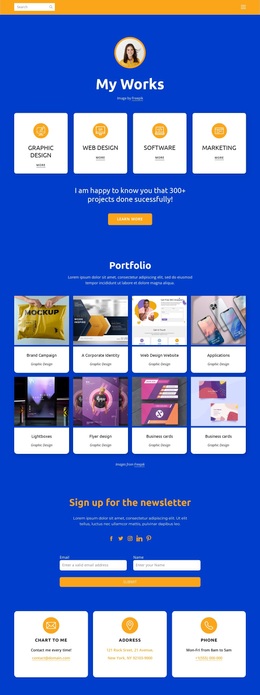
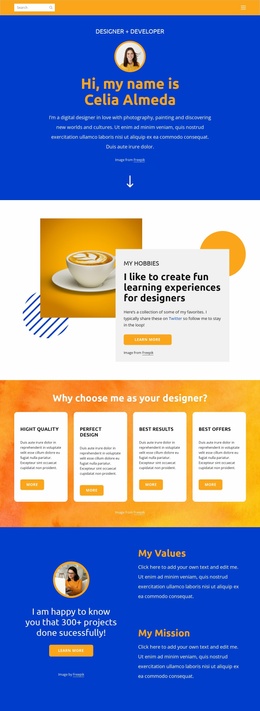
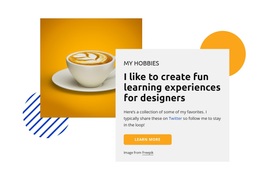
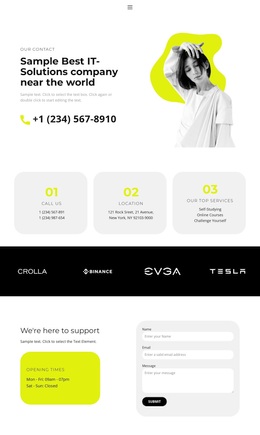
The six-image portfolio gallery is the strongest reason to choose the layout for image-led storytelling. An overlapping description card keeps context close to the work, while the later metrics, social links, and contact form support a transition from viewing projects to beginning a conversation. The result is a ready-made option for a designer who needs more than a biography: it connects personality, capabilities, work examples, and contact opportunities in one energetic presentation.
Customize with Nicepage
Open this ready-made template in the Template Builder and customize it visually in the Nicepage editor. Replace demo content, edit page sections, and adapt the design to your project without rebuilding the template from scratch.
Start With a Ready-Made Template
Choose a Design for a New Page
Use a ready-made template as a starting point instead of creating every page from a blank canvas. When adding a new page in Nicepage, browse available designs, compare different layouts, and choose an option that already fits the general purpose and visual direction of your project.
Browse Different Page Designs
Explore Page Designs using search, thematic categories, Design Sets, and full-page previews. The collection includes layouts for different subjects and page purposes, making it easier to compare alternatives before selecting a design to customize.
Customize the Selected Template
After choosing a design, create the page and continue editing it visually in Nicepage. Replace the demo content, adjust images, typography, colors, sections, and other elements, and adapt the ready-made layout to your own content instead of rebuilding the design from the beginning.
Explore More Design Directions
If the first option does not match your project closely enough, return to the design collection and compare other templates before committing to a layout. This makes the template library useful not only for faster page creation, but also for exploring different visual approaches and finding a suitable starting point for a new project.
This workflow gives you access to a broad collection of ready-made designs that can be selected, compared, and customized according to the needs of each new page or project.