Design studio works Template


Edit Template Offline
2. Create new page and search for id 6325297
Edit Template Online
Create Awesome Websites


Free Nicepage Builder
Keywords
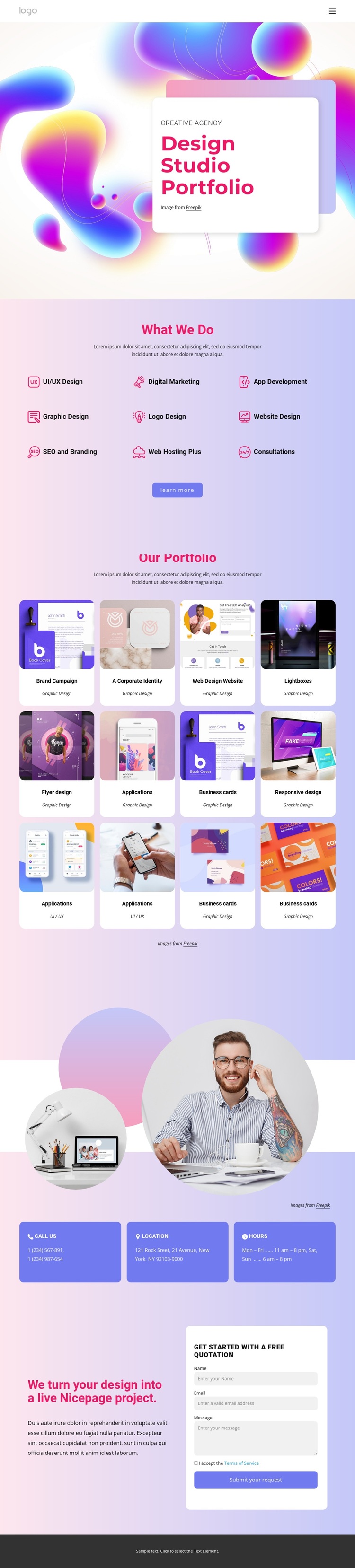
Nine services and twelve projects give the design a clear creative focus
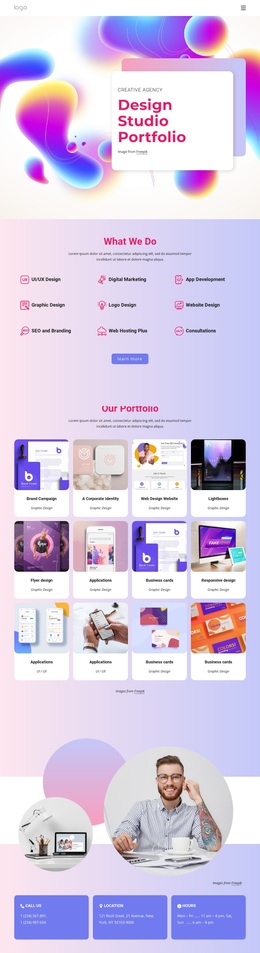
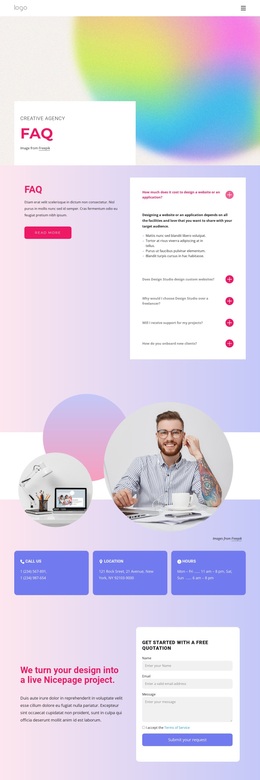
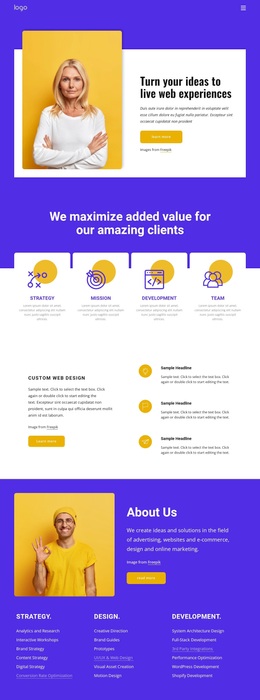
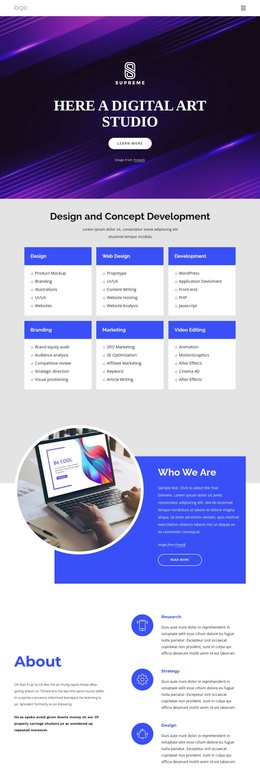
The page begins with a strong visual signal: a centered white panel reading “Design Studio Portfolio” sits over vivid abstract artwork. That combination immediately identifies the design as portfolio-led rather than as a text-heavy corporate layout. The next section broadens its usefulness by presenting nine service categories, including UI/UX design, digital marketing, app development, graphic design, logo design, website design, SEO and branding, web hosting, and consultations.
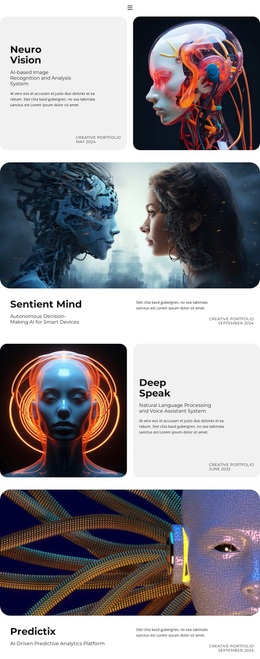
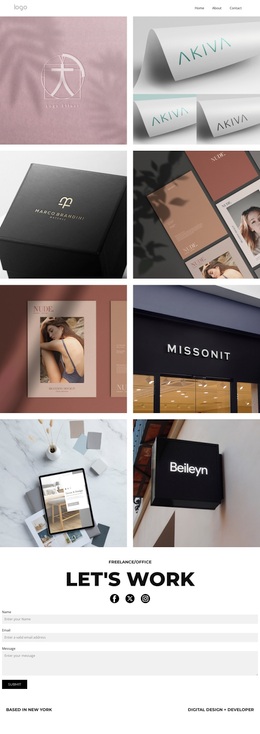
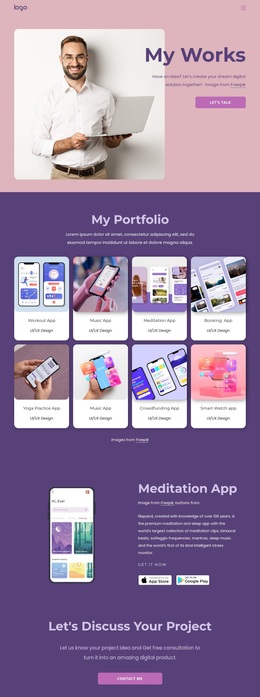
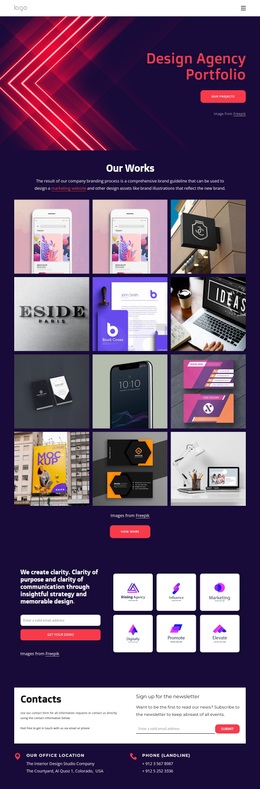
The twelve-item gallery is the most distinctive content feature because it turns the studio’s capabilities into visible project examples. Repeated image cards carry titles and category labels, allowing the layout to support both graphic and UI/UX-oriented work without requiring a separate page for every offering. The pastel gradients, magenta headings, compact typography, and rounded cards keep those different content types within one recognizable visual direction.
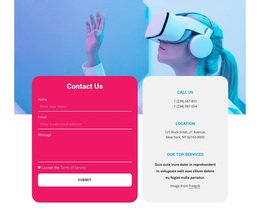
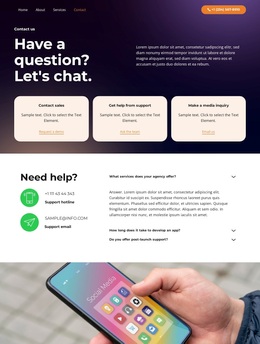
Three contact-information cards add practical context, and the final quotation section gives the design a clear next step through name, email, and message inputs and a request button. As a ready-made option, the template is most suitable for projects that need to show creative range before inviting a prospective client to ask for a quotation. Its value comes from the combined coverage of services, visual proof, contact details, and response content.
Customize with Nicepage
Open this ready-made template in the Template Builder and customize it visually in the Nicepage editor. Replace demo content, edit page sections, and adapt the design to your project without rebuilding the template from scratch.
Start With a Ready-Made Template
Choose a Design for a New Page
Use a ready-made template as a starting point instead of creating every page from a blank canvas. When adding a new page in Nicepage, browse available designs, compare different layouts, and choose an option that already fits the general purpose and visual direction of your project.
Browse Different Page Designs
Explore Page Designs using search, thematic categories, Design Sets, and full-page previews. The collection includes layouts for different subjects and page purposes, making it easier to compare alternatives before selecting a design to customize.
Customize the Selected Template
After choosing a design, create the page and continue editing it visually in Nicepage. Replace the demo content, adjust images, typography, colors, sections, and other elements, and adapt the ready-made layout to your own content instead of rebuilding the design from the beginning.
Explore More Design Directions
If the first option does not match your project closely enough, return to the design collection and compare other templates before committing to a layout. This makes the template library useful not only for faster page creation, but also for exploring different visual approaches and finding a suitable starting point for a new project.
This workflow gives you access to a broad collection of ready-made designs that can be selected, compared, and customized according to the needs of each new page or project.