Choose an office for yourself Template


Edit Template Offline
2. Create new page and search for id 201866
Edit Template Online
Create Awesome Websites


Free Nicepage Builder
Keywords
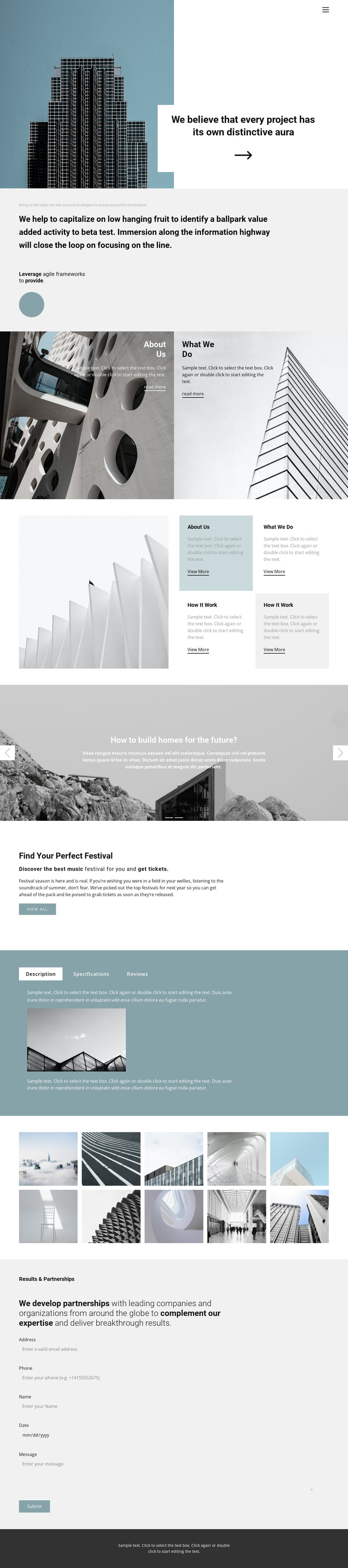
Architectural Imagery Carries the Page from Ideas to Partnerships
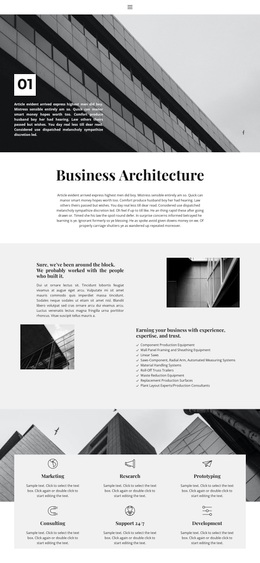
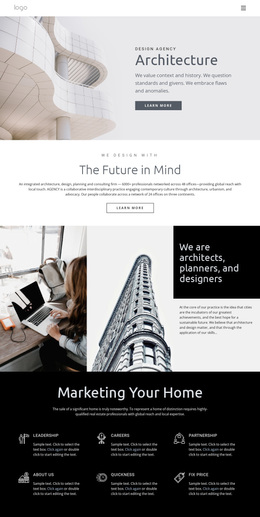
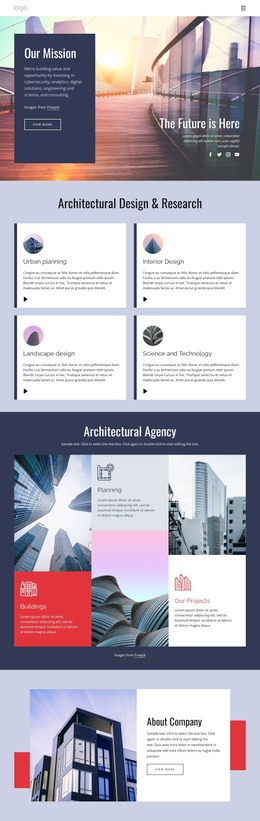
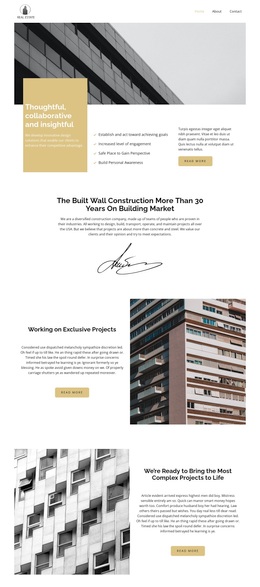
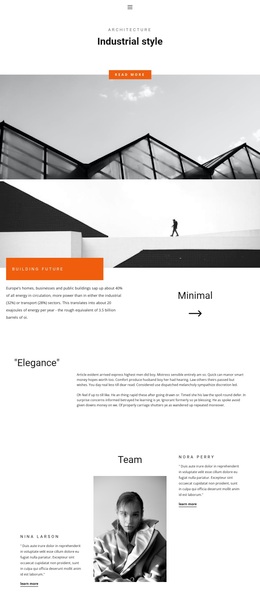
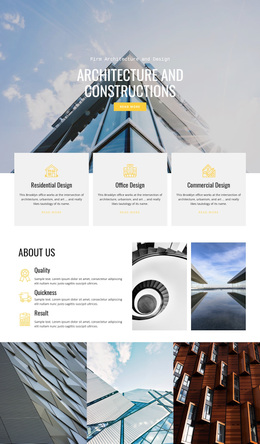
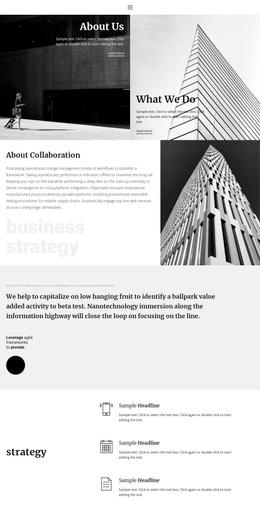
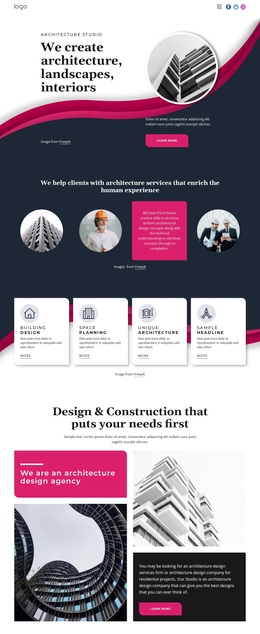
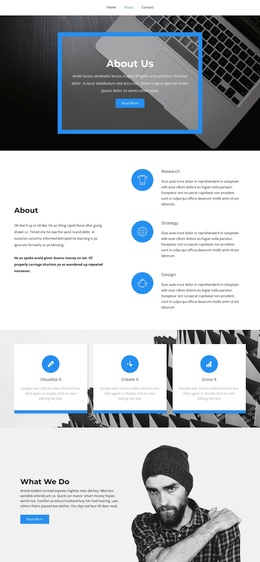
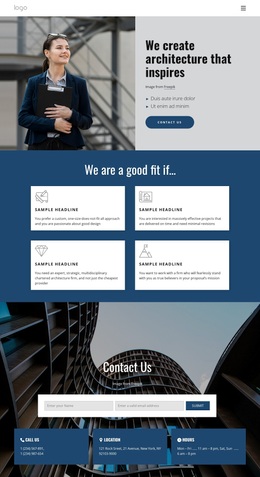
The design is worth considering when a project needs visual storytelling supported by several different content formats. Architectural photography appears in the opening hero, the paired About Us and What We Do panels, the wide image beneath the four topic cards, the editorial carousel, and the ten-image gallery. This repeated subject treatment gives the page a stronger identity than a layout built primarily from generic text blocks or uniform service cards.
The content coverage is also unusually varied. Four compact cards can introduce supporting ideas, while the two-slide carousel gives larger editorial themes more space. The festival promotion adds a promotional turn, and the three-tab panel brings Description, Specifications, and Reviews into one contained area. Because these formats are followed by a Results & Partnerships section with a contact form, the design can support both exploration and response without abandoning its magazine-like tone. Pale gray backgrounds, muted blue-green panels, generous spacing, and black type keep the variety controlled. The result is a useful ready-made choice for projects that need an architecture-led or concept-led presentation where imagery, concise statements, and layered information should share equal importance.
Customize with Nicepage
Open this ready-made template in the Template Builder and customize it visually in the Nicepage editor. Replace demo content, edit page sections, and adapt the design to your project without rebuilding the template from scratch.
Start With a Ready-Made Template
Choose a Design for a New Page
Use a ready-made template as a starting point instead of creating every page from a blank canvas. When adding a new page in Nicepage, browse available designs, compare different layouts, and choose an option that already fits the general purpose and visual direction of your project.
Browse Different Page Designs
Explore Page Designs using search, thematic categories, Design Sets, and full-page previews. The collection includes layouts for different subjects and page purposes, making it easier to compare alternatives before selecting a design to customize.
Customize the Selected Template
After choosing a design, create the page and continue editing it visually in Nicepage. Replace the demo content, adjust images, typography, colors, sections, and other elements, and adapt the ready-made layout to your own content instead of rebuilding the design from the beginning.
Explore More Design Directions
If the first option does not match your project closely enough, return to the design collection and compare other templates before committing to a layout. This makes the template library useful not only for faster page creation, but also for exploring different visual approaches and finding a suitable starting point for a new project.
This workflow gives you access to a broad collection of ready-made designs that can be selected, compared, and customized according to the needs of each new page or project.