Fresh vegetable salad Template


A Split Featured-Product Design With One Clear Focus
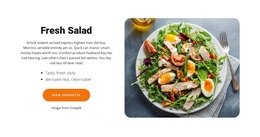
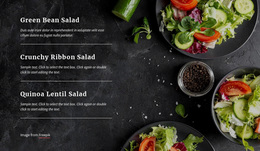
The choice of this block comes from the way it concentrates one food offering into a compact, visually balanced arrangement. Instead of using a larger collection of product cards, it gives the “Fresh Salad” heading, supporting paragraph, and two bullet points a centered text column, then pairs them with one large salad photograph. That structure is useful when a page needs to give one featured item more attention than a list of equal alternatives.
The right-side image adds visual presence without interrupting the reading order of the left column. Its rounded corners soften the boundary between the photograph and the white background, while the orange “View Products” button provides a distinct next step beneath the product attributes. The black typography and generous whitespace keep the section restrained enough for the photograph to remain the main visual counterweight.
Among ready-made section alternatives, this design fits a project that needs product presentation with a clear image-to-information relationship and limited content density. It can introduce a highlighted meal, support a menu-related transition, or give one offering a dedicated moment within a restaurant page. The block remains focused because the static layout contains one product subject, two supporting points, and one action rather than attempting to represent an entire catalog.
Customize with Nicepage
Open this ready-made template in the Template Builder and customize it visually in the Nicepage editor. Replace demo content, edit page sections, and adapt the design to your project without rebuilding the template from scratch.
Edit Template Offline
2. Create a new page or select existing
3. Click Add new block, search for id 3791612 and click enter
Edit Template Online
Create Awesome Websites


Free Nicepage Builder
Keywords
Start With a Ready-Made Template
Choose a Design for a New Page
Use a ready-made template as a starting point instead of creating every page from a blank canvas. When adding a new page in Nicepage, browse available designs, compare different layouts, and choose an option that already fits the general purpose and visual direction of your project.
Browse Different Page Designs
Explore Page Designs using search, thematic categories, Design Sets, and full-page previews. The collection includes layouts for different subjects and page purposes, making it easier to compare alternatives before selecting a design to customize.
Customize the Selected Template
After choosing a design, create the page and continue editing it visually in Nicepage. Replace the demo content, adjust images, typography, colors, sections, and other elements, and adapt the ready-made layout to your own content instead of rebuilding the design from the beginning.
Explore More Design Directions
If the first option does not match your project closely enough, return to the design collection and compare other templates before committing to a layout. This makes the template library useful not only for faster page creation, but also for exploring different visual approaches and finding a suitable starting point for a new project.
This workflow gives you access to a broad collection of ready-made designs that can be selected, compared, and customized according to the needs of each new page or project.