Fun Facts about Pizza Template


Edit Template Offline
2. Create new page and search for id 6196072
Edit Template Online
Create Awesome Websites


Free Nicepage Builder
Keywords
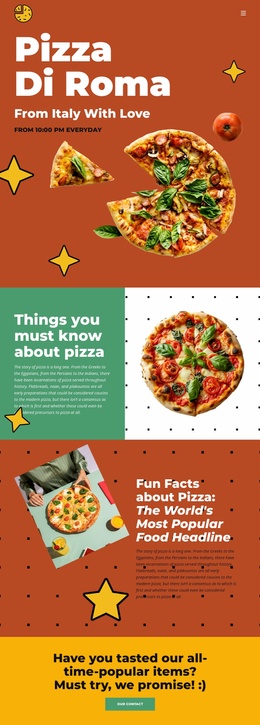
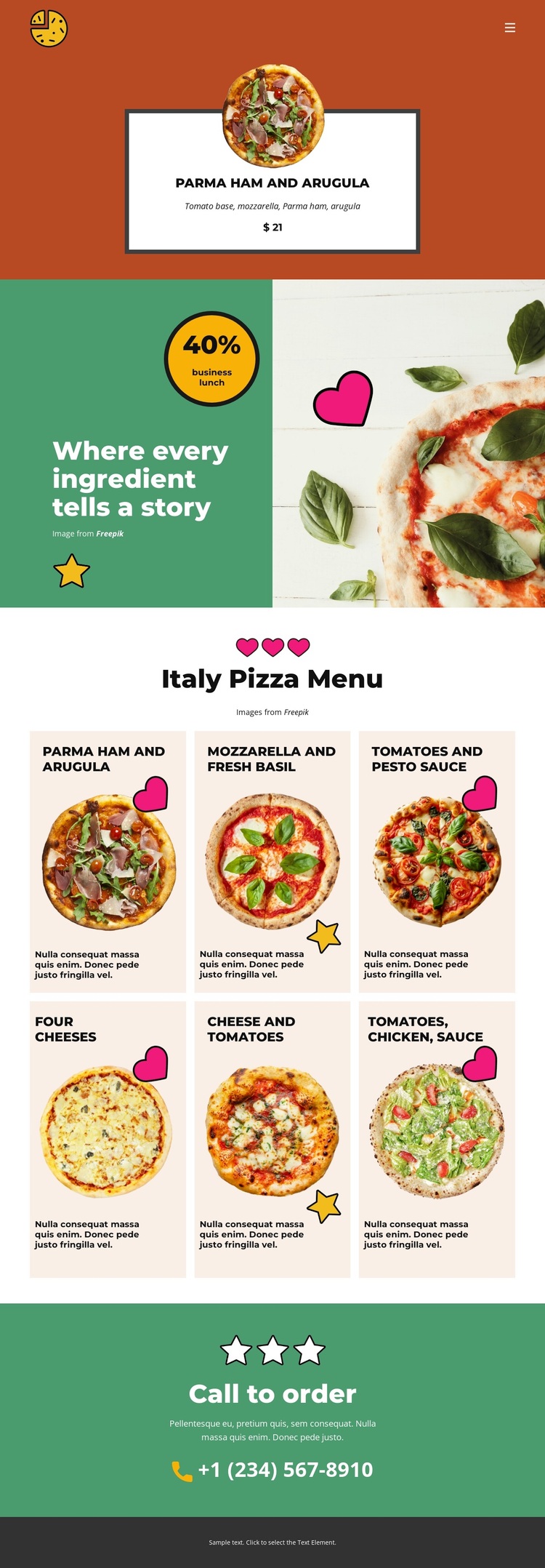
Ingredient storytelling gives this pizza design a distinct starting point
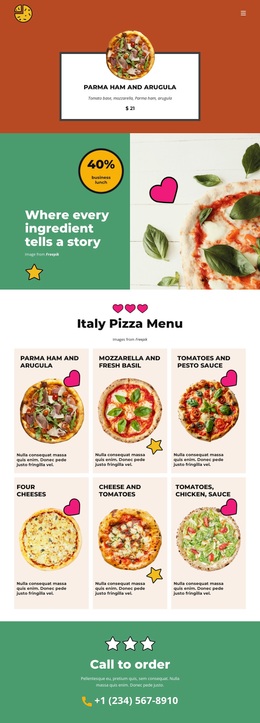
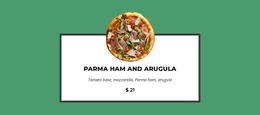
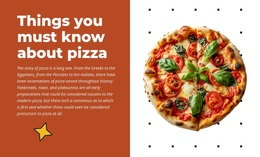
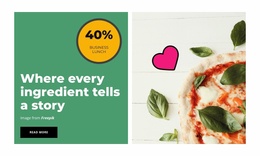
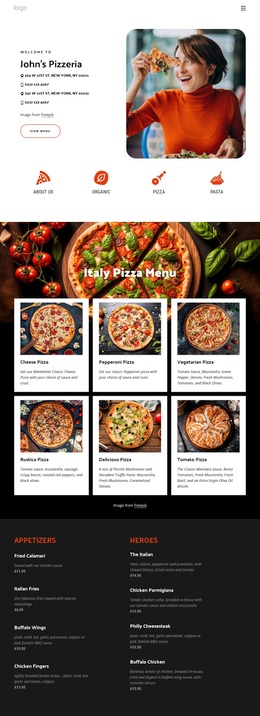
Food photography carries much of the page’s identity, but it is supported by a carefully varied content structure. The featured Parma ham and arugula card opens with one recognizable pizza combination, an ingredient description, and a displayed price. That immediate product focus is followed by the heading “Where every ingredient tells a story,” which gives the restaurant a narrative layer through a split text-and-image composition and a circular promotional badge.
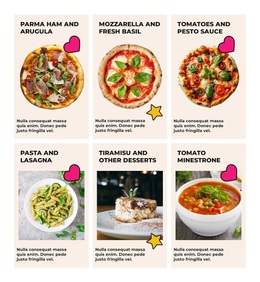
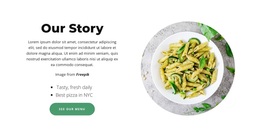
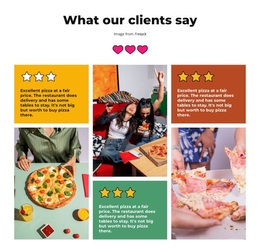
The central “Italy Pizza Menu” section makes the design practical for a restaurant that needs to show several choices without turning the page into a plain list. Six pizza cards repeat a visual pattern of photographs, names, and short descriptions, while the warm terracotta, leafy green, cream, and charcoal palette keeps the presentation cheerful and food-focused. Decorative hearts and stars add a casual detail that separates the page from a more formal menu layout.
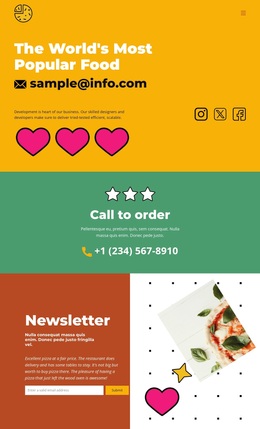
The closing “Call to order” block completes the design with a direct phone contact line. This makes the template a useful choice for projects where customers should first see the food, understand the restaurant character, review a compact menu, and then make contact. The combination of visual storytelling, repeated menu coverage, and a focused ending is the main reason to select this design over a layout centered only on text or isolated product cards.
Customize with Nicepage
Open this ready-made template in the Template Builder and customize it visually in the Nicepage editor. Replace demo content, edit page sections, and adapt the design to your project without rebuilding the template from scratch.
Start With a Ready-Made Template
Choose a Design for a New Page
Use a ready-made template as a starting point instead of creating every page from a blank canvas. When adding a new page in Nicepage, browse available designs, compare different layouts, and choose an option that already fits the general purpose and visual direction of your project.
Browse Different Page Designs
Explore Page Designs using search, thematic categories, Design Sets, and full-page previews. The collection includes layouts for different subjects and page purposes, making it easier to compare alternatives before selecting a design to customize.
Customize the Selected Template
After choosing a design, create the page and continue editing it visually in Nicepage. Replace the demo content, adjust images, typography, colors, sections, and other elements, and adapt the ready-made layout to your own content instead of rebuilding the design from the beginning.
Explore More Design Directions
If the first option does not match your project closely enough, return to the design collection and compare other templates before committing to a layout. This makes the template library useful not only for faster page creation, but also for exploring different visual approaches and finding a suitable starting point for a new project.
This workflow gives you access to a broad collection of ready-made designs that can be selected, compared, and customized according to the needs of each new page or project.