Things you must know about pizza Website Template



Edit Template Offline
2. Create new page and search for id 6194310
Edit Template Online
Create Awesome Websites


Free Nicepage Builder
Keywords
A six-item menu gives the restaurant project room to grow
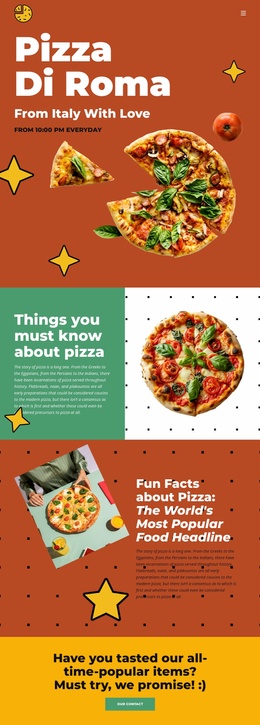
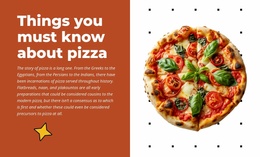
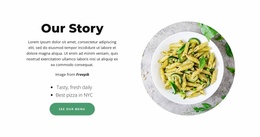
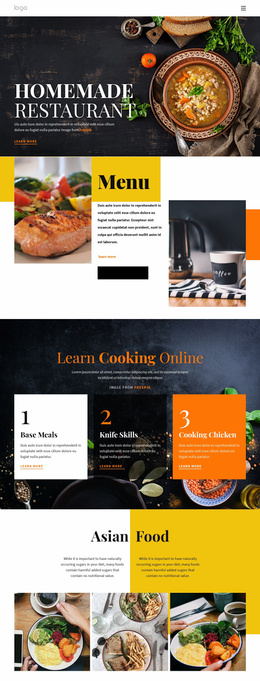
The existing design establishes several major content areas that can serve as a broader restaurant website foundation. The hero covers identity and the primary food subject, while the pizza explanation and fun-facts sections provide editorial content that could support an About or food-story page direction. The yellow promotional band creates a clear place for a featured offer or seasonal message without changing the main visual language.
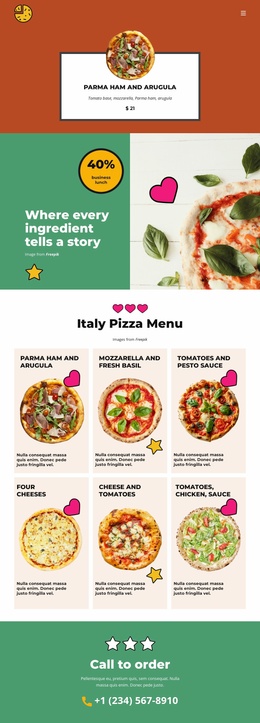
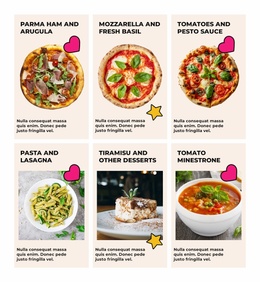
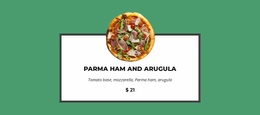
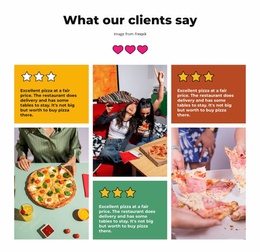
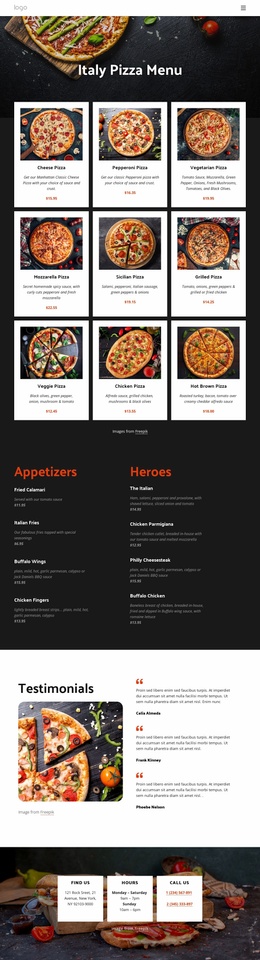
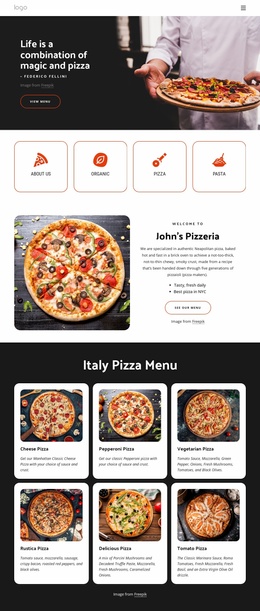
The six menu cards are the strongest basis for expansion. They separate the restaurant’s offering into recognizable categories—Parma ham and arugula, mozzarella and fresh basil, tomatoes and pesto sauce, pasta and lasagna, tiramisu and other desserts, and tomato minestrone. In a larger project, these areas could inform menu, dish, catering, or seasonal content while keeping the repeated card treatment as a connecting pattern. The three testimonial panels add a customer-experience category, and the newsletter section supplies an ongoing communication area rather than a one-time promotional message.
Only one page is verified here, so the template should not be described as an existing multi-page site. Its value is the information architecture already visible in this page: restaurant identity, food education, menu coverage, customer proof, subscription content, and closing information. Those areas give future pages a coherent starting direction instead of requiring the project to define every content category from an empty layout.
Customize with Nicepage
Open this ready-made template in the Website Template Builder and customize it visually in the Nicepage editor. Replace demo content, edit page sections, and adapt the design to your project without rebuilding the template from scratch.
Build a Complete Website From This Template
Customize the Website Visually
Use this ready-made website template as a starting point for your project and adapt its pages visually in Nicepage. Change content, images, typography, navigation, sections, and other design elements while keeping the website together as a single editable project.
Manage Website Pages in One Project
Use the Pages panel to open, add, duplicate, and manage the pages of your website. Work on individual pages while keeping navigation and the overall site structure accessible from the same project, making it easier to develop a complete website instead of managing separate page files.
Expand the Website With Matching Designs
When you need additional pages or sections, use Page Design Sets to find Page and Block Designs created in the same visual style. Design Sets group matching designs together, making it easier to expand the website with new content while maintaining a consistent look across its pages and sections.
Organize Larger Multi-Page Websites
As the website grows, use Page Folders to organize related pages and keep larger multi-page projects easier to navigate in the editor. This is especially useful for websites with separate service pages, company information, contacts, landing pages, and other content areas.
This workflow makes the template a practical foundation for building and expanding a complete website while managing its pages, content, and visual design within one Nicepage project.