Review of the magazine Template


A Circular Portrait Gives the Testimonial a Distinct Center
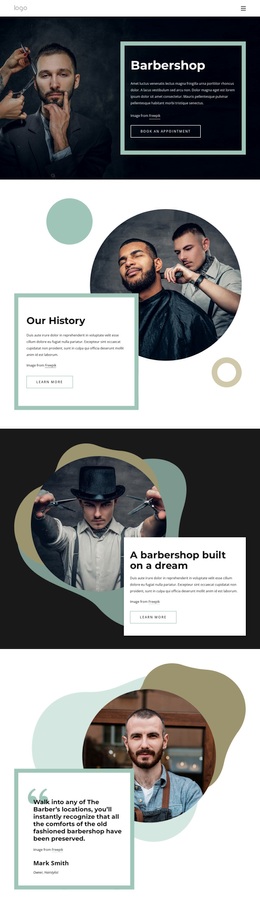
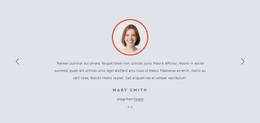
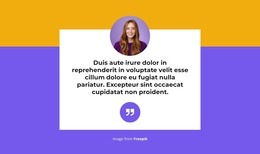
The strongest reason to choose this design is the way it gives one testimonial a complete visual rhythm without multiplying content items. A centered quote carries the main statement, then the circular portrait interrupts the text flow with a compact human image before the attribution identifies the speaker. That sequence is more deliberate than a simple quote-and-name arrangement, yet it remains lighter than a multi-card testimonial grid. The section can therefore add a focused proof moment without increasing content density.
Its visual character comes from the relationship between restraint and emphasis. The white background leaves generous space around the centered stack, while black serif typography makes the quote feel editorial rather than interface-heavy. The circular crop supplies the only strong image shape, so it becomes a recognizable anchor without competing with the statement. Because the interaction is static, attention stays on reading and recognition instead of movement or controls.
This option suits a page that needs one carefully presented voice rather than several testimonials shown at once. It can work as a mid-page pause between more active or information-rich areas, with the vertical composition giving neighboring content a clear contrast. The result is a distinctive testimonial choice built from three coordinated facts: one quote, one portrait, and one attribution arranged as a quiet centered statement.
Customize with Nicepage
Open this ready-made template in the Template Builder and customize it visually in the Nicepage editor. Replace demo content, edit page sections, and adapt the design to your project without rebuilding the template from scratch.
Edit Template Offline
2. Create a new page or select existing
3. Click Add new block, search for id 364954 and click enter
Edit Template Online
Create Awesome Websites


Free Nicepage Builder
Keywords
Start With a Ready-Made Template
Choose a Design for a New Page
Use a ready-made template as a starting point instead of creating every page from a blank canvas. When adding a new page in Nicepage, browse available designs, compare different layouts, and choose an option that already fits the general purpose and visual direction of your project.
Browse Different Page Designs
Explore Page Designs using search, thematic categories, Design Sets, and full-page previews. The collection includes layouts for different subjects and page purposes, making it easier to compare alternatives before selecting a design to customize.
Customize the Selected Template
After choosing a design, create the page and continue editing it visually in Nicepage. Replace the demo content, adjust images, typography, colors, sections, and other elements, and adapt the ready-made layout to your own content instead of rebuilding the design from the beginning.
Explore More Design Directions
If the first option does not match your project closely enough, return to the design collection and compare other templates before committing to a layout. This makes the template library useful not only for faster page creation, but also for exploring different visual approaches and finding a suitable starting point for a new project.
This workflow gives you access to a broad collection of ready-made designs that can be selected, compared, and customized according to the needs of each new page or project.