Best places for hiking and fishing Website Template


Edit Template Offline
2. Create new page and search for id 149829
Edit Template Online
Create Awesome Websites


Free Nicepage Builder
Keywords
Tour content, pass information, and inquiry create a scalable site foundation
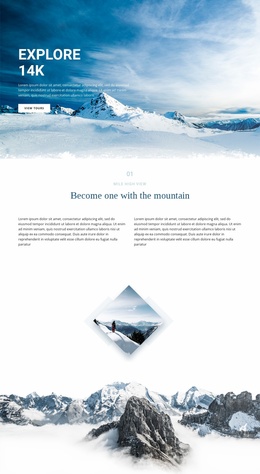
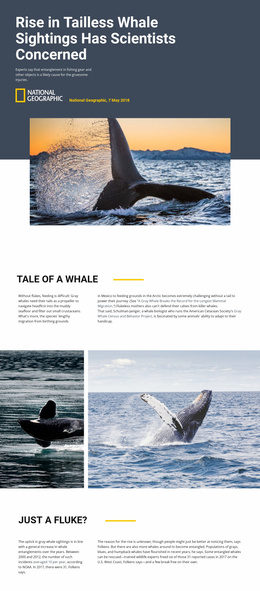
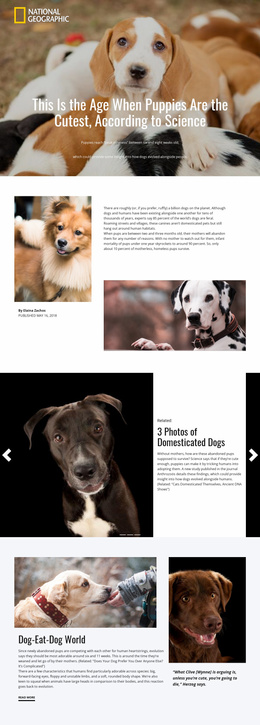
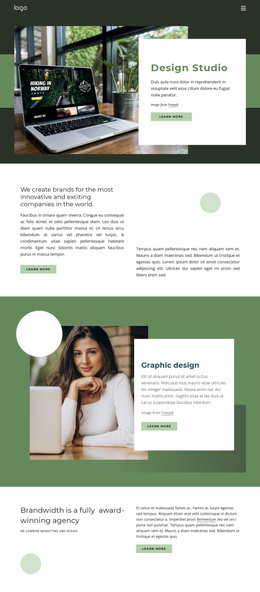
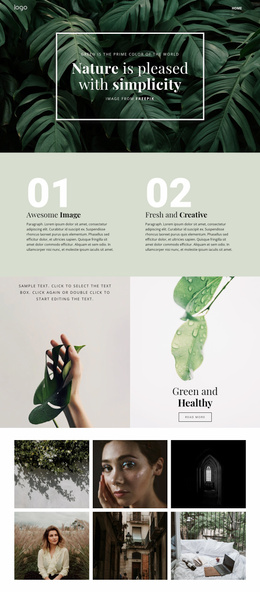
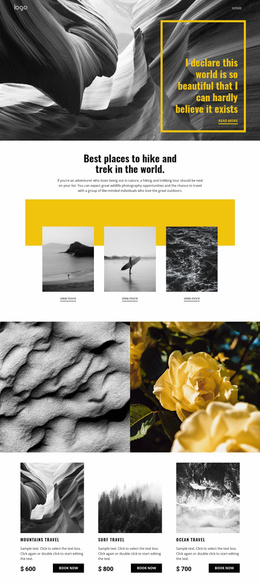
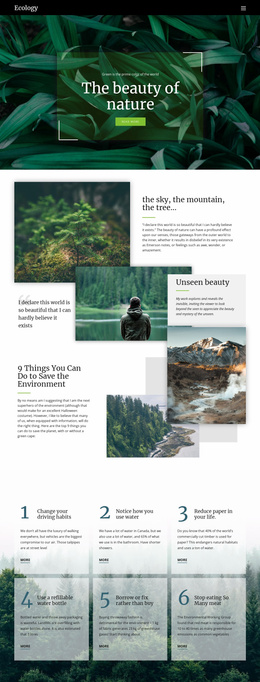
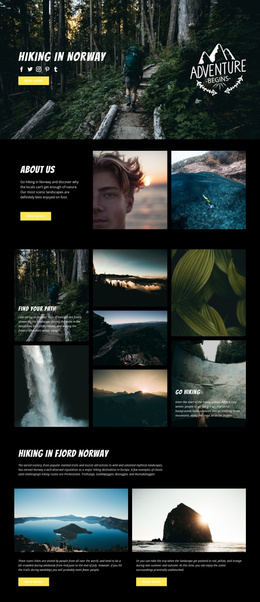
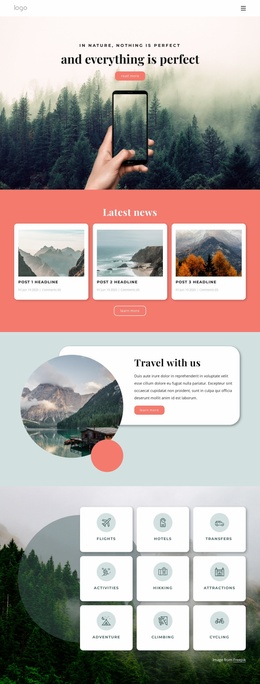
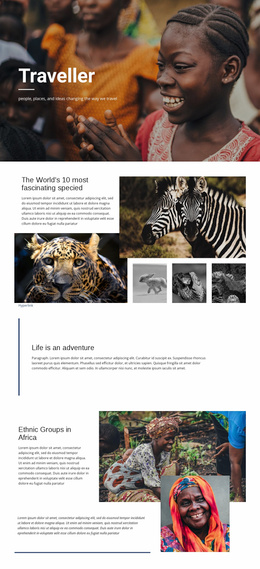
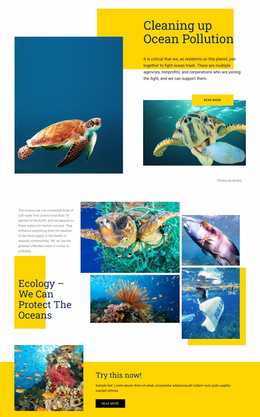
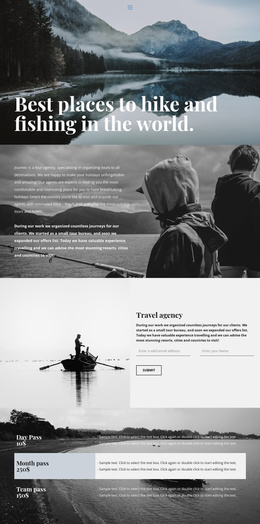
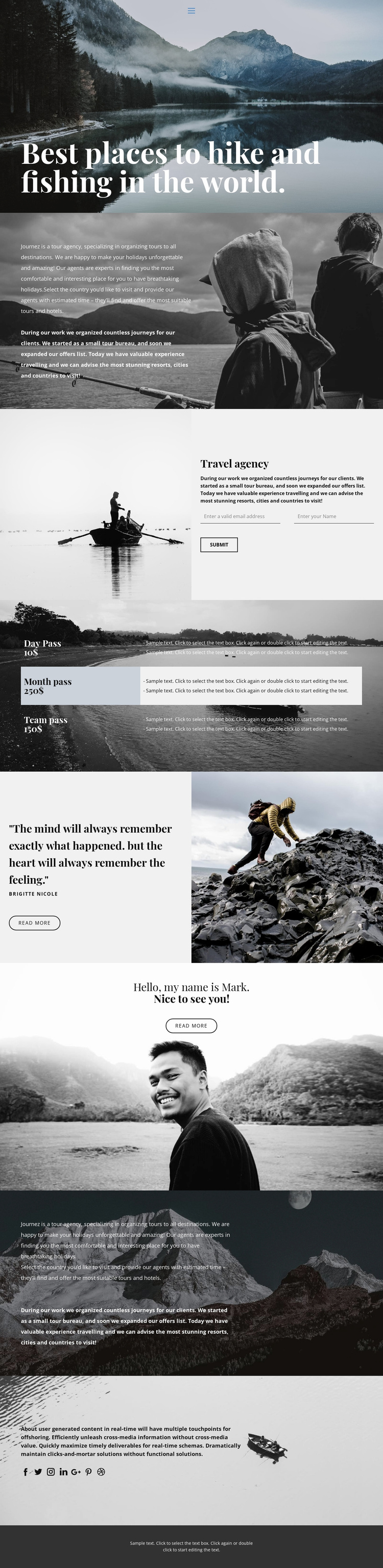
The design establishes several major content areas that a broader travel website could build around. The hero introduces the outdoor subject with mountain-lake photography, while the following image-backed agency content explains the role of organized tours and holiday planning. These sections can serve as the main visual and informational entry point without requiring the project to begin from an empty page.
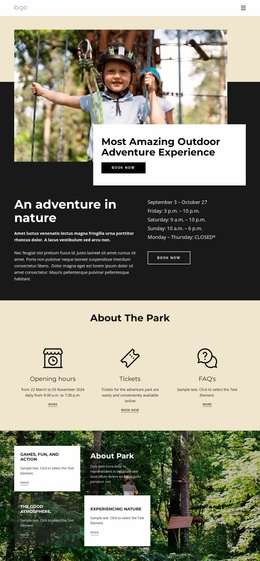
The contact section adds a practical service area by pairing a fishing image with agency copy and a form requesting a name and email address. The three-row pass table contributes a separate offer category, giving the foundation a place for structured travel options alongside descriptive content. Because the pass entries are displayed as a table, the design already distinguishes comparison-oriented information from the more atmospheric image sections.
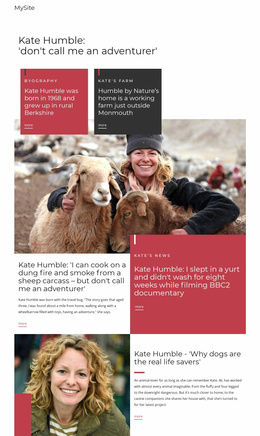
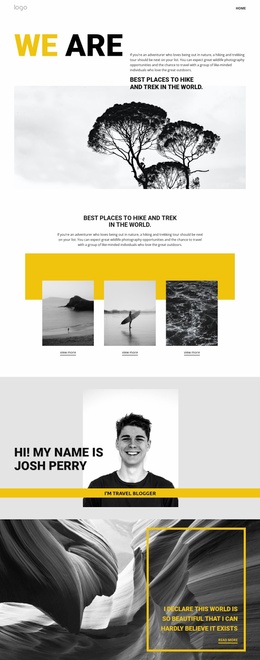
The quote and climbing image introduce a storytelling or inspiration area, while the personal introduction over a portrait image provides a possible guide, agency representative, or brand story location. A second agency description reinforces destination planning before the social block and footer close the current page. Navigation and mobile navigation indicate shared site-entry considerations, while the social links create an outward-facing connection area.
The verified analysis confirms one page, not a complete multi-page set. Even so, its combination of destination imagery, agency explanation, inquiry, structured offers, personal content, and social follow-up provides a clear foundation for additional travel pages such as destination information, tour details, or contact-focused content, provided those pages are created separately.
Customize with Nicepage
Open this ready-made template in the Website Template Builder and customize it visually in the Nicepage editor. Replace demo content, edit page sections, and adapt the design to your project without rebuilding the template from scratch.
Build a Complete Website From This Template
Customize the Website Visually
Use this ready-made website template as a starting point for your project and adapt its pages visually in Nicepage. Change content, images, typography, navigation, sections, and other design elements while keeping the website together as a single editable project.
Manage Website Pages in One Project
Use the Pages panel to open, add, duplicate, and manage the pages of your website. Work on individual pages while keeping navigation and the overall site structure accessible from the same project, making it easier to develop a complete website instead of managing separate page files.
Expand the Website With Matching Designs
When you need additional pages or sections, use Page Design Sets to find Page and Block Designs created in the same visual style. Design Sets group matching designs together, making it easier to expand the website with new content while maintaining a consistent look across its pages and sections.
Organize Larger Multi-Page Websites
As the website grows, use Page Folders to organize related pages and keep larger multi-page projects easier to navigate in the editor. This is especially useful for websites with separate service pages, company information, contacts, landing pages, and other content areas.
This workflow makes the template a practical foundation for building and expanding a complete website while managing its pages, content, and visual design within one Nicepage project.