My bio WordPress Theme


Edit Template Offline
2. Create new page and search for id 6006663
Edit Template Online
Create Awesome Websites


Free Nicepage Builder
Keywords
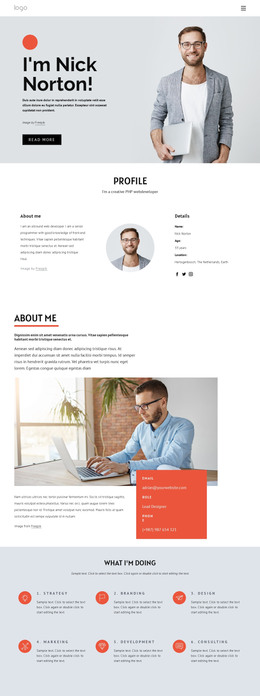
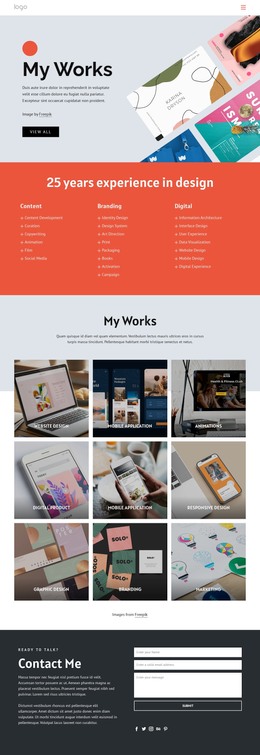
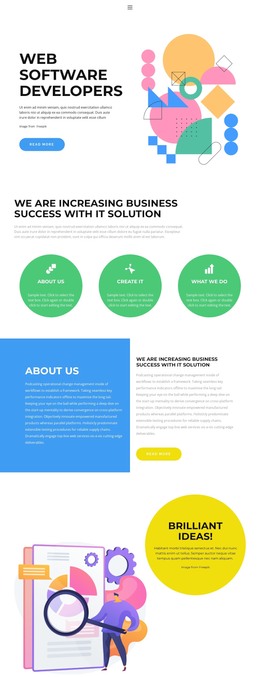
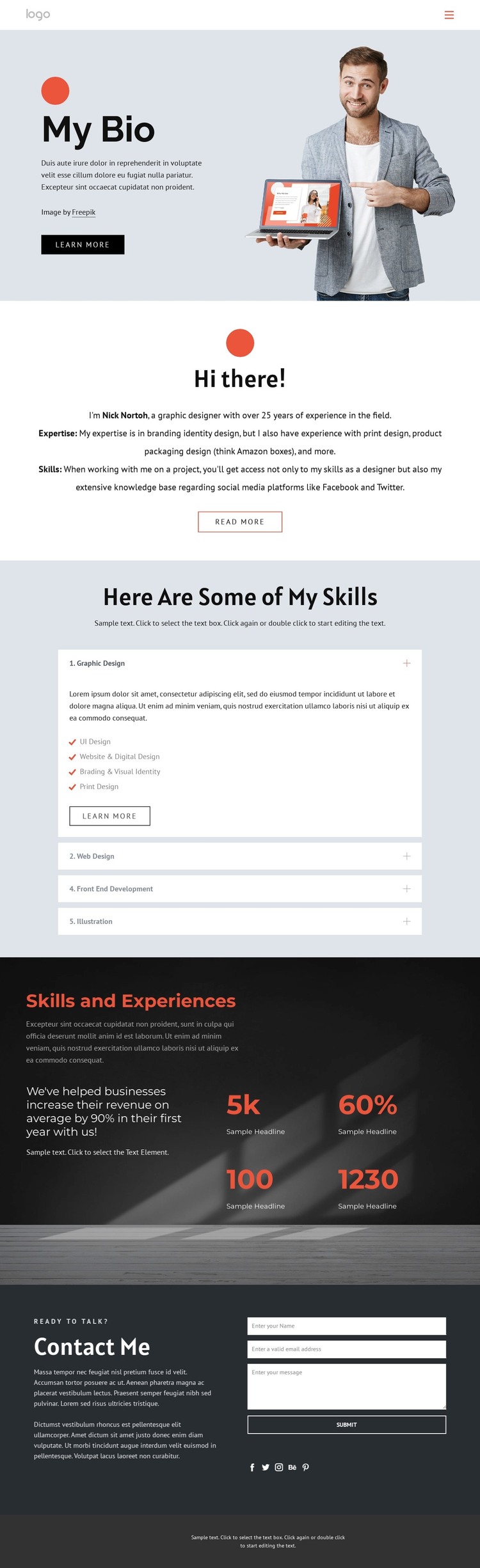
Page Content and Repeated Profile Areas Suit a Designer-Focused Theme
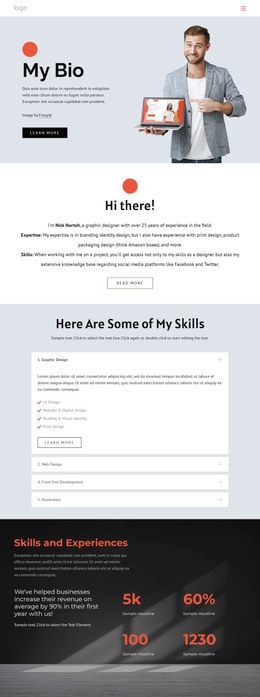
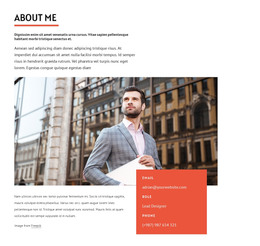
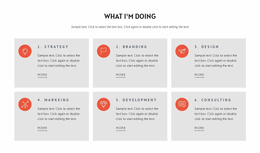
The permanent profile content is clearly divided into areas that can remain central in a WordPress-oriented site. The portrait and “My Bio” copy provide page-based identity content, while the centered expertise section introduces the professional focus before visitors reach the four expandable skill categories. Those categories can be interpreted as structured service information for graphic design, web design, front-end development, and illustration, without claiming that WordPress Posts, categories, or blog structures already exist in the template.
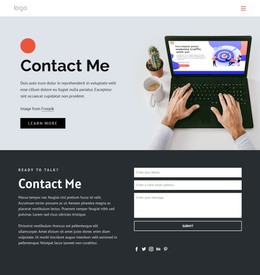
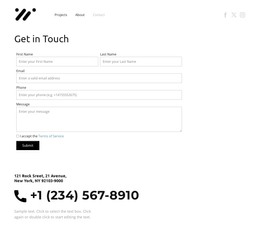
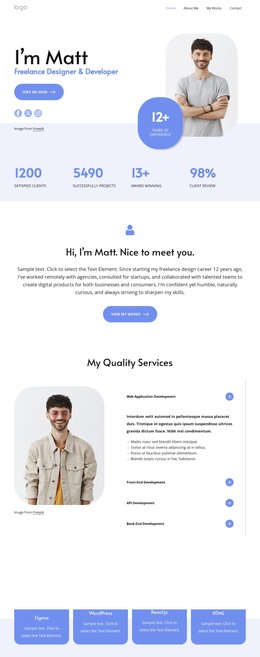
The experience block offers another content relationship worth preserving. Its explanatory text, highlighted sample claim, and four displayed metrics can support a profile or results page after the demo values are replaced with verified information. The closing Contact Me section combines an inquiry form with social links, making it a natural permanent contact area alongside the biography and services. Facebook, Twitter, Instagram, Behance, and Pinterest are already represented as social destinations in the design, while the form supplies the direct inquiry context.
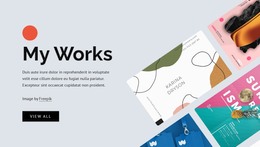
A WordPress theme adaptation can keep these page-oriented areas within the same pale blue, charcoal, and coral visual system. If regularly updated editorial content is added later, it should support rather than obscure the profile structure. The main value here is the mapping of existing identity, service, experience, and contact content to a CMS-managed site, not a claim that additional WordPress content types are already present.
Customize with Nicepage
Open this ready-made template in the WordPress Website Builder and customize it visually in the Nicepage editor. Replace demo content, edit page sections, and adapt the design to your project without rebuilding the template from scratch.
Manage and Edit This Theme in WordPress
Customize and Install the WordPress Theme
Start with this ready-made theme instead of building the WordPress design from scratch. Customize its layout, content, typography, images, sections, and other design elements visually in Nicepage editor, then export and install the WordPress Theme, Plugin, and Pages on your WordPress site. The Nicepage WordPress Plugin lets you continue working with the site after installation.
Edit the Theme Directly in WordPress
After installation, you can edit the WordPress Theme directly in WordPress with the Nicepage WordPress Plugin. Use Site Style to customize site Colors, Fonts, Header, Footer, Blog, and Post Page Templates while working within your WordPress website.
Edit WordPress Pages Visually
Use the Nicepage WordPress Plugin to edit page content directly from the WordPress admin area. Open a WordPress Page with Nicepage and visually change its text, images, sections, and other page elements while continuing to manage the Page through WordPress.
WordPress Content and Theme Integration
Use the customized theme with WordPress Pages, Posts, Blog and Post Templates, menus, widgets, and other CMS-managed content. Shared theme elements such as Colors, Fonts, Header, Footer, Blog, and Post Page Templates can be managed as part of the overall site design, while WordPress provides the CMS environment for managing site content.
This workflow combines a ready-made WordPress Theme with visual customization, direct theme editing in WordPress, and continued content management through the Nicepage WordPress Plugin.