Get the hottest styles Template
Edit Template Offline
2. Create new page and search for id 243942
Edit Template Online
Create Awesome Websites


Free Nicepage Builder
Keywords
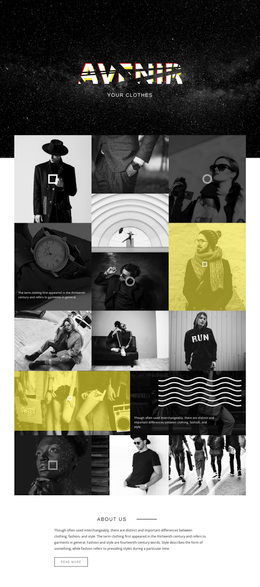
Fashion Photography Connects Trends, Stories, and Shopping Inspiration
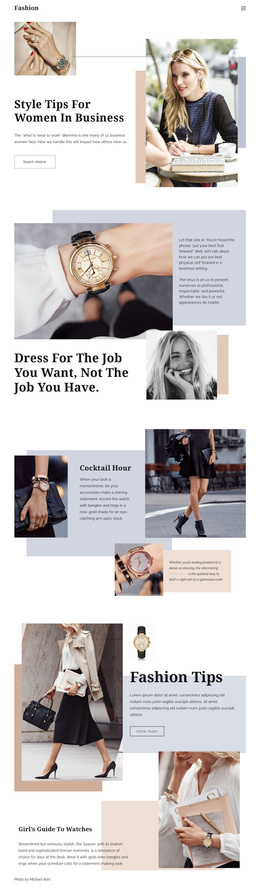
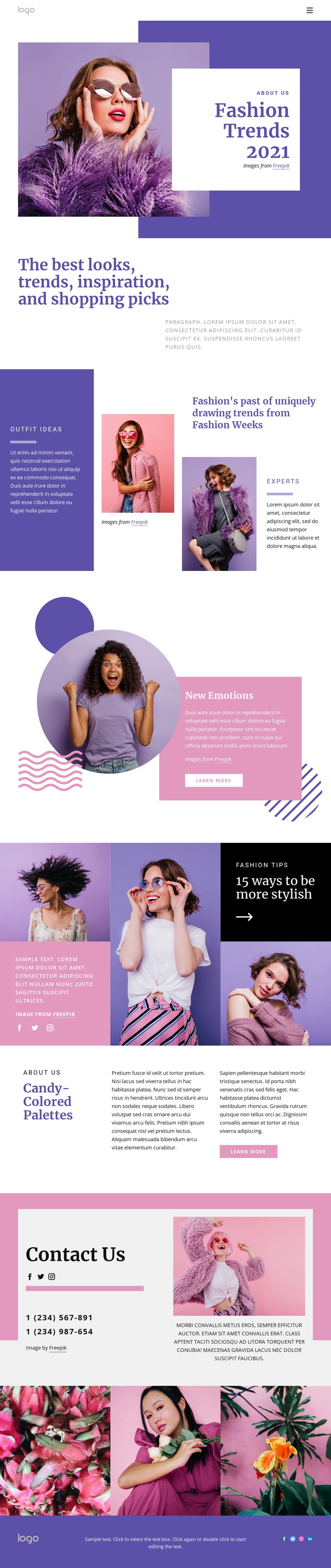
The strongest reason to choose this design is the way fashion photography carries the page from one editorial idea to the next. The opening hero combines a large image, a white title card, and a purple geometric background, immediately establishing a visual language suited to trend reporting and lookbook-style presentation. The following headline expands that direction into looks, inspiration, and shopping picks, so the page offers more than a decorative fashion image.
Its content coverage is also distinctive. One feature connects outfit ideas with Fashion Week context and an experts panel, while “New Emotions” introduces a portrait-led story with colorful overlapping accents and a Learn more action. The “15 ways to be more stylish” section shifts toward practical advice through a three-column photographic composition, and “Candy-Colored Palettes” adds supporting editorial commentary. These changes in emphasis make the design useful for fashion media that needs to combine visual mood, trend explanation, and accessible tips.
The closing contact section, three-image gallery, and social footer strengthen the option for projects that want a complete editorial page rather than a hero-only layout. The gallery returns attention to imagery, while the contact and social regions give readers clear ways to continue exploring or connect with the publication. Together, these relationships distinguish the template from designs centered only on product listings or dense text.
Customize with Nicepage
Open this ready-made template in the Template Builder and customize it visually in the Nicepage editor. Replace demo content, edit page sections, and adapt the design to your project without rebuilding the template from scratch.
Start With a Ready-Made Template
Choose a Design for a New Page
Use a ready-made template as a starting point instead of creating every page from a blank canvas. When adding a new page in Nicepage, browse available designs, compare different layouts, and choose an option that already fits the general purpose and visual direction of your project.
Browse Different Page Designs
Explore Page Designs using search, thematic categories, Design Sets, and full-page previews. The collection includes layouts for different subjects and page purposes, making it easier to compare alternatives before selecting a design to customize.
Customize the Selected Template
After choosing a design, create the page and continue editing it visually in Nicepage. Replace the demo content, adjust images, typography, colors, sections, and other elements, and adapt the ready-made layout to your own content instead of rebuilding the design from the beginning.
Explore More Design Directions
If the first option does not match your project closely enough, return to the design collection and compare other templates before committing to a layout. This makes the template library useful not only for faster page creation, but also for exploring different visual approaches and finding a suitable starting point for a new project.
This workflow gives you access to a broad collection of ready-made designs that can be selected, compared, and customized according to the needs of each new page or project.