Paris style Template


Edit Template Offline
2. Create new page and search for id 203089
Edit Template Online
Create Awesome Websites


Free Nicepage Builder
Keywords
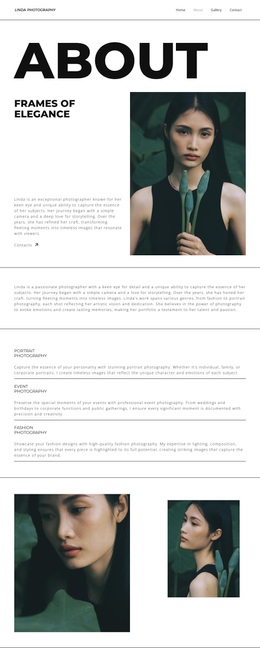
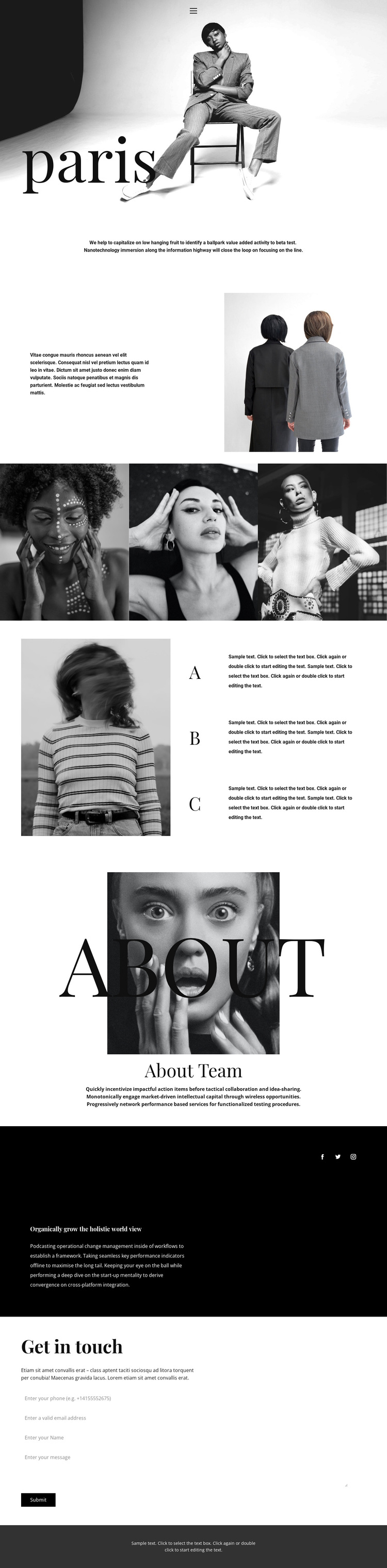
Monochrome portraits give this editorial design a clear point of view
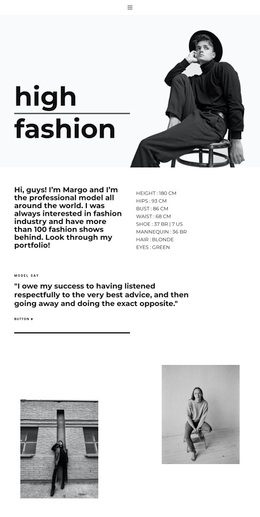
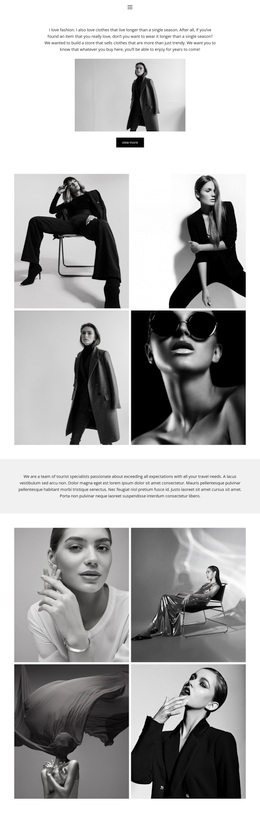
The strongest reason to choose this design is the way photography carries the page’s identity from beginning to end. A full-width black-and-white portrait introduces the oversized “paris” title, the split section places another portrait beside descriptive copy, and a three-image gallery turns the same monochrome treatment into a repeated visual statement. The page therefore feels organized around editorial imagery rather than around a dense list of services or product details.
The surrounding sections broaden that image-led direction. Three labeled feature rows provide compact supporting information, while the About Team block introduces a profile subject through a large portrait, title, and paragraph. The dark social section adds Facebook, Twitter, and Instagram links as a separate connection point, and the closing contact form gives the page a practical way to receive inquiries. These elements provide more coverage than a purely visual portfolio opening while preserving the restrained fashion tone.
This option suits a project that needs a recognizable editorial presentation with profile, social, and contact content in the same visual system. The placeholder copy and labels are structural evidence only and should be replaced. What remains distinctive is the combination of high-contrast photography, oversized serif hierarchy, generous white space, and a dark closing transition.
Customize with Nicepage
Open this ready-made template in the Template Builder and customize it visually in the Nicepage editor. Replace demo content, edit page sections, and adapt the design to your project without rebuilding the template from scratch.
Start With a Ready-Made Template
Choose a Design for a New Page
Use a ready-made template as a starting point instead of creating every page from a blank canvas. When adding a new page in Nicepage, browse available designs, compare different layouts, and choose an option that already fits the general purpose and visual direction of your project.
Browse Different Page Designs
Explore Page Designs using search, thematic categories, Design Sets, and full-page previews. The collection includes layouts for different subjects and page purposes, making it easier to compare alternatives before selecting a design to customize.
Customize the Selected Template
After choosing a design, create the page and continue editing it visually in Nicepage. Replace the demo content, adjust images, typography, colors, sections, and other elements, and adapt the ready-made layout to your own content instead of rebuilding the design from the beginning.
Explore More Design Directions
If the first option does not match your project closely enough, return to the design collection and compare other templates before committing to a layout. This makes the template library useful not only for faster page creation, but also for exploring different visual approaches and finding a suitable starting point for a new project.
This workflow gives you access to a broad collection of ready-made designs that can be selected, compared, and customized according to the needs of each new page or project.