Positive Dog Training Template


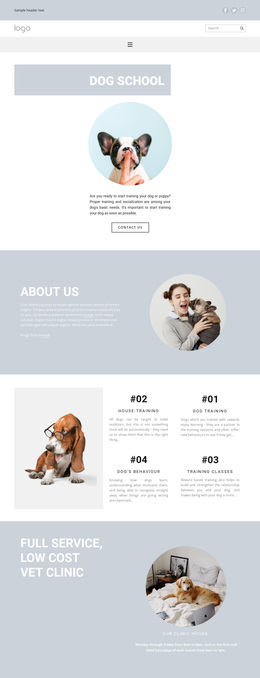
A Split Dog School Hero With a Direct Contact Cue
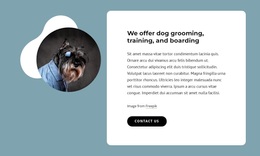
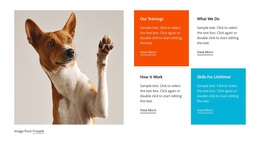
The section combines three useful choices in one compact arrangement: a clearly named Dog School heading, explanatory copy about training and socialization, and a visible Contact Us button. Instead of distributing the message across several cards, it keeps the introduction in one left-side content area. The large dog portrait on the right then supplies an immediate visual signal for the subject, giving the design more presence than a text-only opening while preserving a straightforward reading path.
This makes the block worth considering when a page needs an introductory dog-training section that communicates its topic quickly and leaves the next response visible. The yellow heading band and outlined button create a repeated accent relationship, while the light gray background prevents the split composition from becoming visually heavy. The Freepik credit is retained as part of the image content rather than hidden as an assumed detail. Compared with a denser service grid or a purely photographic banner, this design offers a balanced combination of message, subject image, and contact prompt. Its role remains one reusable section that can be selected among alternatives for a broader page.
Customize with Nicepage
Open this ready-made template in the Template Builder and customize it visually in the Nicepage editor. Replace demo content, edit page sections, and adapt the design to your project without rebuilding the template from scratch.
Edit Template Offline
2. Create a new page or select existing
3. Click Add new block, search for id 108701 and click enter
Edit Template Online
Create Awesome Websites


Free Nicepage Builder
Keywords
Start With a Ready-Made Template
Choose a Design for a New Page
Use a ready-made template as a starting point instead of creating every page from a blank canvas. When adding a new page in Nicepage, browse available designs, compare different layouts, and choose an option that already fits the general purpose and visual direction of your project.
Browse Different Page Designs
Explore Page Designs using search, thematic categories, Design Sets, and full-page previews. The collection includes layouts for different subjects and page purposes, making it easier to compare alternatives before selecting a design to customize.
Customize the Selected Template
After choosing a design, create the page and continue editing it visually in Nicepage. Replace the demo content, adjust images, typography, colors, sections, and other elements, and adapt the ready-made layout to your own content instead of rebuilding the design from the beginning.
Explore More Design Directions
If the first option does not match your project closely enough, return to the design collection and compare other templates before committing to a layout. This makes the template library useful not only for faster page creation, but also for exploring different visual approaches and finding a suitable starting point for a new project.
This workflow gives you access to a broad collection of ready-made designs that can be selected, compared, and customized according to the needs of each new page or project.