Vintage Creative Portfolio Template


Edit Template Offline
2. Create new page and search for id 6656680
Edit Template Online
Create Awesome Websites


Free Nicepage Builder
Keywords
Poster-Led Storytelling Gives This Portfolio a Distinctive Direction
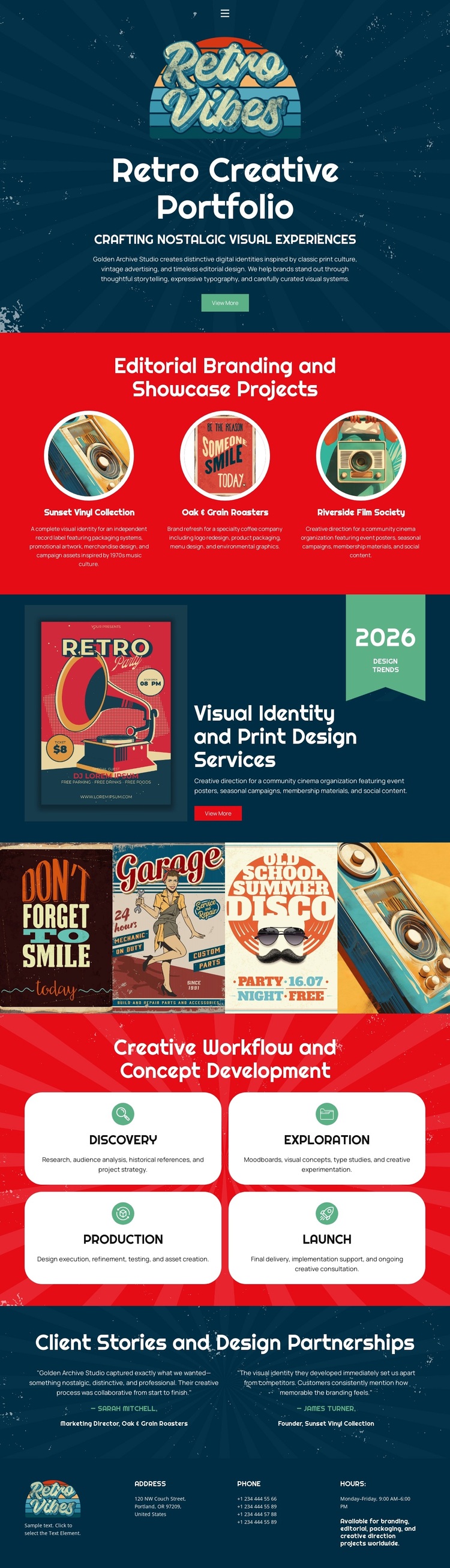
The page makes imagery carry much of the message. Its dark teal and red color blocks, cream display lettering, circular project images, poster artwork, collage details, and halftone-inspired graphics establish a visual direction that is more specific than a neutral portfolio grid. The three showcased projects give that direction practical context, while the separate artwork strip shows how the same print-oriented character can support additional examples.
The design also covers more than project display. The Visual Identity and Print Design Services section explains an offering beside a large poster, and the four stages—Discovery, Exploration, Production, and Launch—show how the creative work can be framed as a process. Two client story blocks add partnership context before the footer supplies contact details. That combination makes the template worth considering when a project needs a memorable identity, visible work samples, service explanation, and a defined creative method in the same presentation. It is less suited to a layout that depends on dense technical copy or restrained corporate neutrality, because its strongest asset is the relationship between retro visual language and the story of creative work.
Customize with Nicepage
Open this ready-made template in the Template Builder and customize it visually in the Nicepage editor. Replace demo content, edit page sections, and adapt the design to your project without rebuilding the template from scratch.
Start With a Ready-Made Template
Choose a Design for a New Page
Use a ready-made template as a starting point instead of creating every page from a blank canvas. When adding a new page in Nicepage, browse available designs, compare different layouts, and choose an option that already fits the general purpose and visual direction of your project.
Browse Different Page Designs
Explore Page Designs using search, thematic categories, Design Sets, and full-page previews. The collection includes layouts for different subjects and page purposes, making it easier to compare alternatives before selecting a design to customize.
Customize the Selected Template
After choosing a design, create the page and continue editing it visually in Nicepage. Replace the demo content, adjust images, typography, colors, sections, and other elements, and adapt the ready-made layout to your own content instead of rebuilding the design from the beginning.
Explore More Design Directions
If the first option does not match your project closely enough, return to the design collection and compare other templates before committing to a layout. This makes the template library useful not only for faster page creation, but also for exploring different visual approaches and finding a suitable starting point for a new project.
This workflow gives you access to a broad collection of ready-made designs that can be selected, compared, and customized according to the needs of each new page or project.