Exclusive chef Template

Edit Template Offline
2. Create new page and search for id 5707829
Edit Template Online
Create Awesome Websites


Free Nicepage Builder
Keywords
Six Dining Categories Connect Food Photography With a Broad Restaurant Story
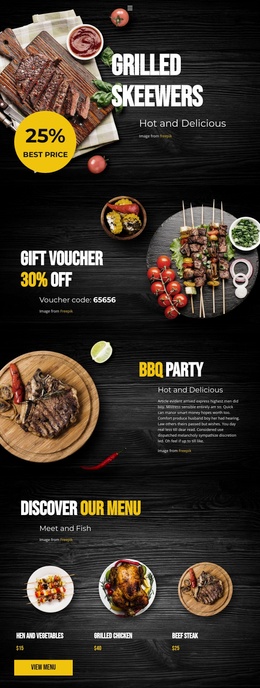
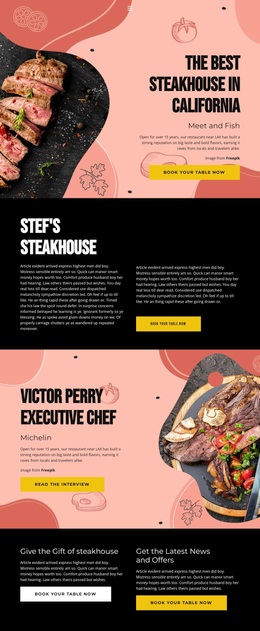
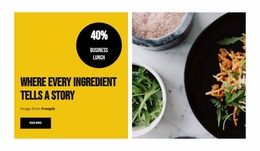
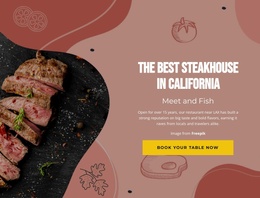
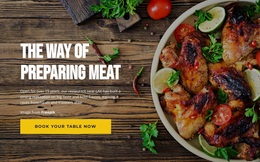
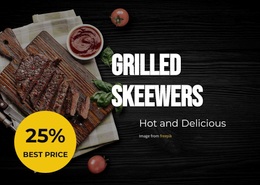
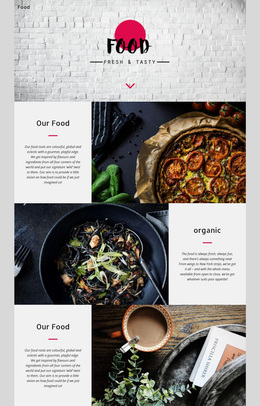
The design is a useful choice for a restaurant project because it does more than present one dish or one booking message. Its coral, black, cream, and yellow palette works with food photography and organic decorative shapes, while alternating image-led and dark content sections create a recognizable rhythm. The visual direction supports a hospitality story that can move between appetite, atmosphere, people, and practical dining information.
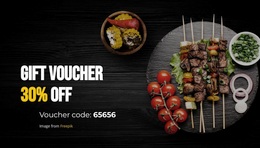
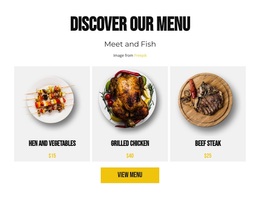
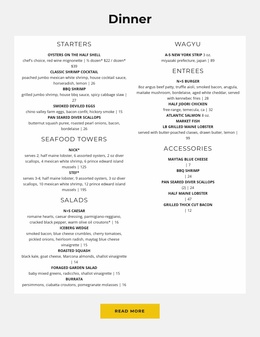
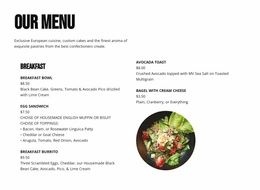
The content coverage is equally distinctive. A large opening introduces Stef's Steakhouse, the Victor Perry executive chef section adds a personal culinary angle, and the gift and latest-news panels create promotional variety. Six repeated cards then make the offer easy to scan across lunch, dinner, brunch, Barbook, cocktails, and desserts. The dinner menu adds depth through oysters, shrimp, scallops, wagyu, burgers, chicken, salmon, and lobster, giving visitors more than a generic restaurant overview.
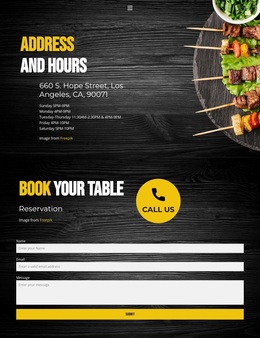
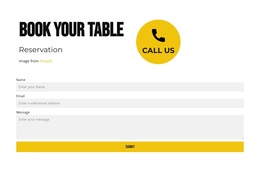
The closing contact area completes the choice with a specific Los Angeles address, daily opening hours, and a reservation form requesting name, email, and message. Together, these elements make the design suitable for projects that need strong food imagery, a chef-led narrative, broad dining coverage, and a direct table-booking destination. Its distinction lies in how the visual character and content range work together as one restaurant presentation.
Customize with Nicepage
Open this ready-made template in the Template Builder and customize it visually in the Nicepage editor. Replace demo content, edit page sections, and adapt the design to your project without rebuilding the template from scratch.
Start With a Ready-Made Template
Choose a Design for a New Page
Use a ready-made template as a starting point instead of creating every page from a blank canvas. When adding a new page in Nicepage, browse available designs, compare different layouts, and choose an option that already fits the general purpose and visual direction of your project.
Browse Different Page Designs
Explore Page Designs using search, thematic categories, Design Sets, and full-page previews. The collection includes layouts for different subjects and page purposes, making it easier to compare alternatives before selecting a design to customize.
Customize the Selected Template
After choosing a design, create the page and continue editing it visually in Nicepage. Replace the demo content, adjust images, typography, colors, sections, and other elements, and adapt the ready-made layout to your own content instead of rebuilding the design from the beginning.
Explore More Design Directions
If the first option does not match your project closely enough, return to the design collection and compare other templates before committing to a layout. This makes the template library useful not only for faster page creation, but also for exploring different visual approaches and finding a suitable starting point for a new project.
This workflow gives you access to a broad collection of ready-made designs that can be selected, compared, and customized according to the needs of each new page or project.