Follow us on Template


Edit Template Offline
2. Create new page and search for id 6172917
Edit Template Online
Create Awesome Websites


Free Nicepage Builder
Keywords
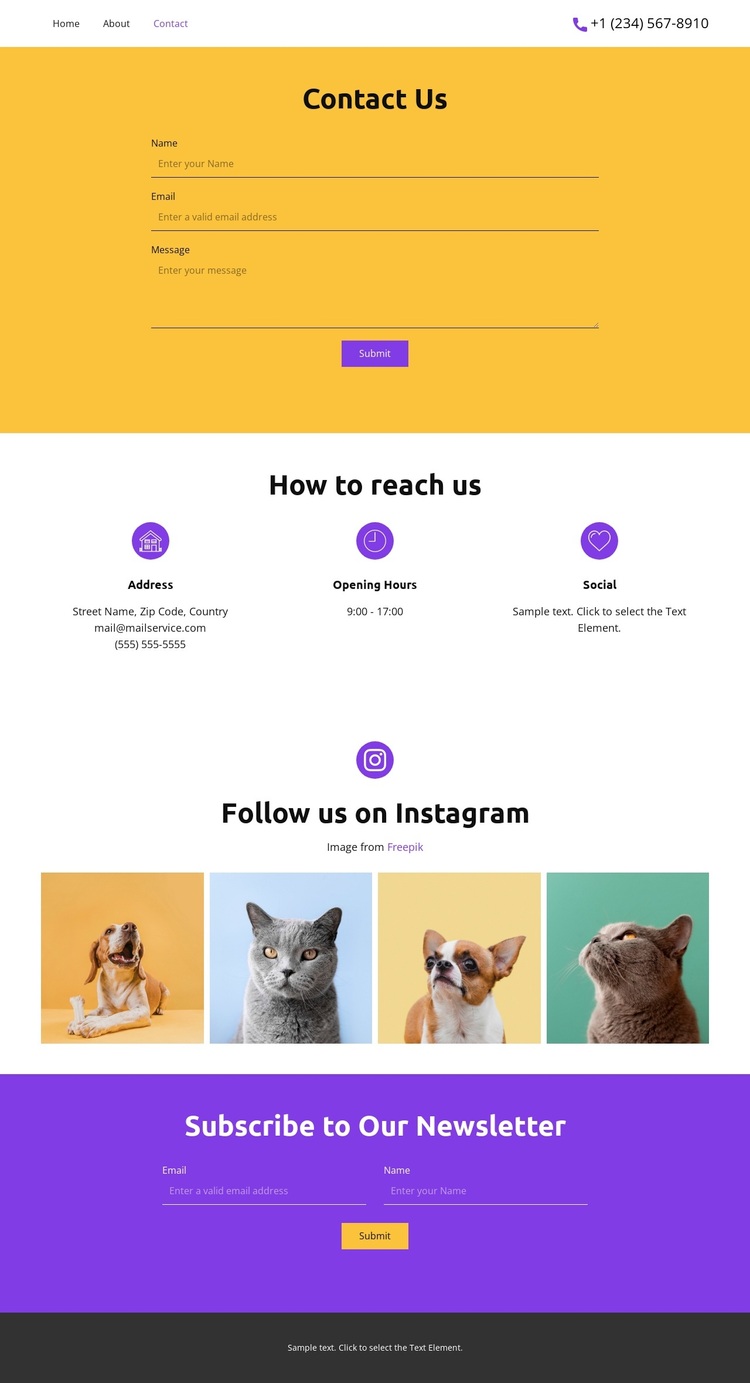
Two Communication Forms Framed by Cards and Photography
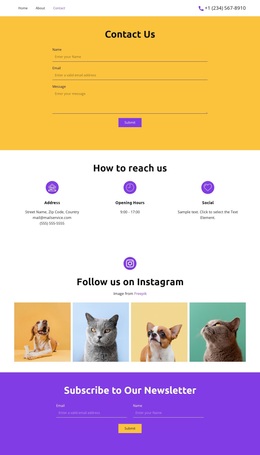
The strongest reason to choose this design is its coverage of several contact-related needs without becoming a long, text-heavy page. The opening yellow section handles direct messages through a centered Contact Us form, while the three-card information row gives address, opening hours, and social details their own visible positions. That combination makes practical contact content easy to distinguish from the main response form.
The four-tile Instagram gallery gives the page a recognizable visual feature. It is not simply decorative filler: placed between the information cards and the newsletter section, it creates a social-media transition before the second action area. The purple newsletter block then adds a subscription route with name and email fields, allowing the design to serve both visitors who want to send a message and those who want continuing updates.
The bright color blocks, centered typography, generous spacing, thin fields, and compact navigation keep the page approachable while preserving a clear sequence. Home, About, and Contact links provide basic movement around the site, and mobile navigation is included in the component structure. This makes the template a useful option for projects that need contact details, social imagery, direct inquiry, and newsletter collection in one coordinated page. The sample contact values remain structural placeholders rather than claims about a real business.
Customize with Nicepage
Open this ready-made template in the Template Builder and customize it visually in the Nicepage editor. Replace demo content, edit page sections, and adapt the design to your project without rebuilding the template from scratch.
Start With a Ready-Made Template
Choose a Design for a New Page
Use a ready-made template as a starting point instead of creating every page from a blank canvas. When adding a new page in Nicepage, browse available designs, compare different layouts, and choose an option that already fits the general purpose and visual direction of your project.
Browse Different Page Designs
Explore Page Designs using search, thematic categories, Design Sets, and full-page previews. The collection includes layouts for different subjects and page purposes, making it easier to compare alternatives before selecting a design to customize.
Customize the Selected Template
After choosing a design, create the page and continue editing it visually in Nicepage. Replace the demo content, adjust images, typography, colors, sections, and other elements, and adapt the ready-made layout to your own content instead of rebuilding the design from the beginning.
Explore More Design Directions
If the first option does not match your project closely enough, return to the design collection and compare other templates before committing to a layout. This makes the template library useful not only for faster page creation, but also for exploring different visual approaches and finding a suitable starting point for a new project.
This workflow gives you access to a broad collection of ready-made designs that can be selected, compared, and customized according to the needs of each new page or project.