Minimalist home office Website Template


A stable image-and-concept pattern for an interior-focused site section
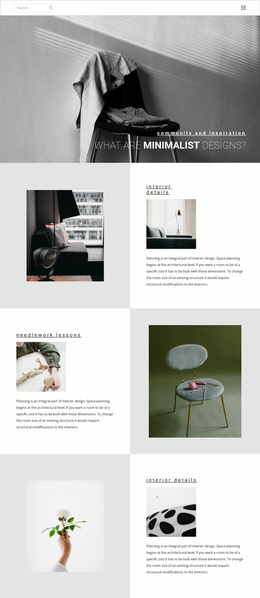
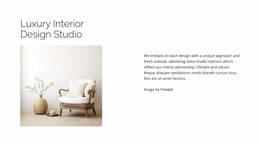
The block provides one clearly defined website content area: a visual reference on the left and a concise concept explanation on the right. The plant photograph gives the section an immediate interior connection, while the black panel organizes the written message around “MINIMALIST INTERIOR” and the more prominent “DESIGN” line. The paragraph adds context about paring away the space and using its underlying axes to shape new geometry. Because the two columns are equal in width, the arrangement feels intentional and repeatable rather than like a loose image placed beside text.
Within a broader website template project, this section could serve as an introduction to an interior direction, a studio viewpoint, or a design-concept area. Other sections would still handle additional subjects, projects, services, or contact information; this block contributes only its own visual and informational role. Its black, white, warm, and dark green treatments can also provide cues for coordinating nearby sections, while the generous empty space offers contrast against denser content patterns elsewhere. The static interaction keeps the concept immediately available, which suits a section meant to communicate one idea without requiring a click. Reusing the block means carrying forward this image-to-explanation relationship, not treating the section as a complete website or multi-page structure.
Customize with Nicepage
Open this ready-made template in the Website Template Builder and customize it visually in the Nicepage editor. Replace demo content, edit page sections, and adapt the design to your project without rebuilding the template from scratch.
Edit Template Offline
2. Create a new page or select existing
3. Click Add new block, search for id 54250 and click enter
Edit Template Online
Create Awesome Websites


Free Nicepage Builder
Keywords
Build a Complete Website From This Template
Customize the Website Visually
Use this ready-made website template as a starting point for your project and adapt its pages visually in Nicepage. Change content, images, typography, navigation, sections, and other design elements while keeping the website together as a single editable project.
Manage Website Pages in One Project
Use the Pages panel to open, add, duplicate, and manage the pages of your website. Work on individual pages while keeping navigation and the overall site structure accessible from the same project, making it easier to develop a complete website instead of managing separate page files.
Expand the Website With Matching Designs
When you need additional pages or sections, use Page Design Sets to find Page and Block Designs created in the same visual style. Design Sets group matching designs together, making it easier to expand the website with new content while maintaining a consistent look across its pages and sections.
Organize Larger Multi-Page Websites
As the website grows, use Page Folders to organize related pages and keep larger multi-page projects easier to navigate in the editor. This is especially useful for websites with separate service pages, company information, contacts, landing pages, and other content areas.
This workflow makes the template a practical foundation for building and expanding a complete website while managing its pages, content, and visual design within one Nicepage project.