Pizzeria offers fresh pizza One Page Template


Edit Template Offline
2. Create new page and search for id 4694857
Edit Template Online
Create Awesome Websites


Free Nicepage Builder
Keywords
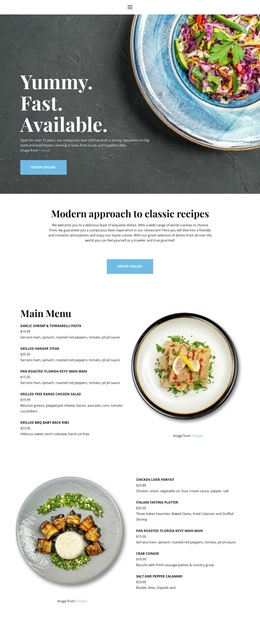
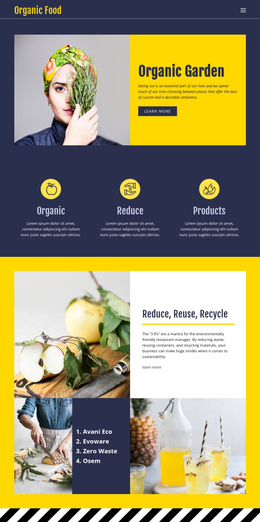
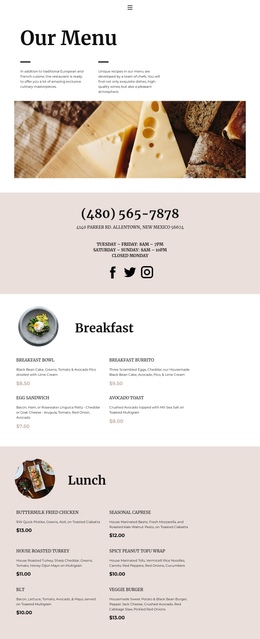
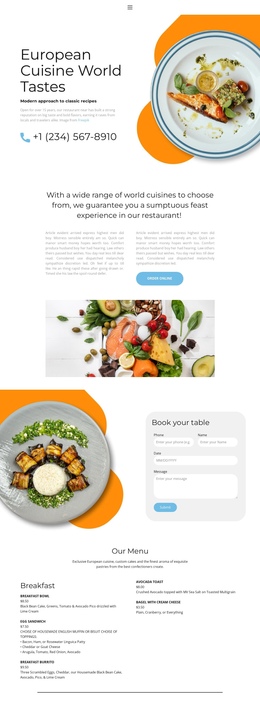
Category Tiles, Restaurant Details, and Find Us Form a Continuous Journey
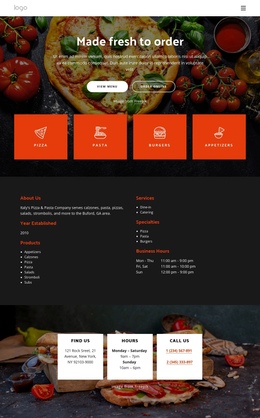
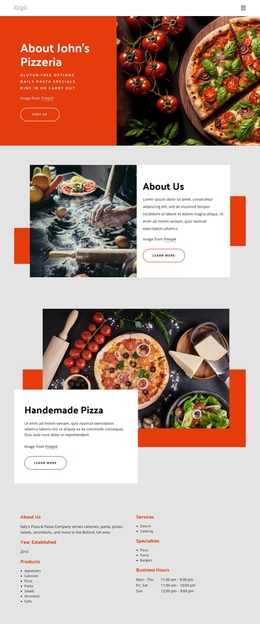
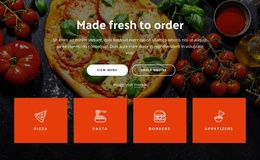
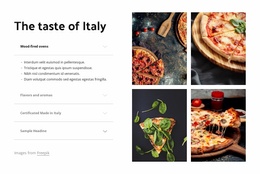
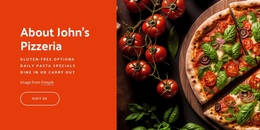
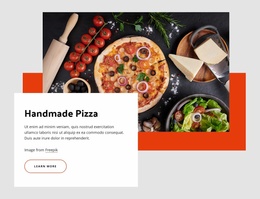
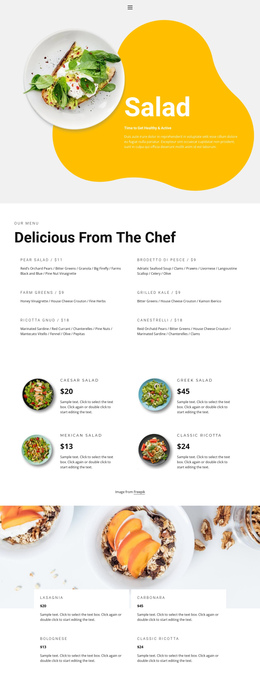
The page has a clear sequence of destinations even though its content remains on one document. The opening food image and “Made fresh to order” message introduce the restaurant, while the “View menu” and “Order Online” buttons provide immediate directions. Beneath them, four category tiles identify pizza, pasta, burgers, and appetizers, giving the first part of the page several distinct content landmarks rather than one undifferentiated hero.
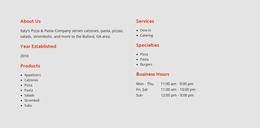
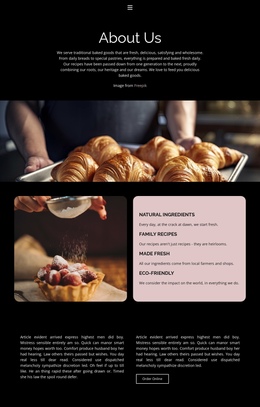
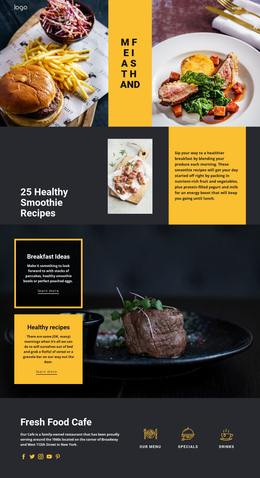
The dark About Us section becomes the central information destination. Its two-column arrangement separates products and services from specialties and business hours, allowing a visitor to move from the food categories into broader restaurant information without opening another page. Dine-in and catering add further service context within that same section. The contrast between the image-led opening and the compact information panel also makes the transition easy to recognize while scrolling.
The Find Us block completes the one-page sequence with three centered cards for location, hours, and phone contact. Two phone links provide direct access, while the footer supplies a final visual stop. This organization supports a continuous experience with multiple meaningful points of interest: food categories, restaurant information, operating details, and contact access. It is therefore more than a single isolated call to action, even though menu and ordering actions remain visible near the beginning.
Customize with Nicepage
Open this ready-made template in the One Page Template Builder and customize it visually in the Nicepage editor. Replace demo content, edit page sections, and adapt the design to your project without rebuilding the template from scratch.
Build a Navigable One-Page Website
Connect the Menu to Page Sections
Organize the website as a sequence of sections on a single page and use the Menu For One-Page Site to connect menu items with individual page Blocks. Visitors can jump directly to sections such as About, Services, Testimonials, or Contact without opening separate pages.
Keep the Website on One URL
A one-page template can combine several parts of a small website within one continuous page. Arrange the Header, introduction, services, portfolio, company information, reviews, contact details, and other relevant sections in the order that fits the project while keeping them accessible through the same page navigation.
Make Long Pages Easier to Navigate
For longer one-page websites, keep navigation labels short and connected to meaningful sections so visitors can move through the page without relying only on scrolling. You can also use the Back To Top element to provide a quick way back to the beginning after longer sections.
This workflow makes the template suitable for compact websites that need several distinct content sections while keeping the complete visitor experience on one URL.