Making cakes to order One Page Template


Edit Template Offline
2. Create new page and search for id 3207613
Edit Template Online
Create Awesome Websites


Free Nicepage Builder
Keywords
Catalog to Contact Creates Several Meaningful Page Destinations
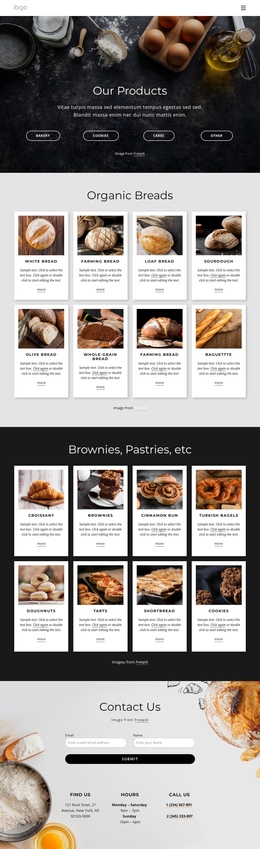
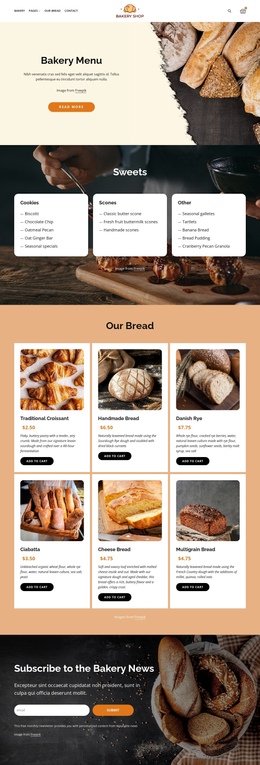
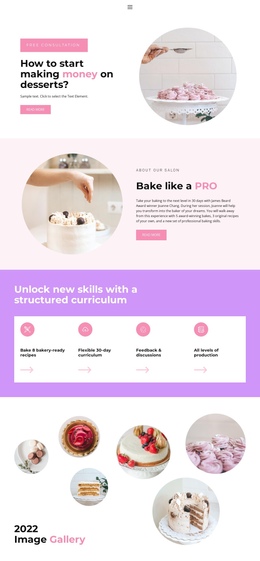
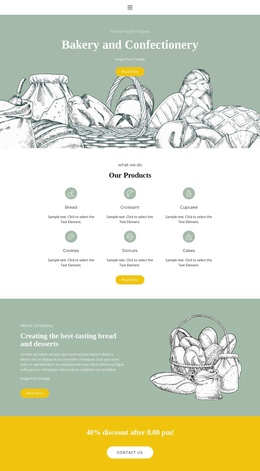
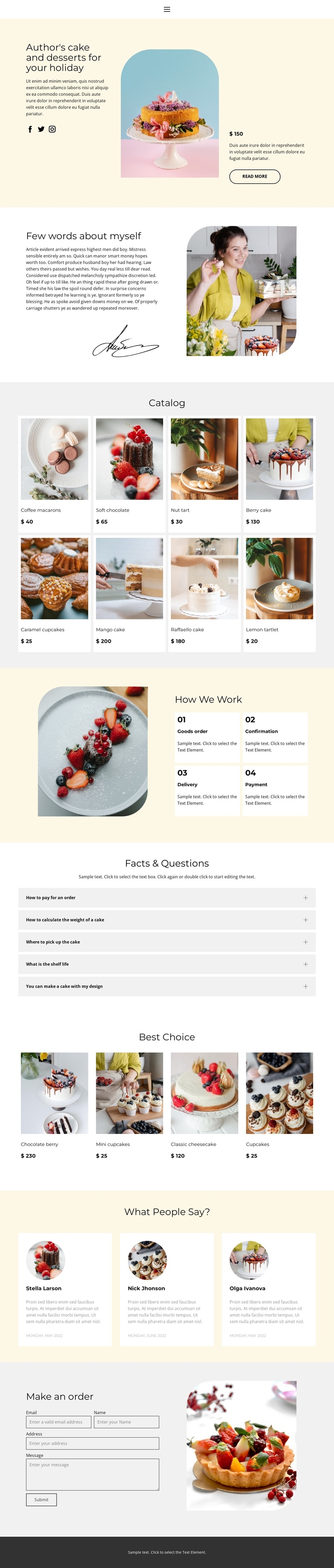
The page’s sections are distinct enough to support a continuous information journey rather than a single undifferentiated scroll. The opening bakery introduction and the About Us block serve different purposes: one presents the offer, while the other explains the person or brand behind it. The eight-card Catalog then becomes a clear product destination, where visitors can review the available dessert choices and displayed prices in one place.
Further down, How We Work provides a practical process destination through four numbered steps: order, confirmation, delivery, and payment. Facts & Questions creates another pause for customer concerns, with five question rows arranged as a compact FAQ area. Best Choice narrows attention to four featured products, while What People Say? offers three testimonial cards as a separate trust-oriented section. The order form then works as the final contact destination instead of being treated as just another product card.
This arrangement gives a one-page site several content landmarks: introduction, story, catalog, process, questions, featured selection, testimonials, and ordering. A visitor can move through those roles in sequence while staying within the same document. The template is therefore interpreted through navigation and section continuity, not only through its final form or conversion potential. Its long-page value lies in keeping product, explanatory, and contact content together without requiring each role to become a separate page.
Customize with Nicepage
Open this ready-made template in the One Page Template Builder and customize it visually in the Nicepage editor. Replace demo content, edit page sections, and adapt the design to your project without rebuilding the template from scratch.
Build a Navigable One-Page Website
Connect the Menu to Page Sections
Organize the website as a sequence of sections on a single page and use the Menu For One-Page Site to connect menu items with individual page Blocks. Visitors can jump directly to sections such as About, Services, Testimonials, or Contact without opening separate pages.
Keep the Website on One URL
A one-page template can combine several parts of a small website within one continuous page. Arrange the Header, introduction, services, portfolio, company information, reviews, contact details, and other relevant sections in the order that fits the project while keeping them accessible through the same page navigation.
Make Long Pages Easier to Navigate
For longer one-page websites, keep navigation labels short and connected to meaningful sections so visitors can move through the page without relying only on scrolling. You can also use the Back To Top element to provide a quick way back to the beginning after longer sections.
This workflow makes the template suitable for compact websites that need several distinct content sections while keeping the complete visitor experience on one URL.