Smoothie Recipes One Page Template


Edit Template Offline
2. Create new page and search for id 12997
Edit Template Online
Create Awesome Websites


Free Nicepage Builder
Keywords
Articles, Recipes, and Requests Build a Continuous Content Journey
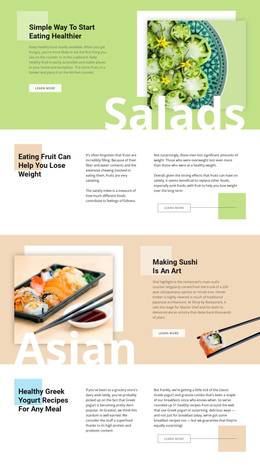
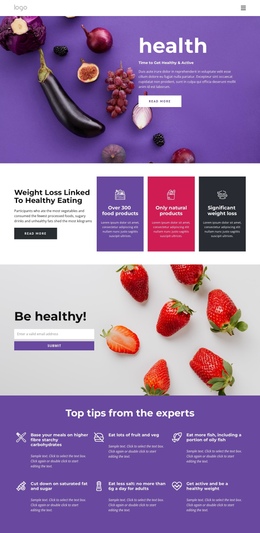
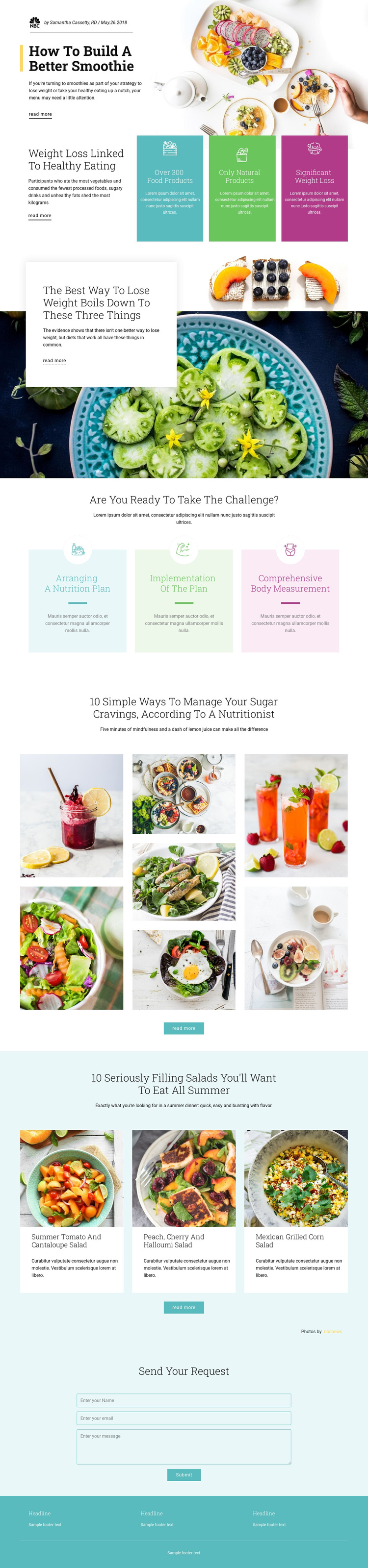
The page contains several meaningful information destinations without separating them into individual documents. The opening smoothie article establishes the subject, followed by a weight-loss article paired with three pastel highlights and another weight-management feature displayed over a salad photograph. These sections create an early editorial sequence in which visitors can move from a featured story to supporting nutrition information.
The later content changes direction without breaking the single-page experience. A three-card nutrition challenge explains the progression from arranging a nutrition plan to implementing it and completing comprehensive body measurement. The seven-image sugar-cravings mosaic then works as a visual article destination, while the three salad cards form a separate recipe collection. Their different layouts help visitors recognize where one content topic ends and another begins as they continue through the page.
The contact request form provides a final destination rather than merely another article block. Its name, email, and message inputs sit beneath “Send your request,” and the teal footer gives the document a clear endpoint. This section sequence makes the design suitable for a one-page structure because multiple content subjects, a practical process, recipe material, and contact information remain accessible within one continuous page journey.
Customize with Nicepage
Open this ready-made template in the One Page Template Builder and customize it visually in the Nicepage editor. Replace demo content, edit page sections, and adapt the design to your project without rebuilding the template from scratch.
Build a Navigable One-Page Website
Connect the Menu to Page Sections
Organize the website as a sequence of sections on a single page and use the Menu For One-Page Site to connect menu items with individual page Blocks. Visitors can jump directly to sections such as About, Services, Testimonials, or Contact without opening separate pages.
Keep the Website on One URL
A one-page template can combine several parts of a small website within one continuous page. Arrange the Header, introduction, services, portfolio, company information, reviews, contact details, and other relevant sections in the order that fits the project while keeping them accessible through the same page navigation.
Make Long Pages Easier to Navigate
For longer one-page websites, keep navigation labels short and connected to meaningful sections so visitors can move through the page without relying only on scrolling. You can also use the Back To Top element to provide a quick way back to the beginning after longer sections.
This workflow makes the template suitable for compact websites that need several distinct content sections while keeping the complete visitor experience on one URL.