The family-owned bakery One Page Template


Edit Template Offline
2. Create new page and search for id 3227975
Edit Template Online
Create Awesome Websites


Free Nicepage Builder
Keywords
Categories, Products, and Hours Create Distinct Page Destinations
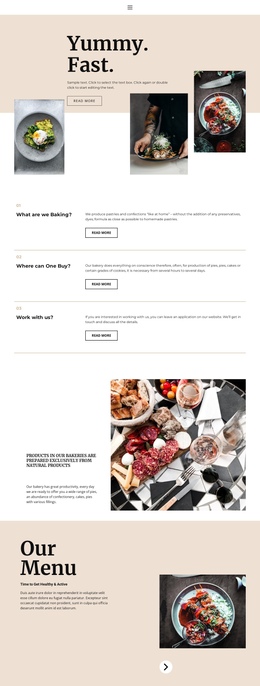
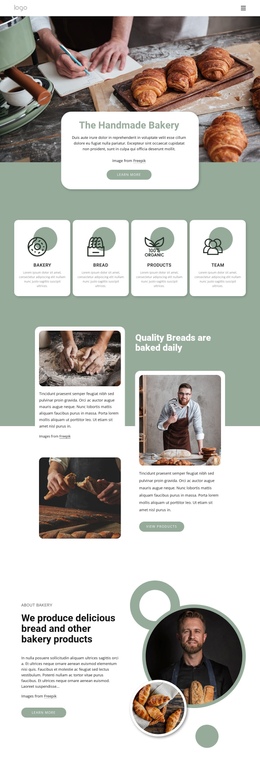
The page contains several substantial information zones that can be understood as separate destinations within one continuous document. The Bakery hero introduces the subject, the family-owned bakery section provides background, and the four category cards create a natural stop for bread, pastries, cakes, and cookies. The six-card Bakery Items area works as another destination because it shifts from broad categories to named products, descriptions, images, and displayed prices. Visitors can therefore move through the content in stages without needing every subject to occupy a separate page.
The organic breads section adds four visible category buttons for bakery, cookies, café, and catering, while the two story cards give the bakery narrative a distinct place in the sequence. The gallery then changes the rhythm from text and cards to four equal photographs, followed by the practical Keeping & Storing information. Ending with Hours & Location gives the page a useful final destination for address, opening hours, phone details, dining, seating, takeaway, Wi-Fi, delivery, and ADA accessibility. This order supports navigation across multiple content purposes—introduction, offer, story, visual context, guidance, and visitor planning—without turning the form into a single-action funnel. The design is therefore well suited to a one-page experience where section sequence matters as much as the individual content blocks.
Customize with Nicepage
Open this ready-made template in the One Page Template Builder and customize it visually in the Nicepage editor. Replace demo content, edit page sections, and adapt the design to your project without rebuilding the template from scratch.
Build a Navigable One-Page Website
Connect the Menu to Page Sections
Organize the website as a sequence of sections on a single page and use the Menu For One-Page Site to connect menu items with individual page Blocks. Visitors can jump directly to sections such as About, Services, Testimonials, or Contact without opening separate pages.
Keep the Website on One URL
A one-page template can combine several parts of a small website within one continuous page. Arrange the Header, introduction, services, portfolio, company information, reviews, contact details, and other relevant sections in the order that fits the project while keeping them accessible through the same page navigation.
Make Long Pages Easier to Navigate
For longer one-page websites, keep navigation labels short and connected to meaningful sections so visitors can move through the page without relying only on scrolling. You can also use the Back To Top element to provide a quick way back to the beginning after longer sections.
This workflow makes the template suitable for compact websites that need several distinct content sections while keeping the complete visitor experience on one URL.