Adventure tours and travel One Page Template


Edit Template Offline
2. Create new page and search for id 12493
Edit Template Online
Create Awesome Websites


Free Nicepage Builder
Keywords
Nine Distinct Sections Create a Continuous Travel Content Journey
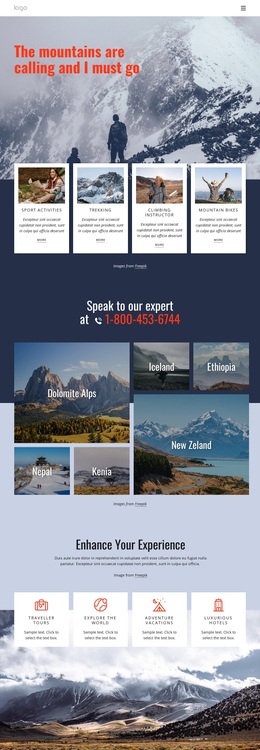
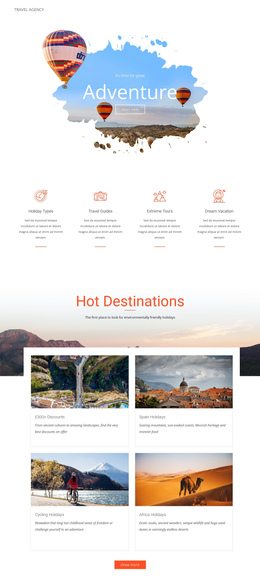
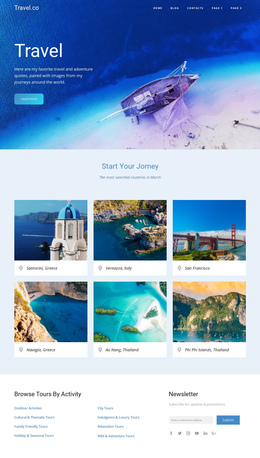
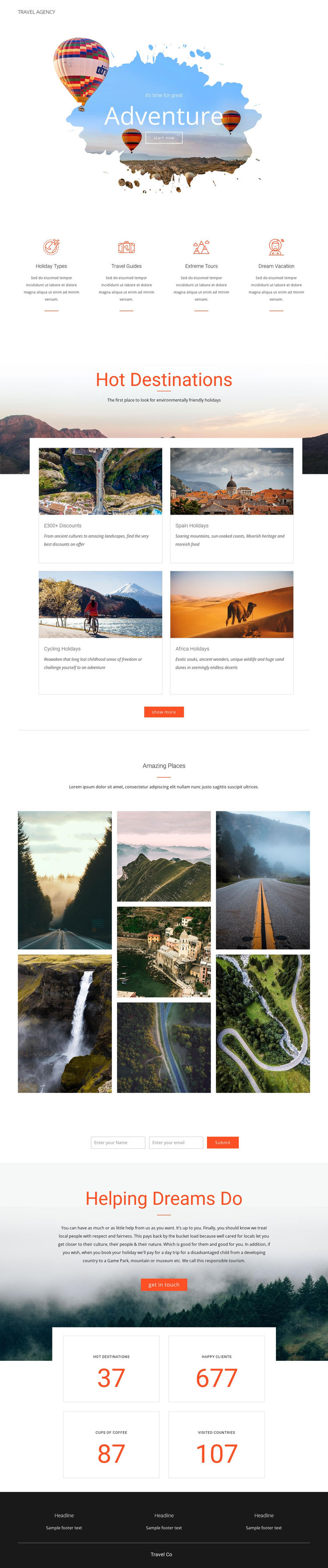
The page’s section order supports a continuous journey through several different kinds of travel information. The Adventure hero establishes the opening destination, followed by four peer feature items that can function as a broad overview of the available experience categories. The Hot destinations banner then marks a transition into a more specific content area, where four image cards provide separate holiday destinations or offer categories.
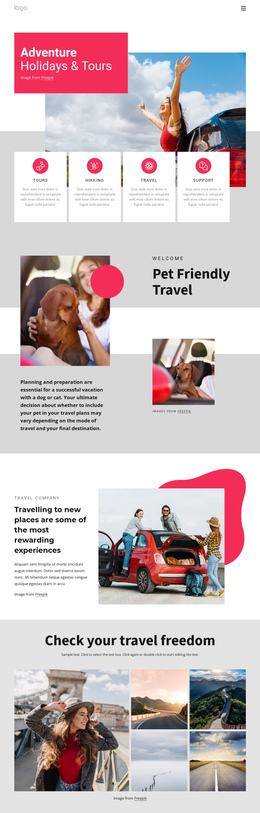
The seven-image Amazing Places collage acts as another meaningful stop in the sequence because it changes the visitor’s role from comparing written card content to exploring scenic inspiration. The contact form follows that visual section, and the Helping Dreams Do panel provides a later text-and-button destination for visitors who want to get in touch. Near the bottom, four bordered metric tiles create a concise summary region before the three-column dark footer closes the document. This arrangement supports one-page navigation because the major groups have distinct purposes even though they remain on the same URL. The existing navigation and mobile-navigation components can present access to those areas, but the analysis does not verify that anchor links are already connected. The important structural point is the continuity itself: introduction, categories, destinations, imagery, contact, invitation, summary, and footer are arranged as one expandable content path rather than split into separate pages.
Customize with Nicepage
Open this ready-made template in the One Page Template Builder and customize it visually in the Nicepage editor. Replace demo content, edit page sections, and adapt the design to your project without rebuilding the template from scratch.
Build a Navigable One-Page Website
Connect the Menu to Page Sections
Organize the website as a sequence of sections on a single page and use the Menu For One-Page Site to connect menu items with individual page Blocks. Visitors can jump directly to sections such as About, Services, Testimonials, or Contact without opening separate pages.
Keep the Website on One URL
A one-page template can combine several parts of a small website within one continuous page. Arrange the Header, introduction, services, portfolio, company information, reviews, contact details, and other relevant sections in the order that fits the project while keeping them accessible through the same page navigation.
Make Long Pages Easier to Navigate
For longer one-page websites, keep navigation labels short and connected to meaningful sections so visitors can move through the page without relying only on scrolling. You can also use the Back To Top element to provide a quick way back to the beginning after longer sections.
This workflow makes the template suitable for compact websites that need several distinct content sections while keeping the complete visitor experience on one URL.