IMPORTANT!
   The Multi-Language is available with the Business License and higher.
    You can upgrade your license here.
The Multi-Language Sites enable website visitors to select their preferred language for the Website. English is set as default. You can change it in Site Settings > SEO > Language.
You can add the Language Element and translations for HTML, WordPress, and Joomla sites, as well as sites published from the Desktop Applications, to Nicepage Hosting.

Language Menu
After adding a new Language, you will see a new Language Menu on the Top Bar. Up to three flags are displayed in a row, and additional localizations are available under the Options icon.
The current localization is highlighted, and the default site language is displayed in the tooltip. The Manage link opens the Language properties in the Property Panel.

You can also switch languages in the Settings Menu on the Top Bar.

Language Name As In Original
You can view the language names in the Language Element, Property Panel, and Add Language dialog as they appear in the original.
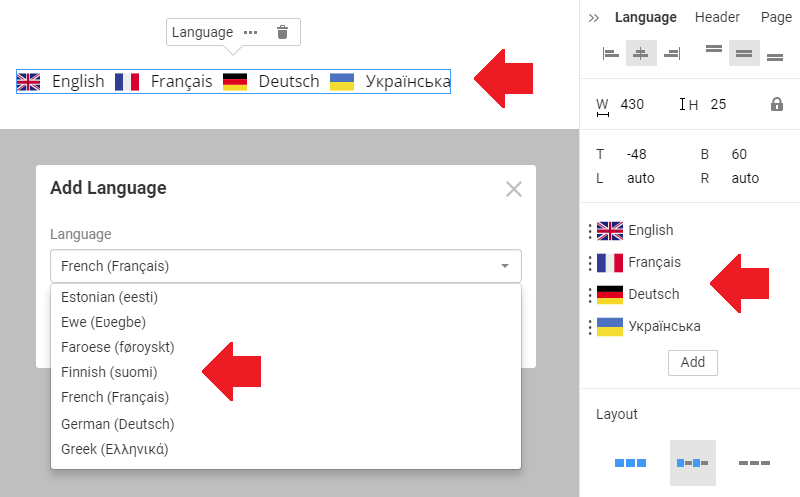
Make Language Default
You can now easily set the Default Language for your site in the Property Panel. Select the Language Element and select this option from the Menu.

Translate Elements
To add a new translation, follow these steps.
- Add a text element, for example, Heading 1.
- Change the Language.
- Type in the translation.
Menu Item Translation
You can use the translations for menu items in the Edit Menu dialog for the selected Language.
Bulleted List, Numbered List, And Blockquote Translation
You can translate the Bulleted List, Numbered List, and Blockquote.

Modal Popups And Cookie Privacy Policy Translation
You can also translate Modal and Cookie Consent Popups on your multi-language sites.

Table Element Translation
You can perform multi-language translations of the Table Element.

Contact Form Translation
You can also translate the Contact Form Elements Fields.

You can translate the Contact Form Steps and Gallery Titles.

FAQ Content Translation
We support the translation of the FAQ Content.

Cookies Popup Translation
You can also translate the Cookies Popup texts.

Image SEO Alt Translation
We also support image SEO alt translation.

Language SEO Options
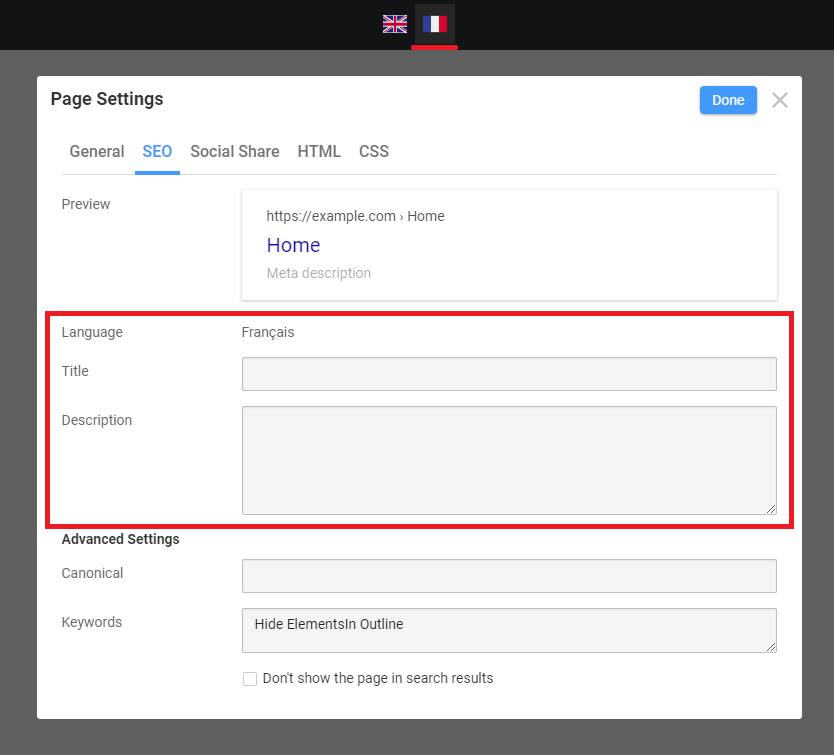
For Multi-Language Sites, you can edit the Title and Description for the chosen language in the SEO Tab of the Page Settings.
Switch Language In Preview
You can also switch the Language in the Quick Preview.

Test Languages In Browser
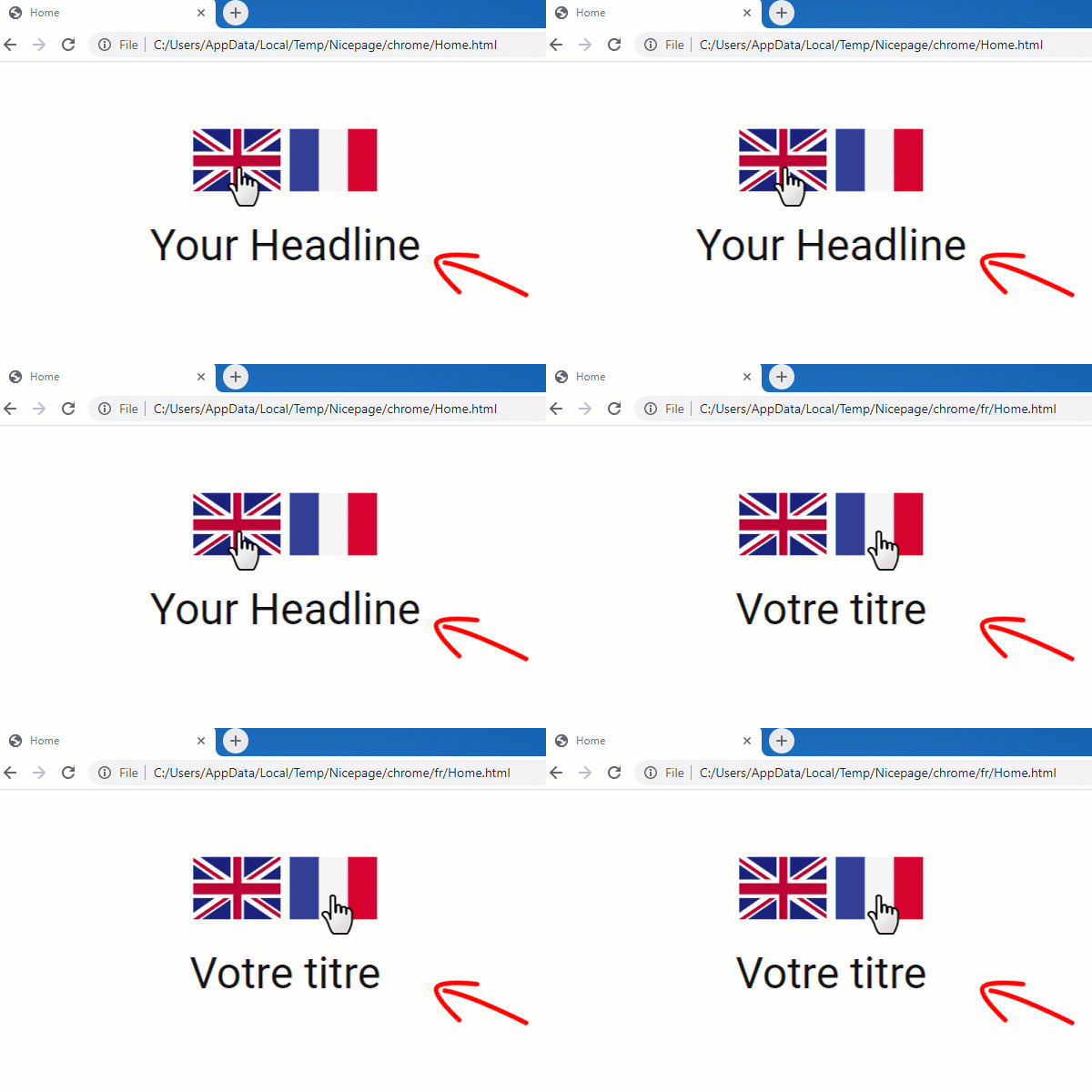
You can test Language switching in a browser.

In your browser, click the Flag icons to switch Languages.
Multi-Language Sites In WordPress And Joomla
You can create Multi-Language Sites using the Nicepage WordPress Plugin and Joomla Extension.
Language Element In Plugins
You can add the Language Element with the WordPress Plugin and Joomla Extension.

Edit Translations In WordPress And Joomla
Similar to the Applications, you can edit translations with the WordPress Plugin and Joomla Extension.
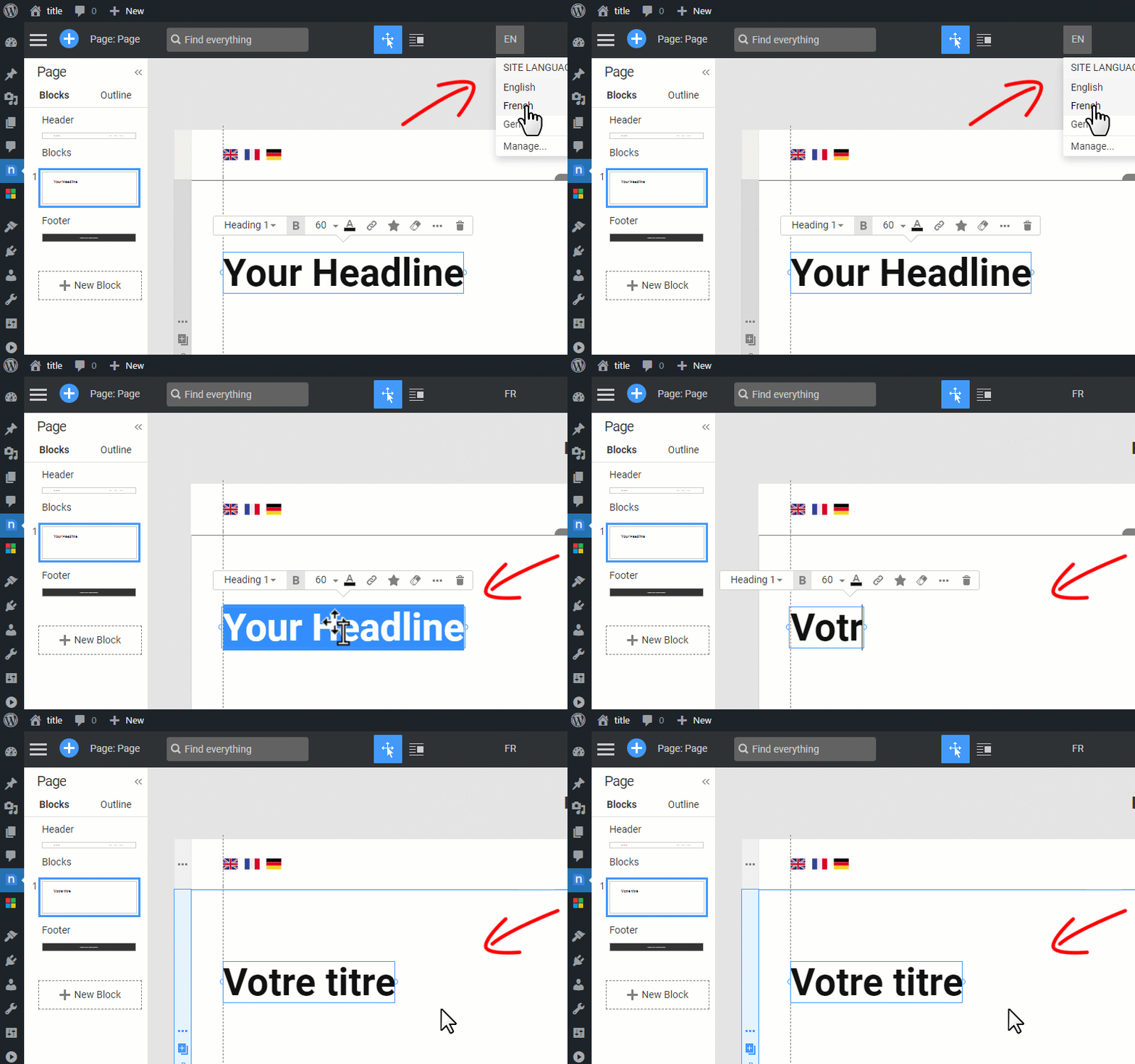
Multi-Language In WordPress And Joomla Themes
You can also use the Multi-Language in WordPress Themes and Joomla Templates.
Switch Language On Site Templates
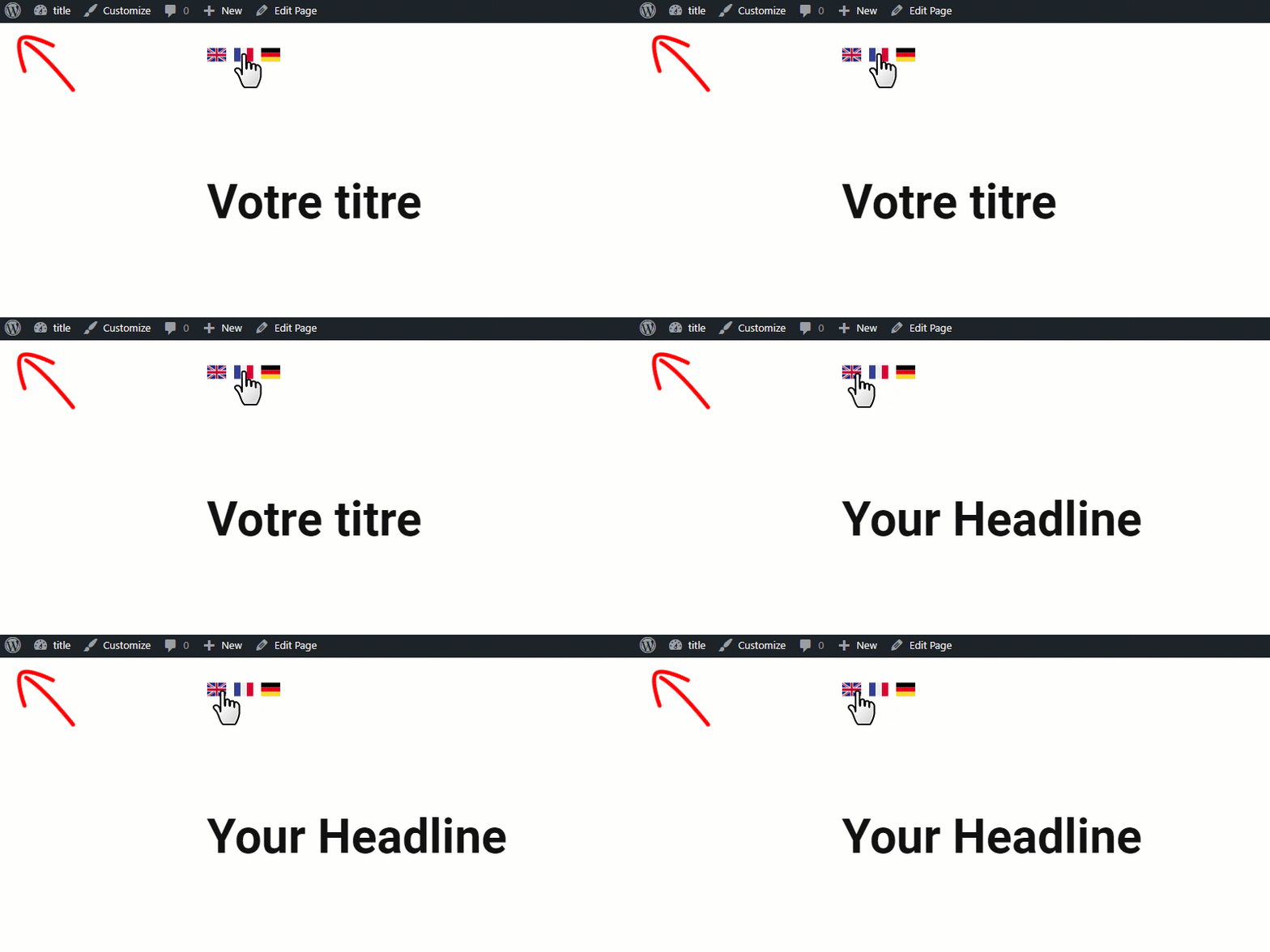
You can use the built-in CMS mechanism to switch the Language in WordPress and Joomla. It works in the Theme on all pages, including templates and non-Nicepage pages, even if you haven't installed the Nicepage Editor plugin.
The following example demonstrates language switching on the home page, which utilizes the Blog Posts Template to display the Website's posts.

NOTE: To add translations for Templates, we recommend using the Loco Translate plugin or poEdit application.
Preview Translated Pages in WordPress And Joomla
You can preview and test your translated pages and articles in WordPress and Joomla.
Thank-You Page Template Translation
The Thank You Page template supports all languages for HTML, WordPress, and Joomla websites.

Category Filter Translation in WordPress
For our WordPress users, we have added the ability to translate Categories for both Blog Posts and WooCommerce Products.
In the WordPress admin, the system will now automatically add translation fields based on the number of languages used in the Nicepage Language Element.

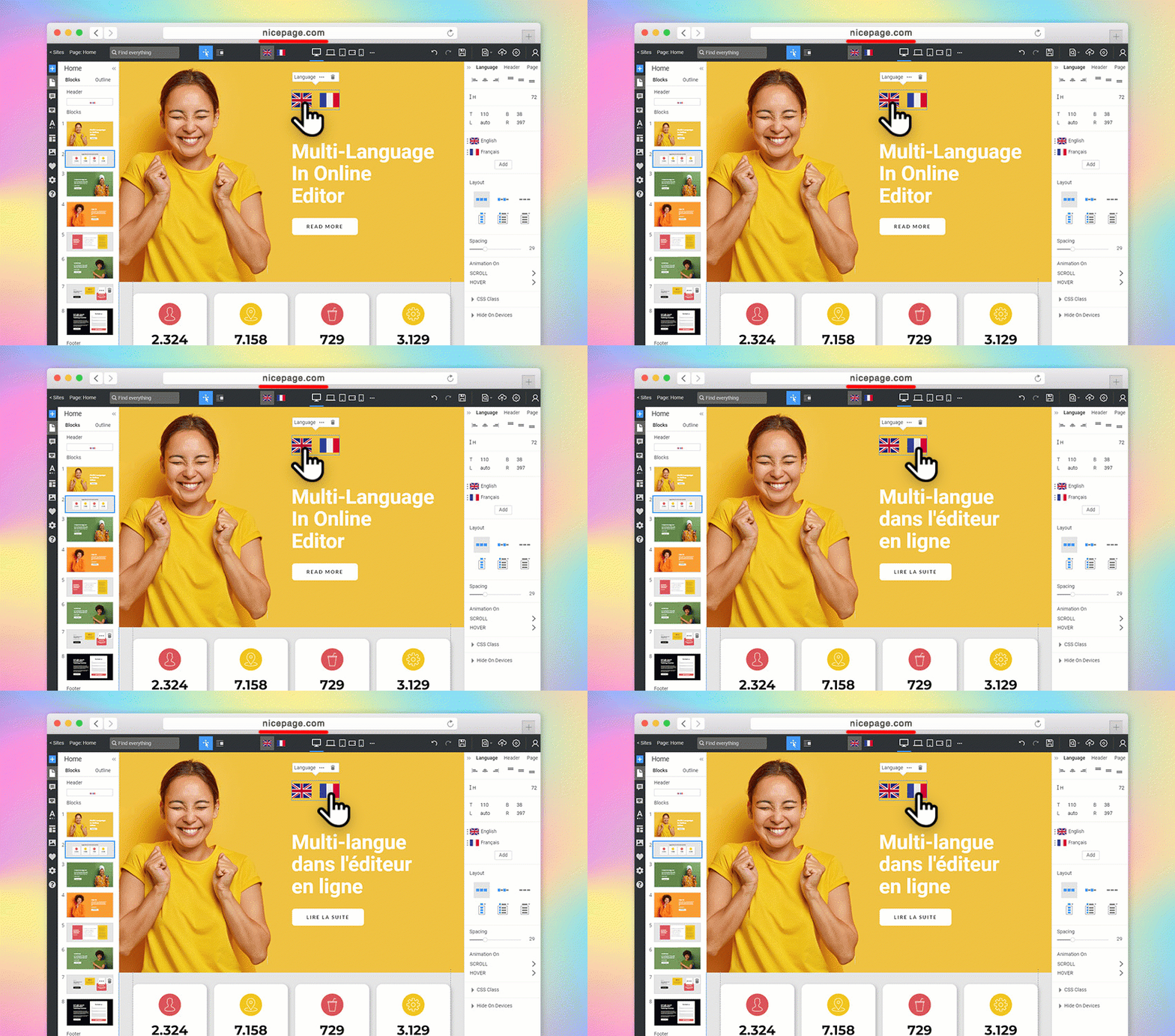
Multi-Language Sites In Online Editor
You can also create Multi-Language Sites in the Online Editor from Nicepage 4.19.