Making your ideas a reality Template
Edit Template Offline
2. Create new page and search for id 6215089
Edit Template Online
Create Awesome Websites


Free Nicepage Builder
Keywords
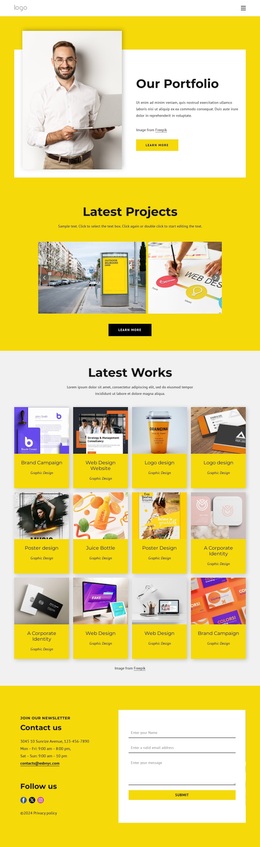
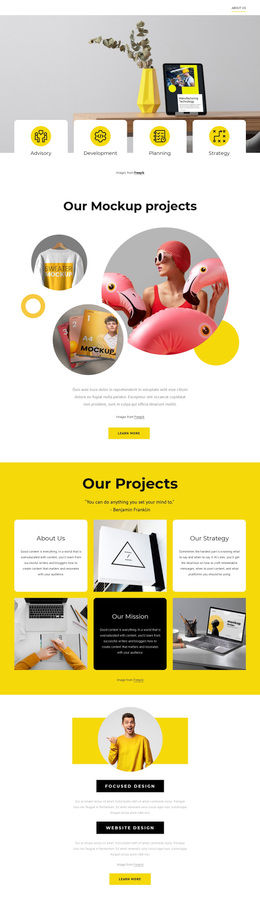
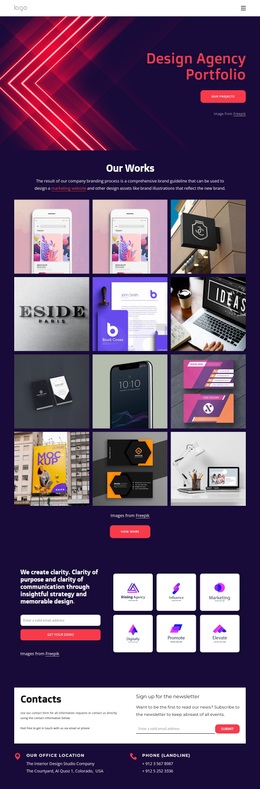
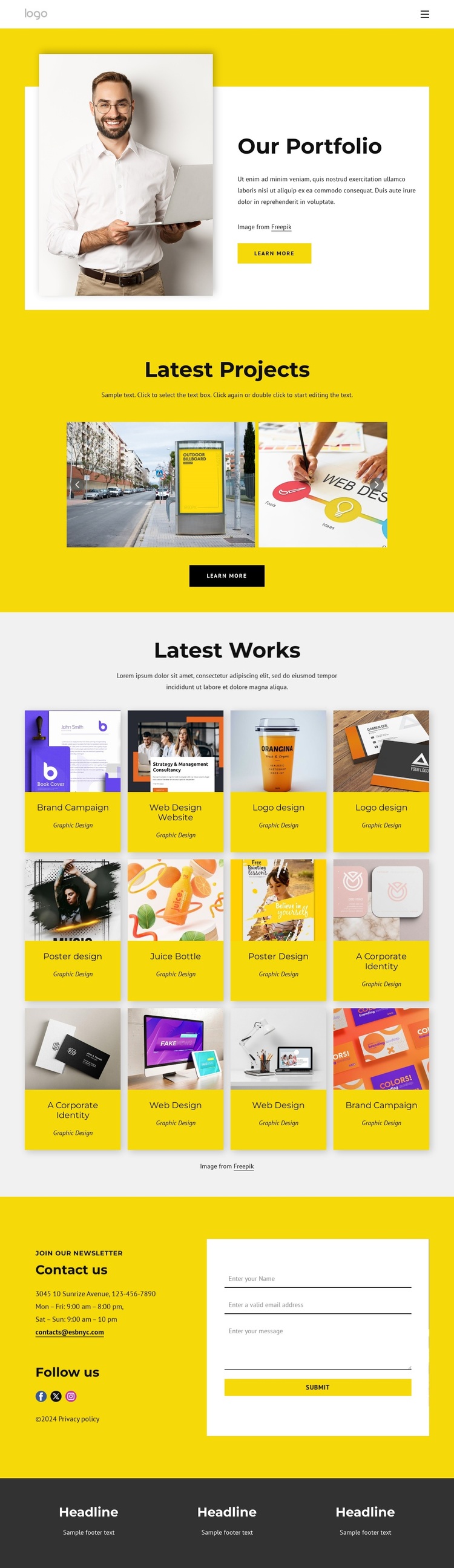
Six Gallery Images and Twelve Cards Carry the Portfolio Story
Large project imagery is the main reason to consider this design as a portfolio starting point. The yellow Our Portfolio introduction establishes a recognizable opening, using a large image beside explanatory copy and a Learn more button rather than leading with a plain service list. That choice suits projects where the quality and variety of visible work should carry much of the message.
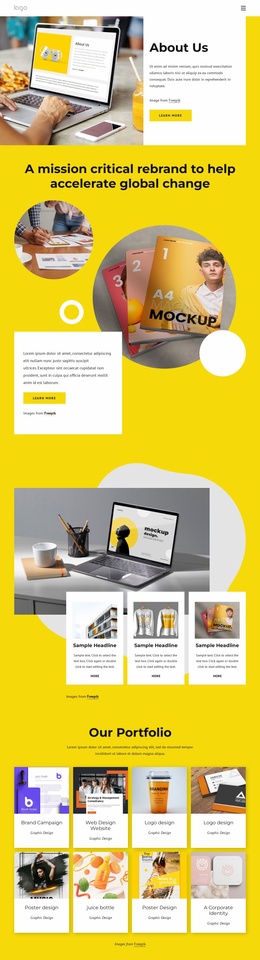
The design then provides two complementary forms of proof. Latest Projects uses six gallery images for a concentrated visual showcase with previous and next controls. Latest Works expands the selection into twelve repeated cards with labels including Brand Campaign, Web Design Website, Logo design, Poster design, A Corporate Identity, Web Design, and Graphic Design. This combination makes the page useful for a creative practice that needs both an immediate sample and a broader range of categories.
The closing contact region keeps the option practical. It places contact information, newsletter wording, and Facebook, Twitter, and Instagram links beside an inquiry form, so the page does not stop after displaying images. The dark footer adds three information columns and gives the long presentation a defined ending. Together, the visual introduction, categorized work coverage, and direct contact area distinguish this option from portfolio layouts centered only on a single project, a biography, or a compact service list.
Customize with Nicepage
Open this ready-made template in the Template Builder and customize it visually in the Nicepage editor. Replace demo content, edit page sections, and adapt the design to your project without rebuilding the template from scratch.
Start With a Ready-Made Template
Choose a Design for a New Page
Use a ready-made template as a starting point instead of creating every page from a blank canvas. When adding a new page in Nicepage, browse available designs, compare different layouts, and choose an option that already fits the general purpose and visual direction of your project.
Browse Different Page Designs
Explore Page Designs using search, thematic categories, Design Sets, and full-page previews. The collection includes layouts for different subjects and page purposes, making it easier to compare alternatives before selecting a design to customize.
Customize the Selected Template
After choosing a design, create the page and continue editing it visually in Nicepage. Replace the demo content, adjust images, typography, colors, sections, and other elements, and adapt the ready-made layout to your own content instead of rebuilding the design from the beginning.
Explore More Design Directions
If the first option does not match your project closely enough, return to the design collection and compare other templates before committing to a layout. This makes the template library useful not only for faster page creation, but also for exploring different visual approaches and finding a suitable starting point for a new project.
This workflow gives you access to a broad collection of ready-made designs that can be selected, compared, and customized according to the needs of each new page or project.