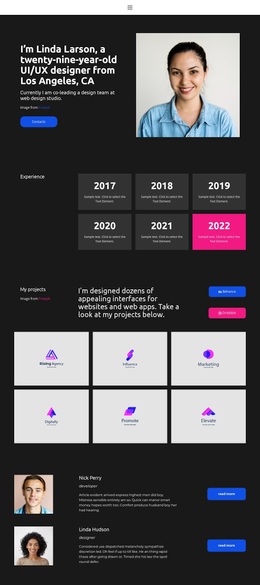
My bio Template


Edit Template Offline
2. Create new page and search for id 6006663
Edit Template Online
Create Awesome Websites


Free Nicepage Builder
Keywords
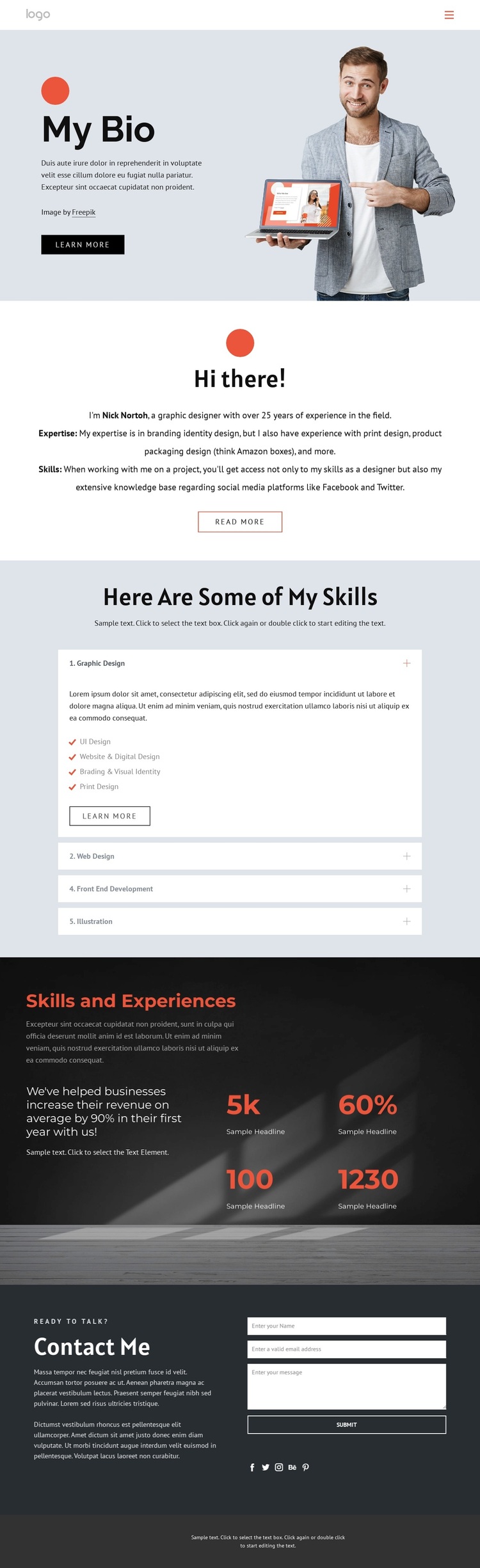
A Portrait-Led Choice for Showing Design Skills and Experience
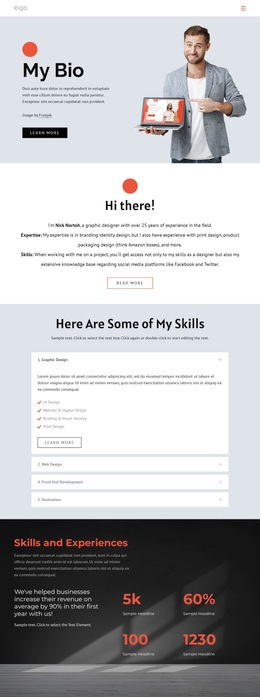
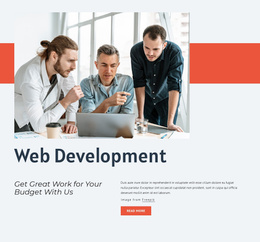
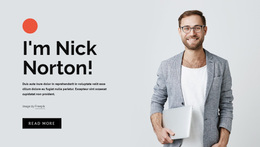
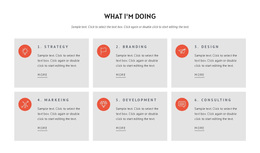
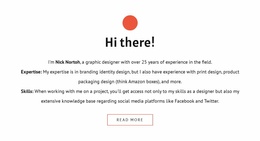
The strongest reason to choose this design is the way it connects personal identity with a compact presentation of professional capabilities. The opening places a portrait beside “My Bio” content, so the page begins with a person rather than an abstract service statement. The following introduction and expandable skills section then broaden that first impression into four clear categories: graphic design, web design, front-end development, and illustration. This combination suits a profile that needs to explain both who the designer is and what kinds of work the designer presents.
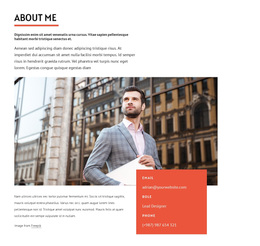
The page also covers the supporting content expected in a client-facing biography. A dark photographic experience section introduces a visual change of pace and displays four metrics, while the final Contact Me section makes the next conversation visible through an inquiry form and social links. The sample names, claims, and numbers are structural placeholders and should not be treated as verified credentials. Visually, pale blue surfaces, charcoal panels, coral accents, large sans-serif headings, and generous spacing keep the design personal without relying on dense text. Compared with a layout centered only on services or only on a portfolio gallery, this option is most distinctive when biography, skills, experience context, and contact access need to share one focused presentation.
Customize with Nicepage
Open this ready-made template in the Template Builder and customize it visually in the Nicepage editor. Replace demo content, edit page sections, and adapt the design to your project without rebuilding the template from scratch.
Start With a Ready-Made Template
Choose a Design for a New Page
Use a ready-made template as a starting point instead of creating every page from a blank canvas. When adding a new page in Nicepage, browse available designs, compare different layouts, and choose an option that already fits the general purpose and visual direction of your project.
Browse Different Page Designs
Explore Page Designs using search, thematic categories, Design Sets, and full-page previews. The collection includes layouts for different subjects and page purposes, making it easier to compare alternatives before selecting a design to customize.
Customize the Selected Template
After choosing a design, create the page and continue editing it visually in Nicepage. Replace the demo content, adjust images, typography, colors, sections, and other elements, and adapt the ready-made layout to your own content instead of rebuilding the design from the beginning.
Explore More Design Directions
If the first option does not match your project closely enough, return to the design collection and compare other templates before committing to a layout. This makes the template library useful not only for faster page creation, but also for exploring different visual approaches and finding a suitable starting point for a new project.
This workflow gives you access to a broad collection of ready-made designs that can be selected, compared, and customized according to the needs of each new page or project.