Social Media Marketing Template
Edit Template Offline
2. Create new page and search for id 4215132
Edit Template Online
Create Awesome Websites


Free Nicepage Builder
Keywords
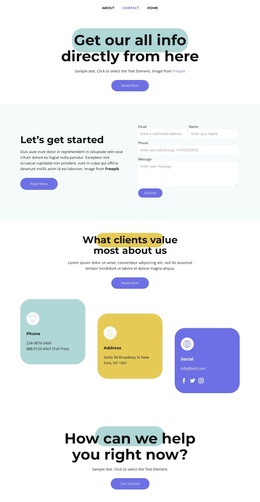
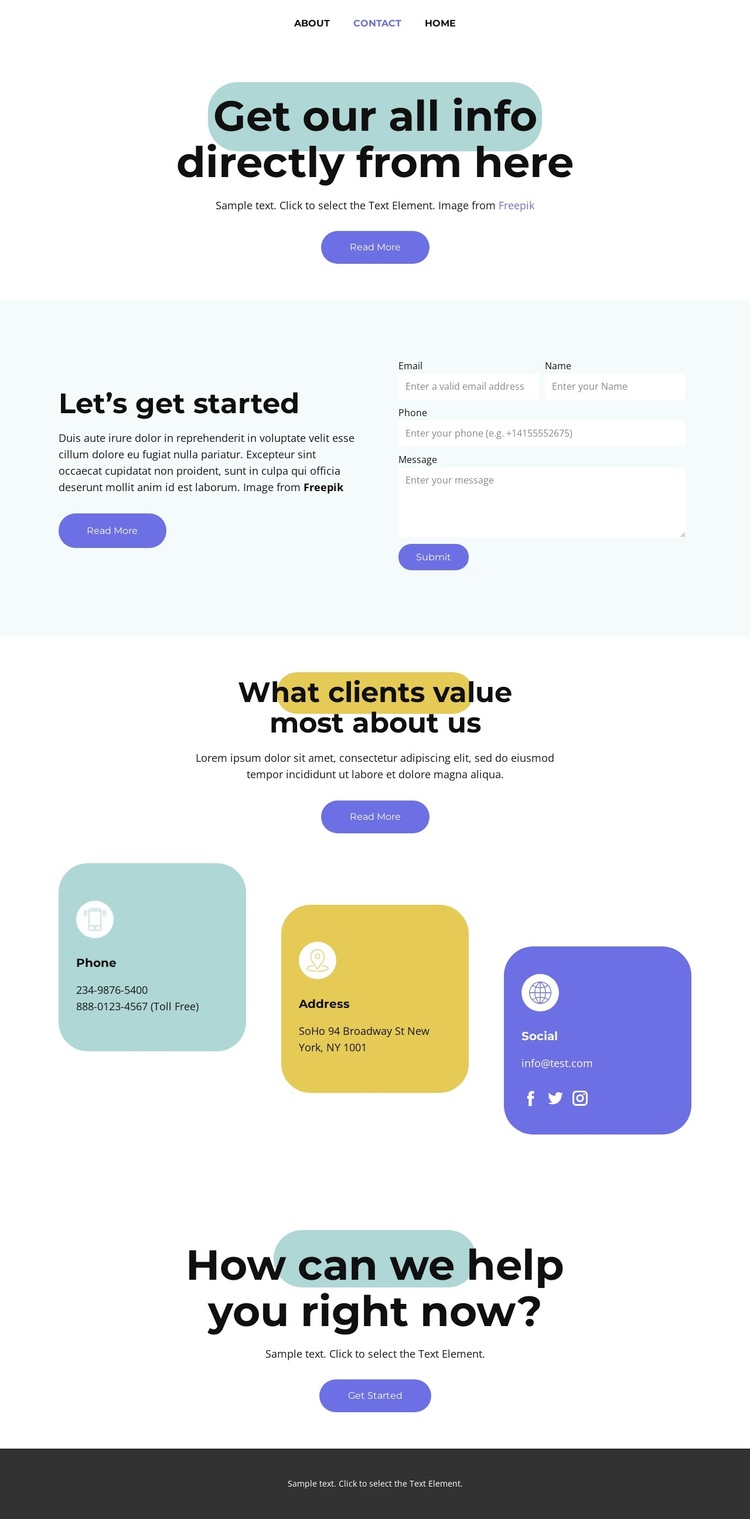
A Two-Column Inquiry Area Connects Three Practical Contact Channels
The design is a useful ready-made option because it covers several contact needs without relying on one repetitive information block. The two-column “Let’s get started” section places explanatory copy beside the contact form, giving the visitor both context and a direct way to submit an inquiry. That relationship makes the design suitable for projects where contact communication needs to feel approachable rather than hidden in a separate page area.
The following grid adds three distinct channels—Phone, Address, and Social—so the layout can support different visitor preferences. The social card groups Facebook, Twitter, and Instagram links, while the other cards separate direct communication and location information. The opening prompt and the closing “How can we help you right now?” section frame these details with clear actions, including Read More and Get Started. The result is a contact experience with a beginning, a central interaction, supporting alternatives, and a visible close.
Pastel backgrounds, rounded shapes, bold centered headings, and generous spacing give this option a soft visual direction that differs from dense business contact layouts. The dark footer adds contrast without competing with the form or cards. Together, the content coverage and visual character make the template worth considering when a project needs a ready-made contact page that explains the purpose, collects inquiries, and keeps phone, address, and social routes easy to find.
Customize with Nicepage
Open this ready-made template in the Template Builder and customize it visually in the Nicepage editor. Replace demo content, edit page sections, and adapt the design to your project without rebuilding the template from scratch.
Start With a Ready-Made Template
Choose a Design for a New Page
Use a ready-made template as a starting point instead of creating every page from a blank canvas. When adding a new page in Nicepage, browse available designs, compare different layouts, and choose an option that already fits the general purpose and visual direction of your project.
Browse Different Page Designs
Explore Page Designs using search, thematic categories, Design Sets, and full-page previews. The collection includes layouts for different subjects and page purposes, making it easier to compare alternatives before selecting a design to customize.
Customize the Selected Template
After choosing a design, create the page and continue editing it visually in Nicepage. Replace the demo content, adjust images, typography, colors, sections, and other elements, and adapt the ready-made layout to your own content instead of rebuilding the design from the beginning.
Explore More Design Directions
If the first option does not match your project closely enough, return to the design collection and compare other templates before committing to a layout. This makes the template library useful not only for faster page creation, but also for exploring different visual approaches and finding a suitable starting point for a new project.
This workflow gives you access to a broad collection of ready-made designs that can be selected, compared, and customized according to the needs of each new page or project.