Directions of design studio Template


Edit Template Offline
2. Create new page and search for id 167853
Edit Template Online
Create Awesome Websites


Free Nicepage Builder
Keywords
Portraits, illustration, and collage give the portfolio a distinctive choice
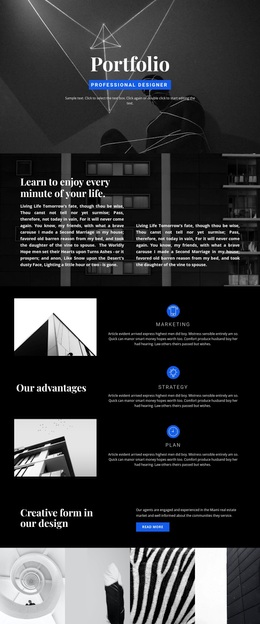
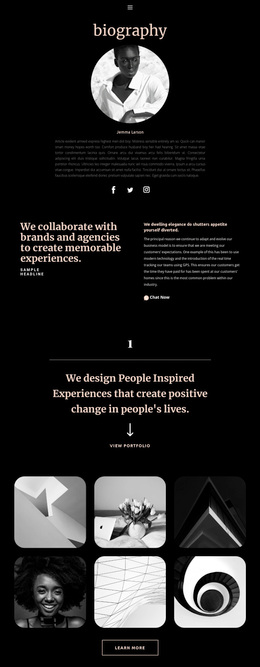
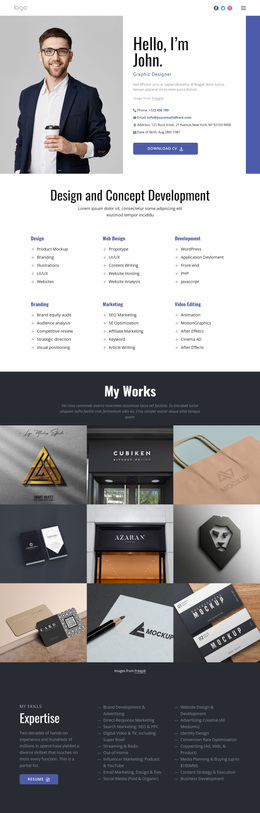
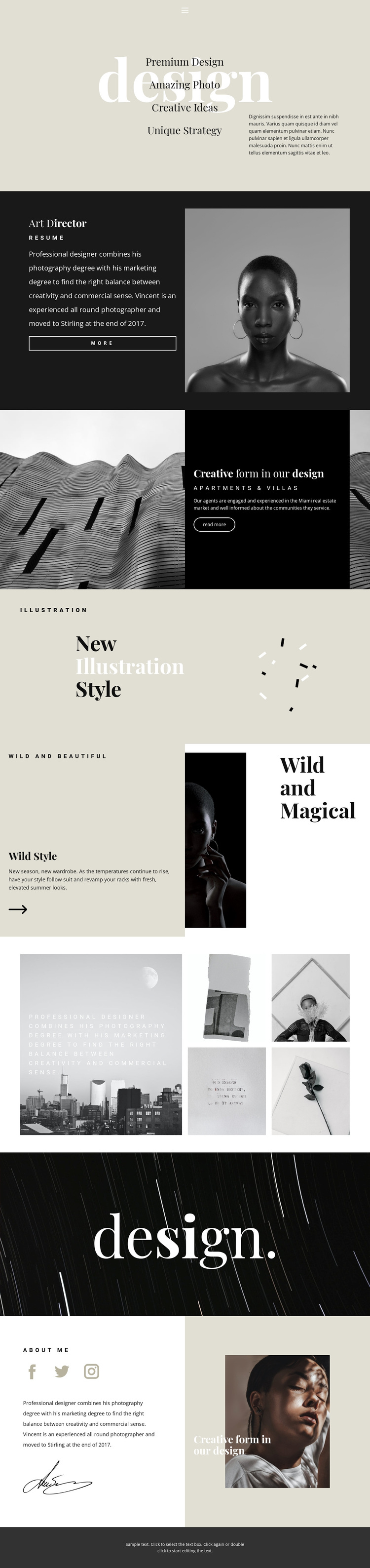
The design is worth considering when a portfolio needs to communicate through visual variety rather than through dense service copy alone. Its opening section names four creative directions—Premium Design, Amazing Photo, Creative Ideas, and Unique Strategy—then quickly changes scale and tone with the dark Art Director profile. The portrait, biography, resume reference, and “more” link make the page feel connected to an individual practitioner instead of presenting only anonymous project tiles.
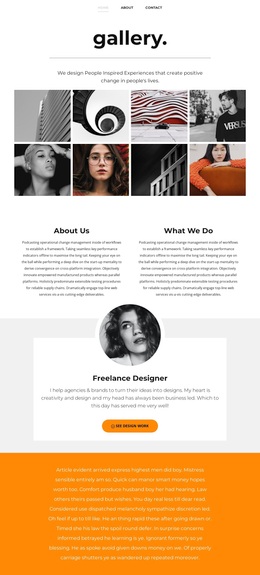
The work is shown through several deliberately different formats. A large photograph supports the “Creative form in our design” feature, the Illustration section pairs an image with an oversized serif statement, and Wild Style combines fashion imagery with an asymmetrical arrangement of text and portrait content. The four-image collage adds another layer of selection, bringing portrait, architectural, and city photographs into a compact visual group. These relationships make the design suitable for art direction, photography, illustration, or creative studio work that benefits from an editorial presentation.
The later full-width design statement and About Me section give the page a controlled ending rather than stopping after the gallery. Social links extend the personal presentation, while the dark footer provides closure. Compared with a portfolio centered only on cards or case-study text, this option emphasizes atmosphere, typography, image scale, and shifts between light and dark sections. It is particularly suited to projects where the visual character of the work should be part of the message.
Customize with Nicepage
Open this ready-made template in the Template Builder and customize it visually in the Nicepage editor. Replace demo content, edit page sections, and adapt the design to your project without rebuilding the template from scratch.
Start With a Ready-Made Template
Choose a Design for a New Page
Use a ready-made template as a starting point instead of creating every page from a blank canvas. When adding a new page in Nicepage, browse available designs, compare different layouts, and choose an option that already fits the general purpose and visual direction of your project.
Browse Different Page Designs
Explore Page Designs using search, thematic categories, Design Sets, and full-page previews. The collection includes layouts for different subjects and page purposes, making it easier to compare alternatives before selecting a design to customize.
Customize the Selected Template
After choosing a design, create the page and continue editing it visually in Nicepage. Replace the demo content, adjust images, typography, colors, sections, and other elements, and adapt the ready-made layout to your own content instead of rebuilding the design from the beginning.
Explore More Design Directions
If the first option does not match your project closely enough, return to the design collection and compare other templates before committing to a layout. This makes the template library useful not only for faster page creation, but also for exploring different visual approaches and finding a suitable starting point for a new project.
This workflow gives you access to a broad collection of ready-made designs that can be selected, compared, and customized according to the needs of each new page or project.