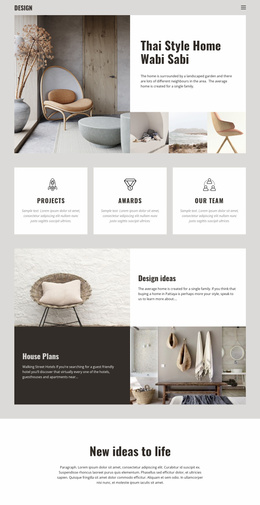
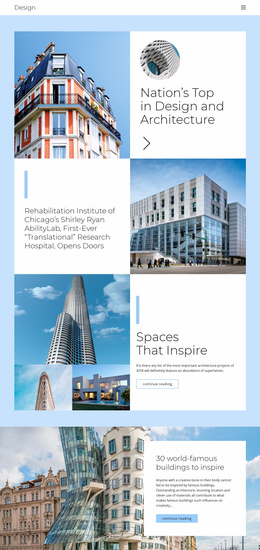
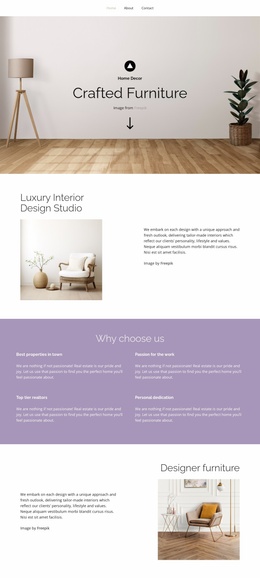
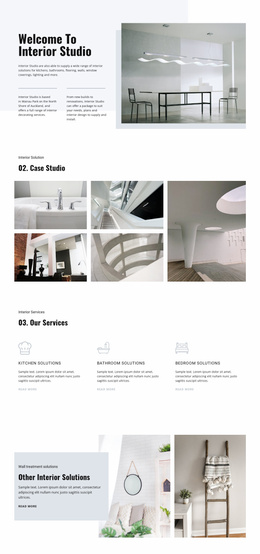
We specialise in luxurious interiors Website Template



Edit Template Offline
2. Create new page and search for id 6282858
Edit Template Online
Create Awesome Websites


Free Nicepage Builder
Keywords
Portfolio and Studio Content Areas Support Wider Site Growth
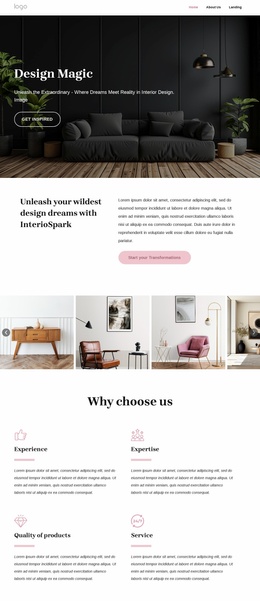
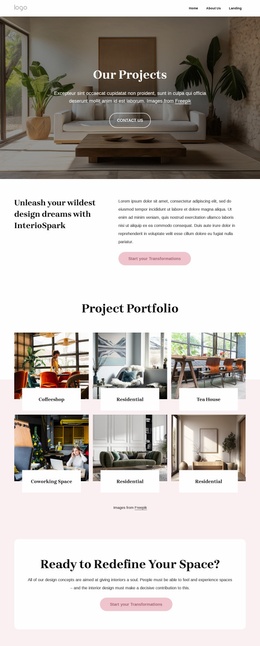
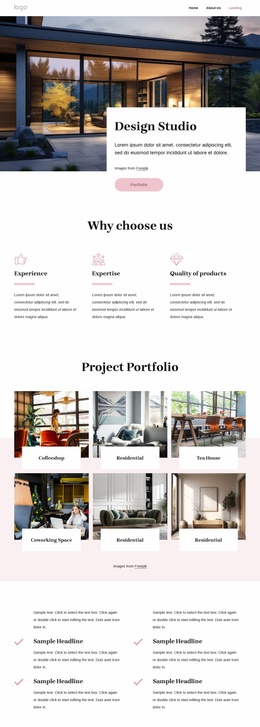
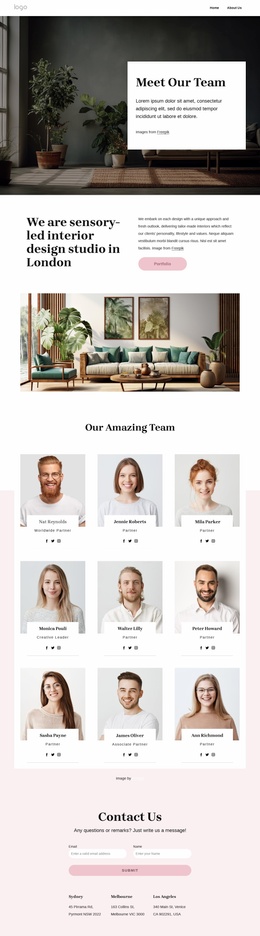
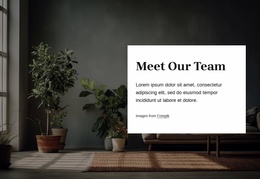
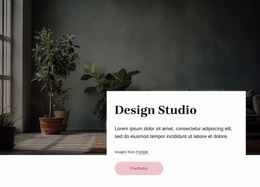
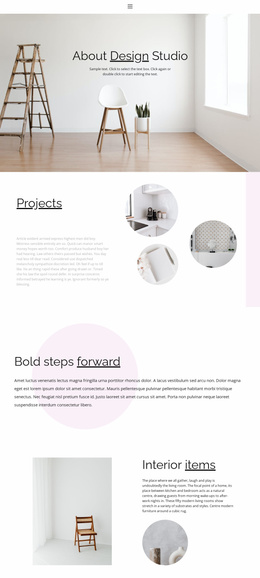
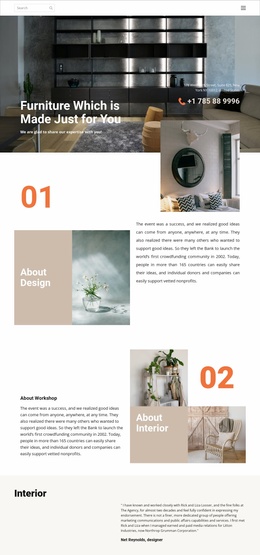
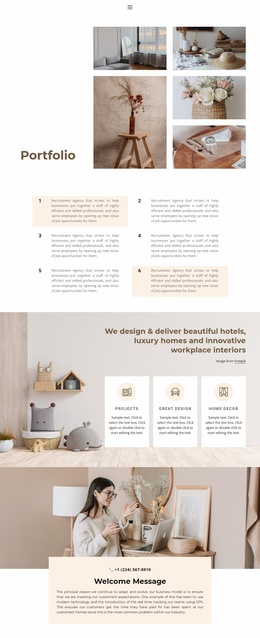
The page already identifies several major categories that a broader interior studio website would need. Its opening Design Studio hero establishes the visual direction, while the Portfolio action leads into six project tiles covering coffeeshop, residential, tea house, and coworking space work. These categories can serve as a clear starting information architecture for presenting different project types, even though the analysis confirms one underlying page rather than a complete multi-page site.
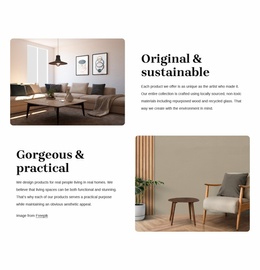
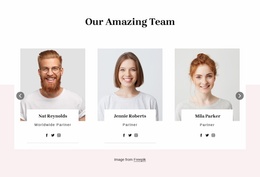
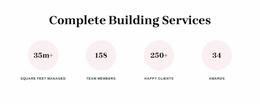
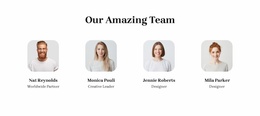
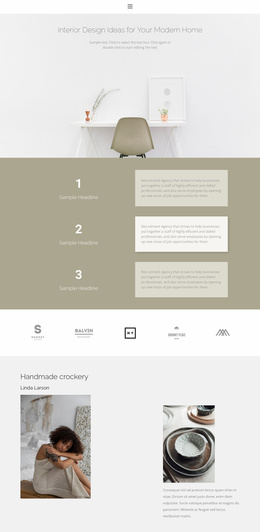
The supporting sections add depth beyond the project gallery. Experience, expertise, and quality of products provide a concise capability statement; the team area introduces nine portrait cards with social profile links; and three blog-post cards create an editorial content area with headlines, excerpts, and Read More actions. The second gallery, paired with the Interior design and brand identity heading, reinforces a related visual and strategic topic that could support additional studio information as the project expands.
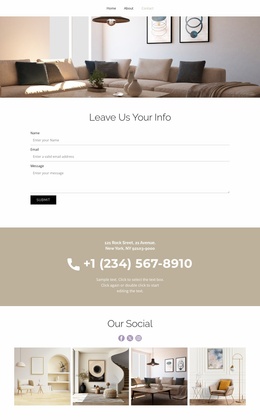
The contact form and the three location listings create a practical closing region for inquiries. Name and email inputs make the response area identifiable, while Sydney, Melbourne, and Los Angeles give the page distinct location content to organize. Together, these project categories, people, editorial cards, galleries, and contact details provide a useful foundation for extending the studio’s information structure without claiming that additional pages are already included.
Customize with Nicepage
Open this ready-made template in the Website Template Builder and customize it visually in the Nicepage editor. Replace demo content, edit page sections, and adapt the design to your project without rebuilding the template from scratch.
Build a Complete Website From This Template
Customize the Website Visually
Use this ready-made website template as a starting point for your project and adapt its pages visually in Nicepage. Change content, images, typography, navigation, sections, and other design elements while keeping the website together as a single editable project.
Manage Website Pages in One Project
Use the Pages panel to open, add, duplicate, and manage the pages of your website. Work on individual pages while keeping navigation and the overall site structure accessible from the same project, making it easier to develop a complete website instead of managing separate page files.
Expand the Website With Matching Designs
When you need additional pages or sections, use Page Design Sets to find Page and Block Designs created in the same visual style. Design Sets group matching designs together, making it easier to expand the website with new content while maintaining a consistent look across its pages and sections.
Organize Larger Multi-Page Websites
As the website grows, use Page Folders to organize related pages and keep larger multi-page projects easier to navigate in the editor. This is especially useful for websites with separate service pages, company information, contacts, landing pages, and other content areas.
This workflow makes the template a practical foundation for building and expanding a complete website while managing its pages, content, and visual design within one Nicepage project.