Modern architecture Website Template


A Reusable Architecture Explanation With Image and Principles
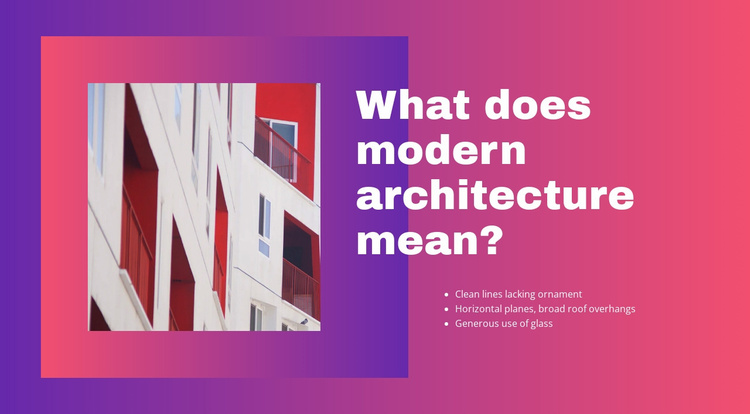
The block provides one clearly bounded content area for a broader website project: an explanation of modern architecture supported by a building photograph. Its two-column structure keeps the visual example on the left and the written interpretation on the right. The heading introduces the central question, while the three bullets organize the answer around clean lines lacking ornament, horizontal planes with broad roof overhangs, and generous use of glass.
That combination can serve as a repeatable explanatory pattern when a website needs to connect visual examples with concise descriptions. In a wider architecture-oriented project, neighboring sections could present projects, services, background information, or contact content, while this block remains focused on defining characteristics. The pink-to-purple gradient supplies a consistent visual field across both columns, and the white typography unifies the heading with the list rather than making the image and text feel like separate modules. Since the interaction is static, the section can preserve the same reading order wherever it is placed. Its reusable value comes from the stable relationship between image, question-led heading, and short principles: the arrangement communicates a subject clearly without requiring additional controls or a larger content system inside the block.
Customize with Nicepage
Open this ready-made template in the Website Template Builder and customize it visually in the Nicepage editor. Replace demo content, edit page sections, and adapt the design to your project without rebuilding the template from scratch.
Edit Template Offline
2. Create a new page or select existing
3. Click Add new block, search for id 52139 and click enter
Edit Template Online
Create Awesome Websites


Free Nicepage Builder
Keywords
Build a Complete Website From This Template
Customize the Website Visually
Use this ready-made website template as a starting point for your project and adapt its pages visually in Nicepage. Change content, images, typography, navigation, sections, and other design elements while keeping the website together as a single editable project.
Manage Website Pages in One Project
Use the Pages panel to open, add, duplicate, and manage the pages of your website. Work on individual pages while keeping navigation and the overall site structure accessible from the same project, making it easier to develop a complete website instead of managing separate page files.
Expand the Website With Matching Designs
When you need additional pages or sections, use Page Design Sets to find Page and Block Designs created in the same visual style. Design Sets group matching designs together, making it easier to expand the website with new content while maintaining a consistent look across its pages and sections.
Organize Larger Multi-Page Websites
As the website grows, use Page Folders to organize related pages and keep larger multi-page projects easier to navigate in the editor. This is especially useful for websites with separate service pages, company information, contacts, landing pages, and other content areas.
This workflow makes the template a practical foundation for building and expanding a complete website while managing its pages, content, and visual design within one Nicepage project.