Eating essentials for food Website Template


Edit Template Offline
2. Create new page and search for id 38011
Edit Template Online
Create Awesome Websites


Free Nicepage Builder
Keywords
Sustainability Topics Provide a Clear Foundation for Site Expansion
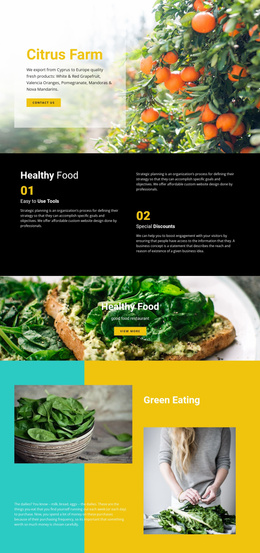
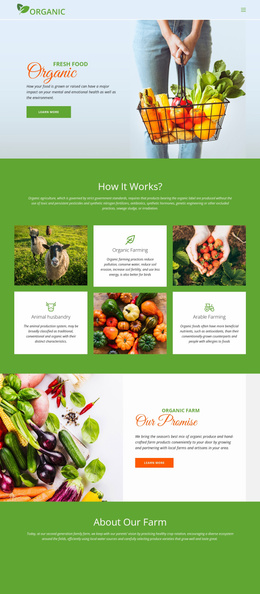
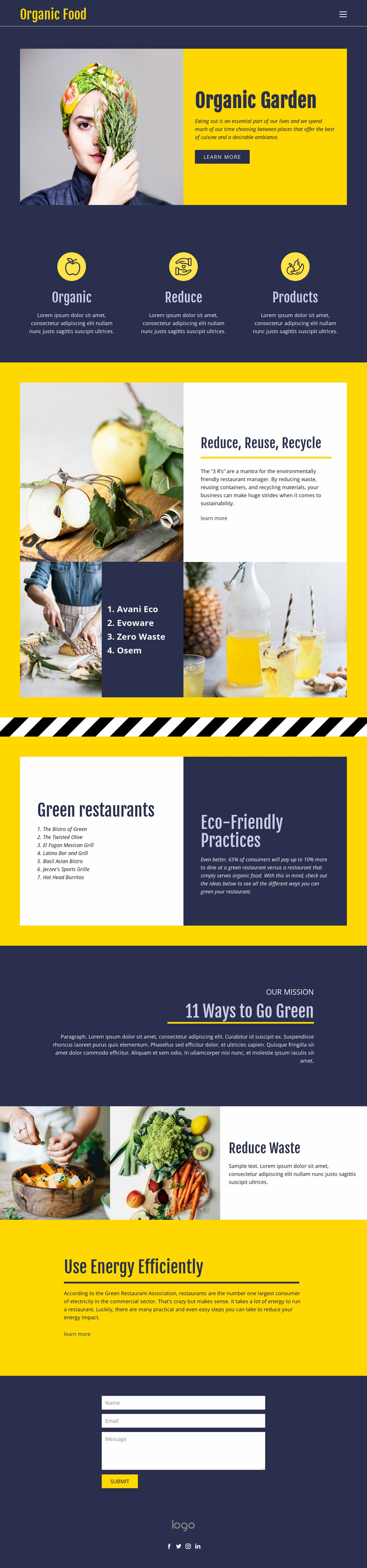
The design already identifies several content categories that a broader restaurant sustainability project may need. Organic Garden can introduce the subject, while the three feature items—Organic, Reduce, and Products—provide a compact top-level grouping. The longer Reduce, Reuse, Recycle section then supplies a dedicated area for waste and reusable-practice information rather than forcing every idea into the opening block.
Additional sections create room for related site content. Green restaurants and Eco-Friendly Practices connect the environmental theme directly to restaurant examples and operating guidance. The 11 Ways to Go Green mission can serve as a central initiative area, while Reduce Waste and Use Energy Efficiently offer focused topics that could remain distinct as the project develops. These are verified content areas, not evidence that the template already contains multiple complete pages.
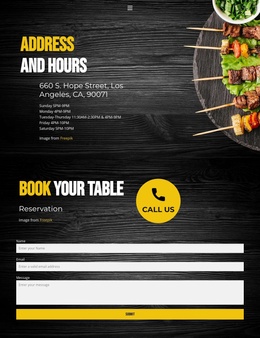
The compact contact form gives the foundation a defined communication region, and the footer combines a logo with Facebook, Twitter, Instagram, and LinkedIn links. The shared header and recurring high-contrast panel treatment can help additional content remain visually related to the existing page. This makes the template useful as a starting information structure for a wider project: it begins with food and organic themes, expands through restaurant sustainability practices, and ends with inquiry and social connection. Any future pages would still need to be created and populated with verified project content.
Customize with Nicepage
Open this ready-made template in the Website Template Builder and customize it visually in the Nicepage editor. Replace demo content, edit page sections, and adapt the design to your project without rebuilding the template from scratch.
Build a Complete Website From This Template
Customize the Website Visually
Use this ready-made website template as a starting point for your project and adapt its pages visually in Nicepage. Change content, images, typography, navigation, sections, and other design elements while keeping the website together as a single editable project.
Manage Website Pages in One Project
Use the Pages panel to open, add, duplicate, and manage the pages of your website. Work on individual pages while keeping navigation and the overall site structure accessible from the same project, making it easier to develop a complete website instead of managing separate page files.
Expand the Website With Matching Designs
When you need additional pages or sections, use Page Design Sets to find Page and Block Designs created in the same visual style. Design Sets group matching designs together, making it easier to expand the website with new content while maintaining a consistent look across its pages and sections.
Organize Larger Multi-Page Websites
As the website grows, use Page Folders to organize related pages and keep larger multi-page projects easier to navigate in the editor. This is especially useful for websites with separate service pages, company information, contacts, landing pages, and other content areas.
This workflow makes the template a practical foundation for building and expanding a complete website while managing its pages, content, and visual design within one Nicepage project.