Our way of project’s development Website Template


A Reusable Contact Area for a Broader Architecture Website
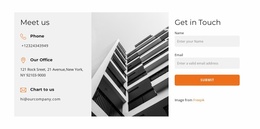
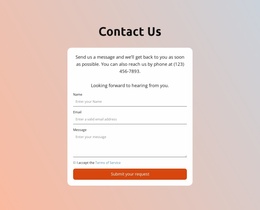
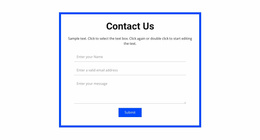
The block defines one stable content area that can be reused as a contact section within a broader website project. Its left column carries the information-collection role: the “Contact Us” heading introduces name, email, and message fields, followed by a terms-of-service checkbox and the Submit action. Because these elements form a complete request sequence within the section, the block can retain its purpose while other parts of the project handle introductions, services, portfolios, or project descriptions.
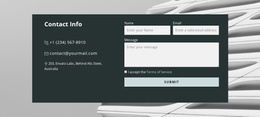
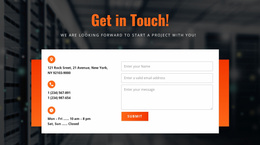
The right column gives the contact area a distinct visual and informational counterpart. A tall monochrome architectural corridor image occupies the panel, and the “call us” label with two displayed phone numbers is placed near the lower edge. This creates a recognizable pattern that can be coordinated with related architecture-focused sections without requiring the form and image to perform the same job. The image supplies subject context, while the phone details add a direct communication path alongside the form.
In a website template project, the value lies in this separation of responsibilities. The block is sufficiently self-contained to act as a repeatable contact-area design, yet it remains one section rather than a complete site or theme. Neighboring pages or sections can provide the broader navigation, company information, project work, and supporting content around this contact pattern.
Customize with Nicepage
Open this ready-made template in the Website Template Builder and customize it visually in the Nicepage editor. Replace demo content, edit page sections, and adapt the design to your project without rebuilding the template from scratch.
Edit Template Offline
2. Create a new page or select existing
3. Click Add new block, search for id 2908242 and click enter
Edit Template Online
Create Awesome Websites


Free Nicepage Builder
Keywords
Build a Complete Website From This Template
Customize the Website Visually
Use this ready-made website template as a starting point for your project and adapt its pages visually in Nicepage. Change content, images, typography, navigation, sections, and other design elements while keeping the website together as a single editable project.
Manage Website Pages in One Project
Use the Pages panel to open, add, duplicate, and manage the pages of your website. Work on individual pages while keeping navigation and the overall site structure accessible from the same project, making it easier to develop a complete website instead of managing separate page files.
Expand the Website With Matching Designs
When you need additional pages or sections, use Page Design Sets to find Page and Block Designs created in the same visual style. Design Sets group matching designs together, making it easier to expand the website with new content while maintaining a consistent look across its pages and sections.
Organize Larger Multi-Page Websites
As the website grows, use Page Folders to organize related pages and keep larger multi-page projects easier to navigate in the editor. This is especially useful for websites with separate service pages, company information, contacts, landing pages, and other content areas.
This workflow makes the template a practical foundation for building and expanding a complete website while managing its pages, content, and visual design within one Nicepage project.