Alaska Travel Website Template
Edit Template Offline
2. Create new page and search for id 20516
Edit Template Online
Create Awesome Websites


Free Nicepage Builder
Keywords
Travel Services and Destination Content Create a Broader Site Foundation
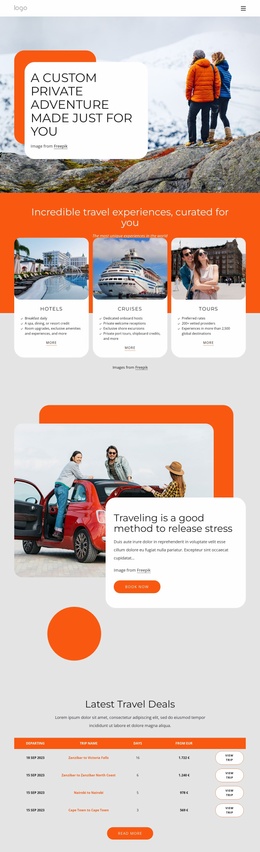
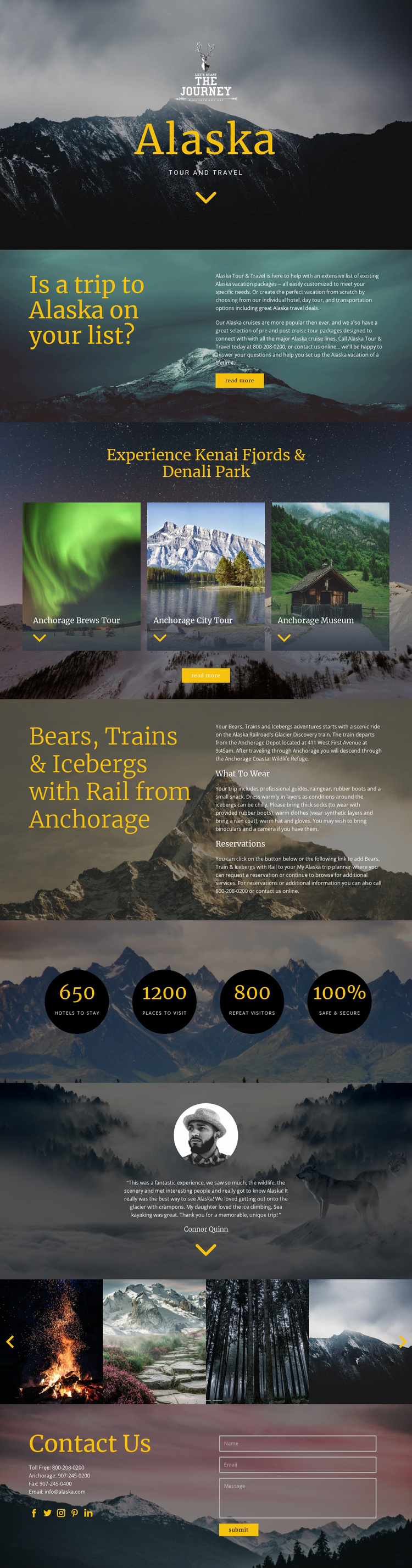
The design already identifies several major content areas that a larger Alaska travel project could build around. The opening proposition introduces vacation packages, cruises, tours, hotels, and transportation, giving the project a broad service foundation rather than limiting it to one excursion. The three repeated experience cards then establish a destination-and-activity pattern for Kenai Fjords, Denali Park, and Anchorage attractions. These areas could guide related content as the site grows, without claiming that additional pages are already included.
The Alaska Railroad feature adds a second level of project structure. Its focus on a rail journey from Anchorage, together with What To Wear and Reservations, shows how the design can accommodate a detailed itinerary alongside broader service information. The four circular metrics and testimonial provide supporting areas for travel information and customer voice, while the scenic carousel supplies a visual media region that can reinforce the destination across related sections.
The final contact block gives the foundation a practical communication endpoint. Telephone numbers, email, social links, and an inquiry form are grouped into one clear area for reservations or questions. Because the page combines service categories, featured experiences, itinerary detail, supporting proof, visual media, and contact content, it offers an information architecture from which a broader travel website could be expanded. Its value is not an unsupported claim of multiple existing pages, but the clear range of content roles already represented in this design.
Customize with Nicepage
Open this ready-made template in the Website Template Builder and customize it visually in the Nicepage editor. Replace demo content, edit page sections, and adapt the design to your project without rebuilding the template from scratch.
Build a Complete Website From This Template
Customize the Website Visually
Use this ready-made website template as a starting point for your project and adapt its pages visually in Nicepage. Change content, images, typography, navigation, sections, and other design elements while keeping the website together as a single editable project.
Manage Website Pages in One Project
Use the Pages panel to open, add, duplicate, and manage the pages of your website. Work on individual pages while keeping navigation and the overall site structure accessible from the same project, making it easier to develop a complete website instead of managing separate page files.
Expand the Website With Matching Designs
When you need additional pages or sections, use Page Design Sets to find Page and Block Designs created in the same visual style. Design Sets group matching designs together, making it easier to expand the website with new content while maintaining a consistent look across its pages and sections.
Organize Larger Multi-Page Websites
As the website grows, use Page Folders to organize related pages and keep larger multi-page projects easier to navigate in the editor. This is especially useful for websites with separate service pages, company information, contacts, landing pages, and other content areas.
This workflow makes the template a practical foundation for building and expanding a complete website while managing its pages, content, and visual design within one Nicepage project.