Four Seasons Website Template


Edit Template Offline
2. Create new page and search for id 12874
Edit Template Online
Create Awesome Websites


Free Nicepage Builder
Keywords
Villa, Location, and Dining Areas Establish a Travel Site Foundation
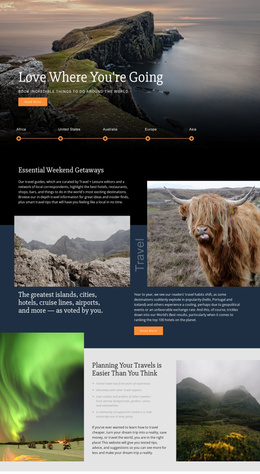
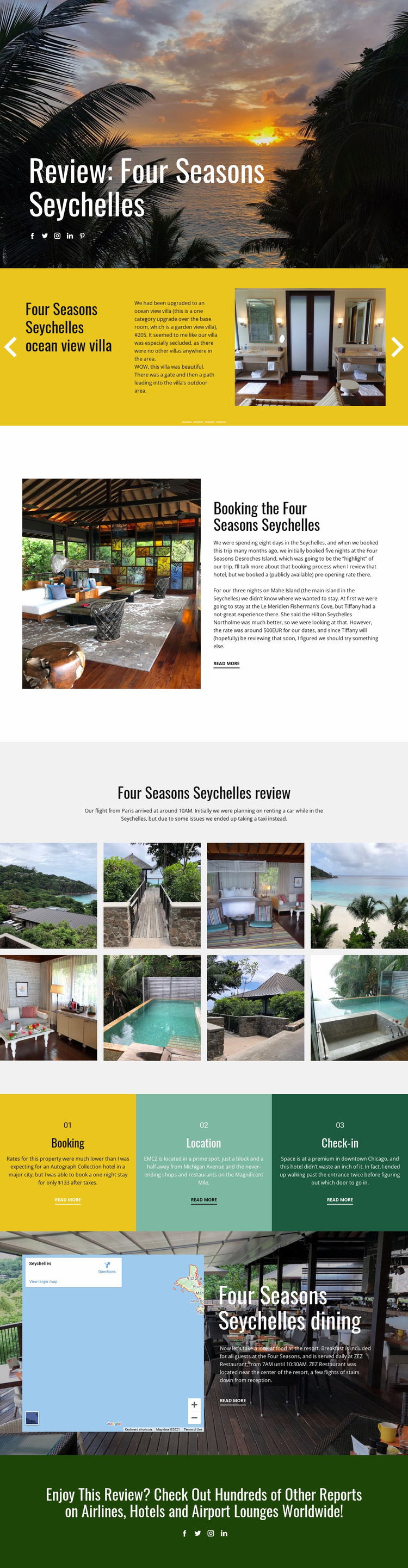
The template defines more than a single visual introduction: it identifies several content categories that can support a broader travel project. The ocean-view villa slider gives accommodation its own presentation, while the booking section supplies practical context. The three numbered panels then establish reusable subject areas for booking, location, and check-in, creating an information pattern that could guide related resort or destination pages without claiming that those additional pages already exist.
The eight-image gallery contributes a separate visual-content area, and the map beside the dining discussion connects hospitality information with place. The ZEZ Restaurant reference gives the dining section a specific editorial direction, while the final invitation to explore airline, hotel, and airport-lounge reports suggests how the featured resort review could sit within a larger travel-report structure. Shared visual traits—bold condensed headings, saturated color blocks, dark overlays, and generous white space—can provide continuity as that project expands. In this sense, the design functions as a website foundation because its content areas are already differentiated: accommodation, booking, visual review, practical stay topics, location, dining, and related reports. A larger site could build around those categories while preserving the current page as a focused resort review, rather than treating it as evidence of an existing multi-page website.
Customize with Nicepage
Open this ready-made template in the Website Template Builder and customize it visually in the Nicepage editor. Replace demo content, edit page sections, and adapt the design to your project without rebuilding the template from scratch.
Build a Complete Website From This Template
Customize the Website Visually
Use this ready-made website template as a starting point for your project and adapt its pages visually in Nicepage. Change content, images, typography, navigation, sections, and other design elements while keeping the website together as a single editable project.
Manage Website Pages in One Project
Use the Pages panel to open, add, duplicate, and manage the pages of your website. Work on individual pages while keeping navigation and the overall site structure accessible from the same project, making it easier to develop a complete website instead of managing separate page files.
Expand the Website With Matching Designs
When you need additional pages or sections, use Page Design Sets to find Page and Block Designs created in the same visual style. Design Sets group matching designs together, making it easier to expand the website with new content while maintaining a consistent look across its pages and sections.
Organize Larger Multi-Page Websites
As the website grows, use Page Folders to organize related pages and keep larger multi-page projects easier to navigate in the editor. This is especially useful for websites with separate service pages, company information, contacts, landing pages, and other content areas.
This workflow makes the template a practical foundation for building and expanding a complete website while managing its pages, content, and visual design within one Nicepage project.