Good morning breakfast One Page Template


The Breakfast Image Gives One-Page Flow a Clear Opening Destination
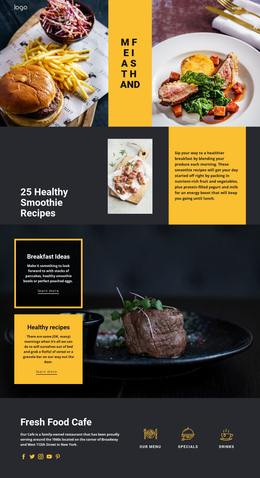
The full-width breakfast photograph gives this section a strong visual boundary, while the upper-left “#gm” heading and “tasty breakfast” line identify its content destination. The image shows coffee, pastries, orange juice, and tableware, so the section communicates its subject quickly without requiring a dense explanation. Since the text is placed over the image, the block reads as one integrated introduction rather than as a separate text area followed by unrelated media.
Within a one-page template context, this section can provide the breakfast-focused stop in a continuous page journey. It might introduce a food service theme before later sections provide menu details, story content, location information, or contact material. Its value comes from being easy to recognize as one bounded area; it does not need to become a separate page or contain the entire information architecture. The static presentation also keeps the transition to neighboring blocks predictable.
If the wider page uses section-based navigation, this block could serve as a destination associated with its content role, provided the surrounding page supplies that navigation. The block itself contributes the visual and textual identity of the destination. Nicepage documents a Menu For One-Page Site for page-level section navigation, while the reusable section retains its own breakfast introduction and image-led hierarchy.
Customize with Nicepage
Open this ready-made template in the One Page Template Builder and customize it visually in the Nicepage editor. Replace demo content, edit page sections, and adapt the design to your project without rebuilding the template from scratch.
Edit Template Offline
2. Create a new page or select existing
3. Click Add new block, search for id 55703 and click enter
Edit Template Online
Create Awesome Websites


Free Nicepage Builder
Keywords
Build a Navigable One-Page Website
Connect the Menu to Page Sections
Organize the website as a sequence of sections on a single page and use the Menu For One-Page Site to connect menu items with individual page Blocks. Visitors can jump directly to sections such as About, Services, Testimonials, or Contact without opening separate pages.
Keep the Website on One URL
A one-page template can combine several parts of a small website within one continuous page. Arrange the Header, introduction, services, portfolio, company information, reviews, contact details, and other relevant sections in the order that fits the project while keeping them accessible through the same page navigation.
Make Long Pages Easier to Navigate
For longer one-page websites, keep navigation labels short and connected to meaningful sections so visitors can move through the page without relying only on scrolling. You can also use the Back To Top element to provide a quick way back to the beginning after longer sections.
This workflow makes the template suitable for compact websites that need several distinct content sections while keeping the complete visitor experience on one URL.