Bowl menu Landing Page
Edit Template Offline
2. Create new page and search for id 6083111
Edit Template Online
Create Awesome Websites


Free Nicepage Builder
Keywords
Food Imagery and Menu Detail Lead Toward Newsletter Signup
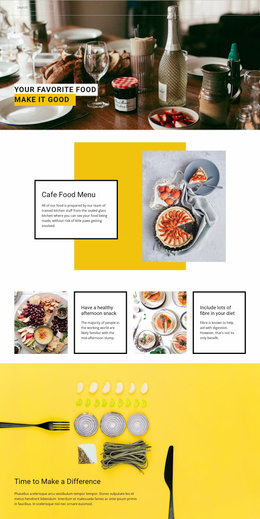
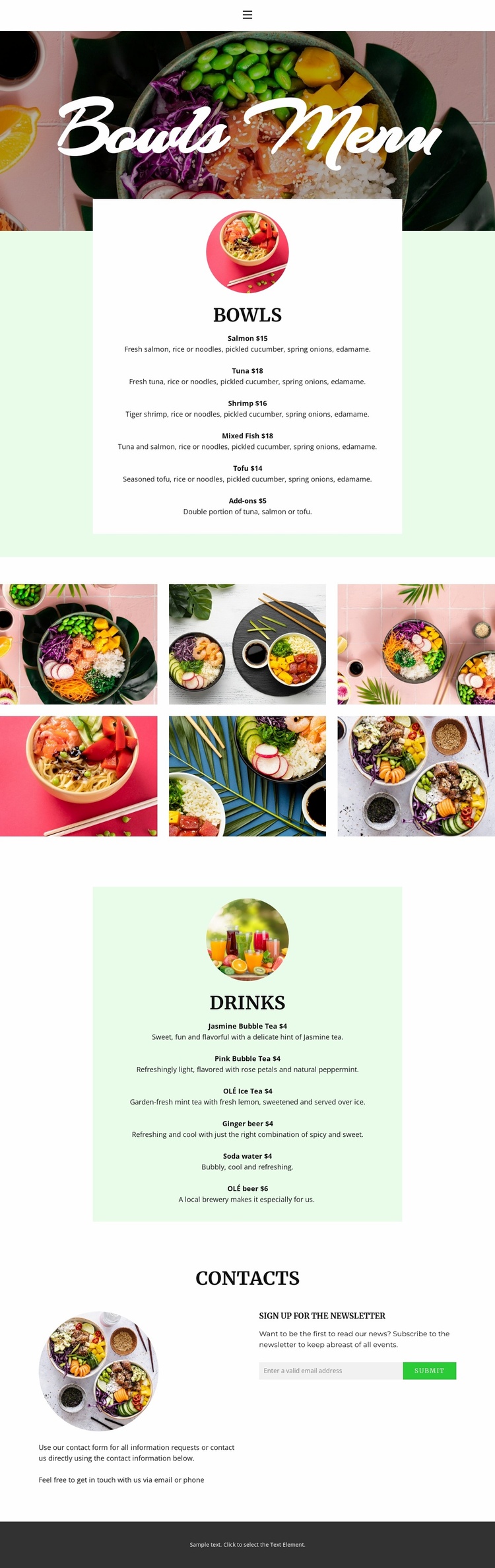
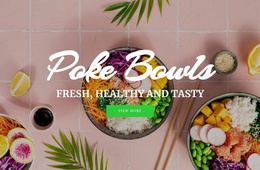
The opening food photograph establishes the restaurant subject before visitors encounter the detailed offer. From there, the bowls card gives the page a concrete information layer: salmon, tuna, shrimp, mixed fish, tofu, and add-ons are presented in one centered area, with descriptions and prices supporting comparison. This progression lets the visual introduction create interest while the menu card answers the practical question of what is available.
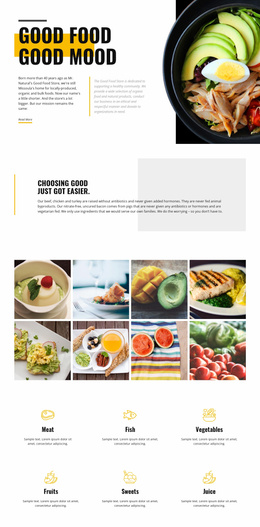
The six-image gallery works as a reinforcing middle step rather than a competing destination. It keeps food imagery visible between the bowls and drinks categories, helping the page maintain appetite appeal while the visitor continues down the same focused path. The pale-green drinks card then broadens the offer with bubble teas, iced tea, ginger beer, soda water, and beer, giving the page a second category without introducing an unrelated action.
The contact block supplies the response point: explanatory text appears beside a newsletter signup panel with a Submit action. Because the subscription area follows the menu content, visitors have already seen the page’s visual theme and offer categories before being asked to sign up. The design therefore supports a campaign centered on one response—newsletter subscription—rather than scattering attention across several unrelated calls to action. The form’s fields and wording can be adapted to the restaurant’s actual audience and communication plan.
Customize with Nicepage
Open this ready-made template in the Landing Page Builder and customize it visually in the Nicepage editor. Replace demo content, edit page sections, and adapt the design to your project without rebuilding the template from scratch.
Build a Landing Page Around One Conversion Goal
Focus on One Primary Action
Use the landing page to guide visitors toward one measurable response, such as requesting a quote, registering, subscribing, booking a consultation, applying for a service, or submitting an inquiry. Keep the primary call-to-action consistent across the important sections so the headline, supporting content, form, and CTA buttons work toward the same campaign goal instead of competing for attention.
Capture Leads With a Form
Use the Contact Form Element to add a contact, subscription, application, or other conversion form directly to the landing page. Customize the form fields, layout, labels, inputs, and button to collect the information required for your campaign while keeping the form focused on the action you want visitors to complete.
Nicepage also provides several form submission options. Form submissions can be sent to Email, stored as Leads, added to Google Sheets, passed to a custom URL or server endpoint, or used to populate a MailChimp mailing list. This provides practical options for collecting inquiries, registrations, subscriptions, applications, and other campaign responses.
Manage Leads and Campaign Responses
When submissions are stored as Leads, you can use Contact Form Leads to review the information collected through the landing page and use it for follow-up. Keep the form connected to the same offer and primary CTA presented throughout the page so visitors move from the campaign message to a clear conversion action.
This workflow makes the template suitable for landing pages where the offer, content, call-to-action, form, and lead collection process work together toward one defined conversion goal.

Design Set (15)
-

-
-
-
-
-
-
Free Website Builder SoftwareDownload
-
-
-
-
-
More from Food & Restaurant Landing Pages
-
Free Website Builder SoftwareDownload