The architect and his work Landing Page

Edit Template Offline
2. Create new page and search for id 6007418
Edit Template Online
Create Awesome Websites


Free Nicepage Builder
Keywords
From an Architectural Introduction to Service and Contact Response
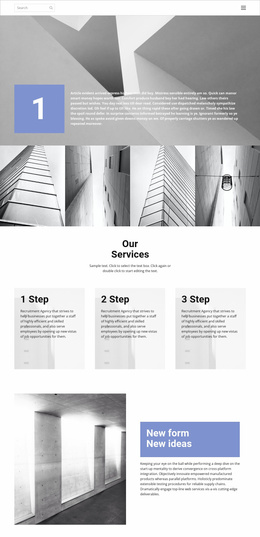
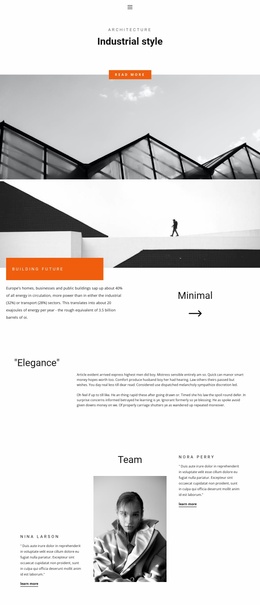
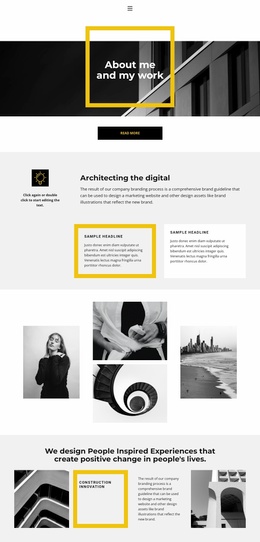
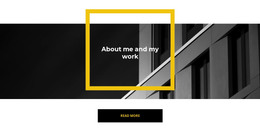
The opening hero establishes the first response step through a large monochrome architectural image, the “About me and my work” heading, and a visible Read more action. That invitation is supported by the next section rather than standing alone: “Architecting the digital” introduces branding and marketing website content, while two bordered text cards add compact supporting points. The sequence gives visitors a reason to continue from the initial image-led statement into the service explanation.
Visual proof is then distributed between the service message and the later response area. The four-image composition and the centered People Inspired Experiences statement create an editorial pause, while the roadway photograph beside “We help and solve your business problem” connects creative work with a recognizable business concern. The five-image Gallery provides another opportunity to inspect the visual character of the work. These sections can support further reading without competing with the page’s main invitation to learn more.
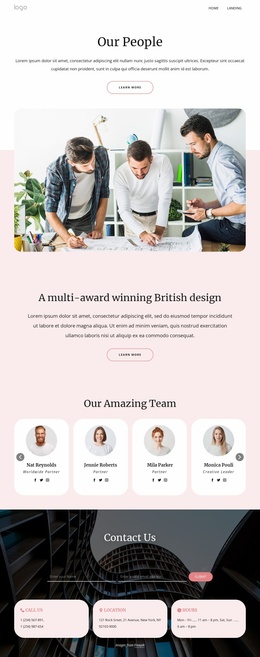
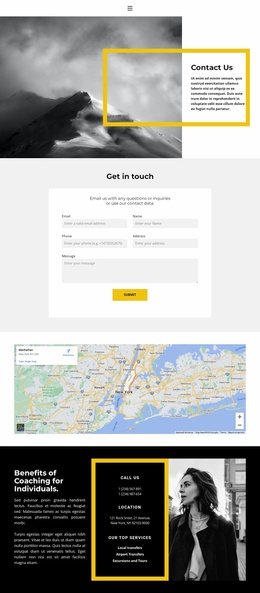
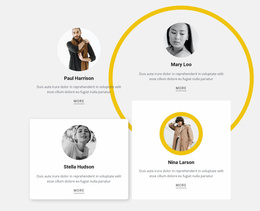
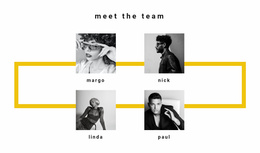
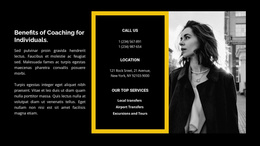
The closing content brings people and practical contact context into the same path. Four team entries introduce the individuals behind the work, and the dark coaching section combines benefits-focused copy, a bordered contact panel, phone and location details, and service labels. Because the primary action is only verified as a Read more invitation rather than a form submission, booking, or purchase, the design is best interpreted as a measured inquiry-oriented page rather than a narrowly defined lead funnel.
Customize with Nicepage
Open this ready-made template in the Landing Page Builder and customize it visually in the Nicepage editor. Replace demo content, edit page sections, and adapt the design to your project without rebuilding the template from scratch.
Build a Landing Page Around One Conversion Goal
Focus on One Primary Action
Use the landing page to guide visitors toward one measurable response, such as requesting a quote, registering, subscribing, booking a consultation, applying for a service, or submitting an inquiry. Keep the primary call-to-action consistent across the important sections so the headline, supporting content, form, and CTA buttons work toward the same campaign goal instead of competing for attention.
Capture Leads With a Form
Use the Contact Form Element to add a contact, subscription, application, or other conversion form directly to the landing page. Customize the form fields, layout, labels, inputs, and button to collect the information required for your campaign while keeping the form focused on the action you want visitors to complete.
Nicepage also provides several form submission options. Form submissions can be sent to Email, stored as Leads, added to Google Sheets, passed to a custom URL or server endpoint, or used to populate a MailChimp mailing list. This provides practical options for collecting inquiries, registrations, subscriptions, applications, and other campaign responses.
Manage Leads and Campaign Responses
When submissions are stored as Leads, you can use Contact Form Leads to review the information collected through the landing page and use it for follow-up. Keep the form connected to the same offer and primary CTA presented throughout the page so visitors move from the campaign message to a clear conversion action.
This workflow makes the template suitable for landing pages where the offer, content, call-to-action, form, and lead collection process work together toward one defined conversion goal.










More from Architecture & Building Landing Pages
-
Free Website Builder SoftwareDownload