Design in architecture Landing Page
Edit Template Offline
2. Create new page and search for id 24113
Edit Template Online
Create Awesome Websites


Free Nicepage Builder
Keywords
A Bold Architecture Lead-In That Moves Toward More Stories
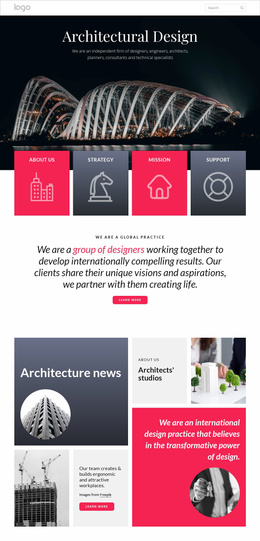
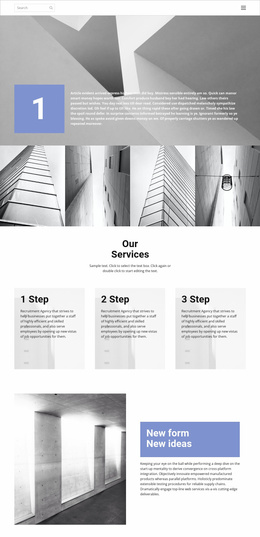
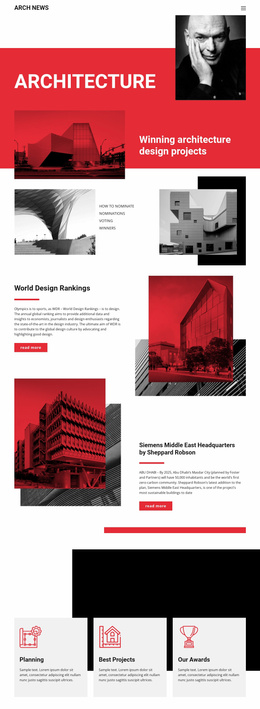
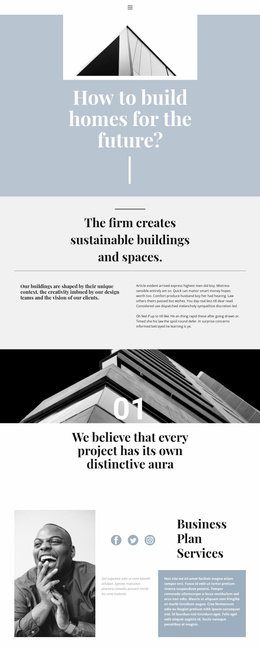
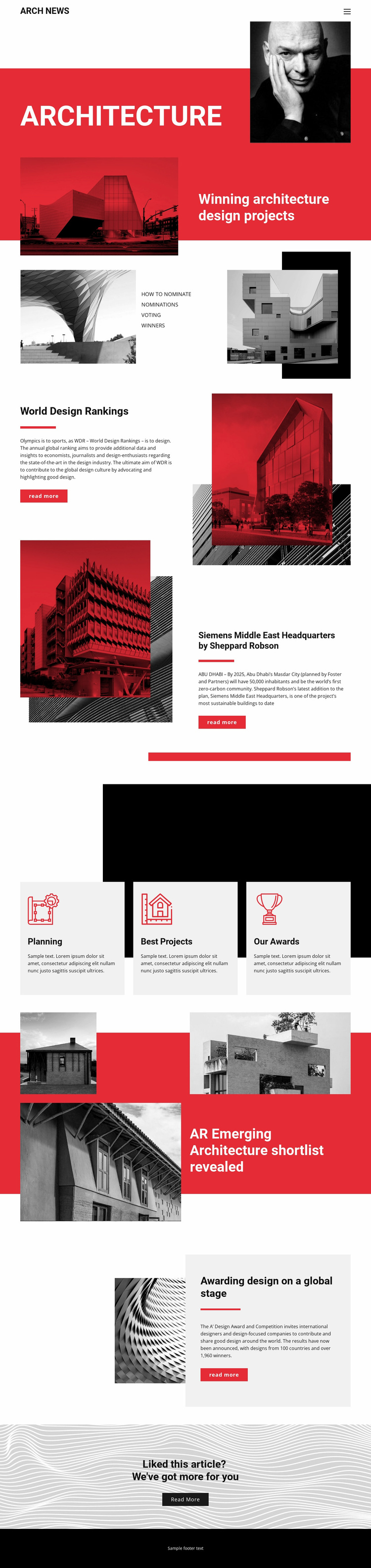
The Architecture hero provides the first response point by presenting a large headline, supporting project message, and high-contrast collage of architectural images. References to How to Nominate, Nominations, Voting, and Winners give the opening area an editorial action context, while the red and black treatment makes the principal subject immediately prominent. Rather than presenting a product offer, the page uses story access and reader interest as its response path.
The following sections build reasons to continue. World Design Rankings introduces a recognizable feature with explanatory copy and a read-more link. The Siemens Middle East Headquarters article adds a specific project, the Sheppard Robson attribution, and the Abu Dhabi reference, giving readers another focused entry into architecture coverage. The three cards for Planning, Best Projects, and Our Awards work as compact discovery choices, while the AR Emerging Architecture shortlist and A’ Design Award and Competition coverage extend the range of possible stories.
The closing section, “Liked this article? We've got more for you,” makes the next action explicit through Read More. This sequence is suited to a content-led landing page because the page does not rely on one commercial form: it captures attention with the hero, builds interest through ranked and project-based proof, and repeatedly directs readers toward related architecture and design stories.
Customize with Nicepage
Open this ready-made template in the Landing Page Builder and customize it visually in the Nicepage editor. Replace demo content, edit page sections, and adapt the design to your project without rebuilding the template from scratch.
Build a Landing Page Around One Conversion Goal
Focus on One Primary Action
Use the landing page to guide visitors toward one measurable response, such as requesting a quote, registering, subscribing, booking a consultation, applying for a service, or submitting an inquiry. Keep the primary call-to-action consistent across the important sections so the headline, supporting content, form, and CTA buttons work toward the same campaign goal instead of competing for attention.
Capture Leads With a Form
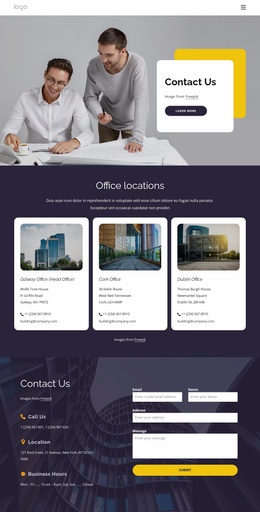
Use the Contact Form Element to add a contact, subscription, application, or other conversion form directly to the landing page. Customize the form fields, layout, labels, inputs, and button to collect the information required for your campaign while keeping the form focused on the action you want visitors to complete.
Nicepage also provides several form submission options. Form submissions can be sent to Email, stored as Leads, added to Google Sheets, passed to a custom URL or server endpoint, or used to populate a MailChimp mailing list. This provides practical options for collecting inquiries, registrations, subscriptions, applications, and other campaign responses.
Manage Leads and Campaign Responses
When submissions are stored as Leads, you can use Contact Form Leads to review the information collected through the landing page and use it for follow-up. Keep the form connected to the same offer and primary CTA presented throughout the page so visitors move from the campaign message to a clear conversion action.
This workflow makes the template suitable for landing pages where the offer, content, call-to-action, form, and lead collection process work together toward one defined conversion goal.

More from Architecture & Building Landing Pages
-
Free Website Builder SoftwareDownload