Driving Business Success Template


Edit Template Offline
2. Create new page and search for id 6389763
Edit Template Online
Create Awesome Websites


Free Nicepage Builder
Keywords
A Form-to-Location Layout for Consulting Contact Projects
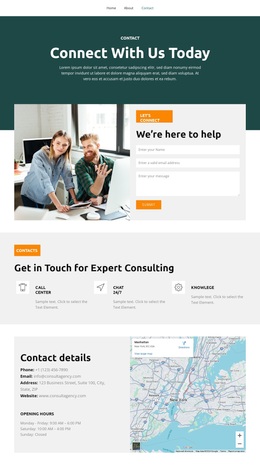
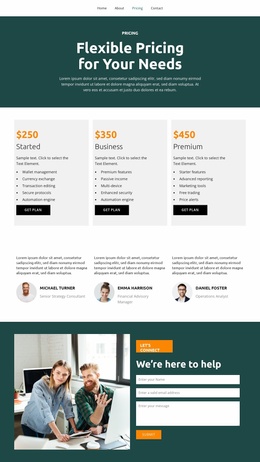
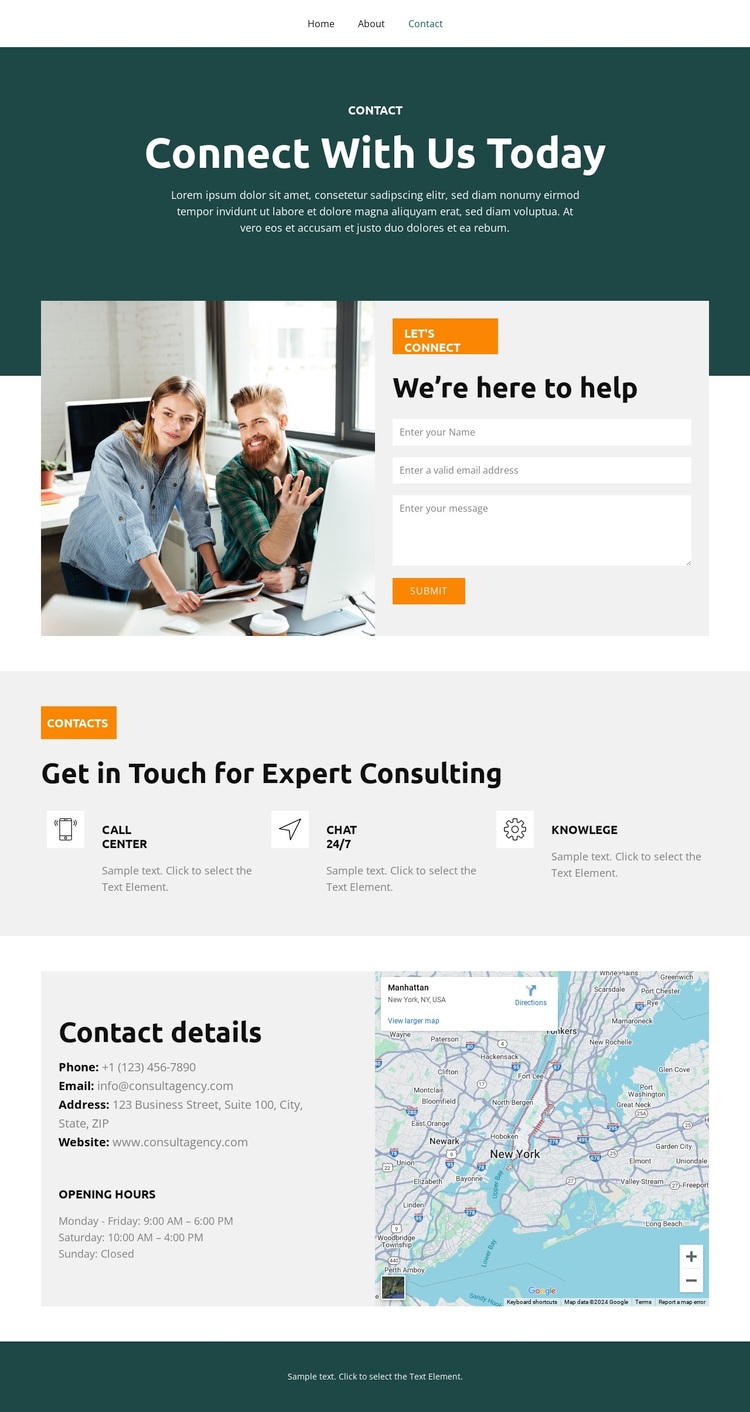
The design is a useful option for projects that need more than a bare contact form. It begins with a direct invitation to connect, then gives the inquiry task a prominent two-column setting where the form’s name, email, and message inputs sit beside visual content. That arrangement makes communication the central subject while avoiding a page made only of fields and labels.
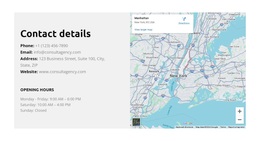
Its coverage continues through three repeated contact-option items for call center, chat, and knowledge support. These choices give the page a distinctive middle section and make the layout suitable for consulting projects that want to present several ways to seek assistance. The lower contact-details area adds phone, email, address, website, and opening-hours fields beside a map, so practical access information is not hidden in a separate page or reduced to a single footer line.
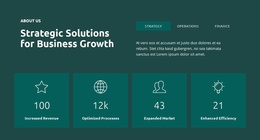
The combination of a dark teal hero, light gray content areas, orange accents, bold sans-serif headings, and generous spacing gives the design a clear professional direction without depending on dense explanatory copy. Navigation for Home, About, Pricing, and Contact also makes the page easy to place within a larger business context. Together, the inquiry form, repeated support channels, contact data, schedule, and map distinguish this option from a consulting layout focused only on services or pricing.
Customize with Nicepage
Open this ready-made template in the Template Builder and customize it visually in the Nicepage editor. Replace demo content, edit page sections, and adapt the design to your project without rebuilding the template from scratch.
Start With a Ready-Made Template
Choose a Design for a New Page
Use a ready-made template as a starting point instead of creating every page from a blank canvas. When adding a new page in Nicepage, browse available designs, compare different layouts, and choose an option that already fits the general purpose and visual direction of your project.
Browse Different Page Designs
Explore Page Designs using search, thematic categories, Design Sets, and full-page previews. The collection includes layouts for different subjects and page purposes, making it easier to compare alternatives before selecting a design to customize.
Customize the Selected Template
After choosing a design, create the page and continue editing it visually in Nicepage. Replace the demo content, adjust images, typography, colors, sections, and other elements, and adapt the ready-made layout to your own content instead of rebuilding the design from the beginning.
Explore More Design Directions
If the first option does not match your project closely enough, return to the design collection and compare other templates before committing to a layout. This makes the template library useful not only for faster page creation, but also for exploring different visual approaches and finding a suitable starting point for a new project.
This workflow gives you access to a broad collection of ready-made designs that can be selected, compared, and customized according to the needs of each new page or project.