The most common problems Template


Four Practical Questions in a Compact Accordion Design
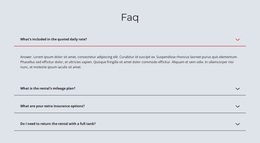
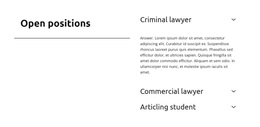
The section stands out through the combination of four practical rental topics and a restrained accordion layout. Rather than presenting a long block of visible explanatory copy, it places questions about daily-rate inclusions, mileage, extra insurance, and full-tank return into separate rows that visitors can open as needed. That content coverage makes the design useful when a page needs several related answers while preserving space for surrounding information.
The first answer is expanded in the supplied state, giving the design an immediate example of its open and closed states. The three remaining questions retain their labels and remain visually compact. Chevron controls on the right establish a consistent interaction cue, while the full-width rows and dark dividers make the sequence easy to scan from top to bottom. A bold heading provides the section’s entry point without competing with the question labels.
The visual balance is another reason to choose this option. The white background keeps the block light, the gray active fill identifies the selected item, and the yellow bottom accent adds a focused point of emphasis. This combination offers more structure than a plain list while remaining quieter than a card-heavy layout. It is a ready-made section choice for rental information that needs clarity, topic separation, and controlled answer visibility.
Customize with Nicepage
Open this ready-made template in the Template Builder and customize it visually in the Nicepage editor. Replace demo content, edit page sections, and adapt the design to your project without rebuilding the template from scratch.
Edit Template Offline
2. Create a new page or select existing
3. Click Add new block, search for id 387950 and click enter
Edit Template Online
Create Awesome Websites


Free Nicepage Builder
Keywords
Start With a Ready-Made Template
Choose a Design for a New Page
Use a ready-made template as a starting point instead of creating every page from a blank canvas. When adding a new page in Nicepage, browse available designs, compare different layouts, and choose an option that already fits the general purpose and visual direction of your project.
Browse Different Page Designs
Explore Page Designs using search, thematic categories, Design Sets, and full-page previews. The collection includes layouts for different subjects and page purposes, making it easier to compare alternatives before selecting a design to customize.
Customize the Selected Template
After choosing a design, create the page and continue editing it visually in Nicepage. Replace the demo content, adjust images, typography, colors, sections, and other elements, and adapt the ready-made layout to your own content instead of rebuilding the design from the beginning.
Explore More Design Directions
If the first option does not match your project closely enough, return to the design collection and compare other templates before committing to a layout. This makes the template library useful not only for faster page creation, but also for exploring different visual approaches and finding a suitable starting point for a new project.
This workflow gives you access to a broad collection of ready-made designs that can be selected, compared, and customized according to the needs of each new page or project.